
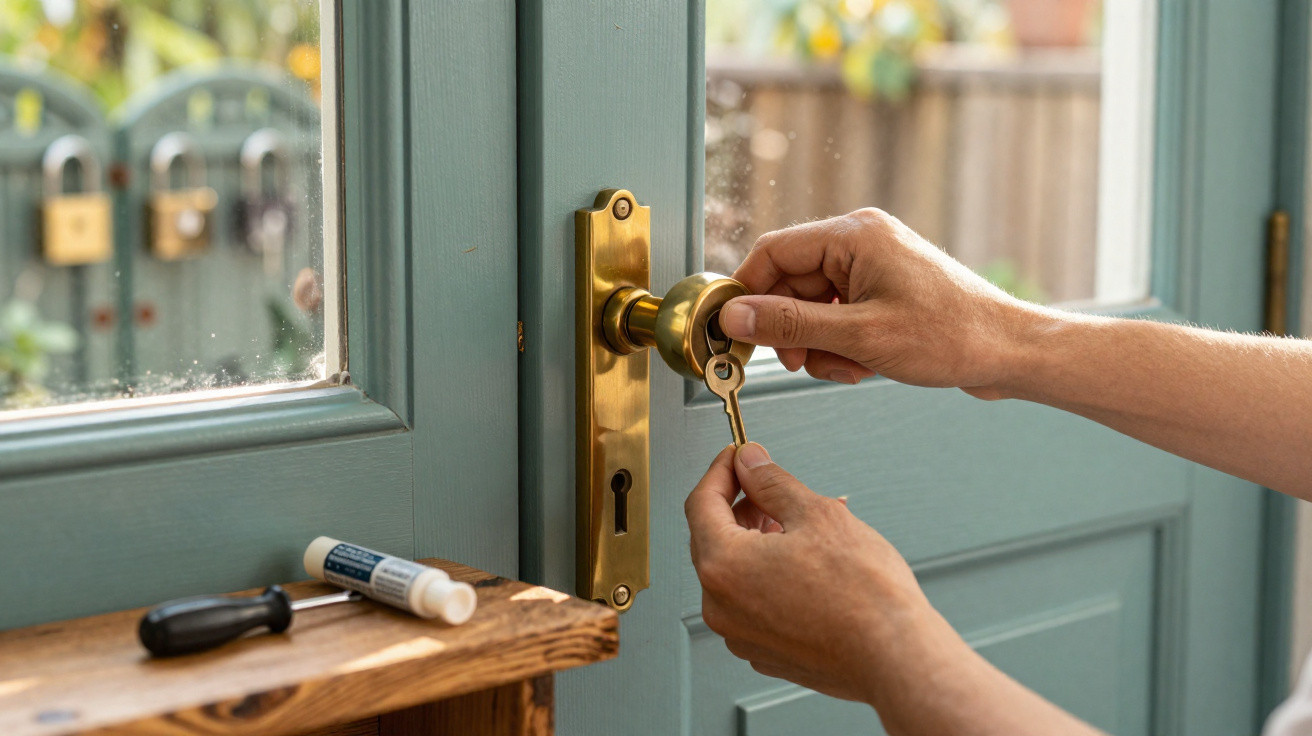
Locking and unlocking doors is part of everyday life, but the lock does not always play along. Over time, it is common for the mechanism to become stiff, stick halfway through the turn, or even trap the key. Locksmiths say that many of these issues can be dealt with at home, as long as you take a few basic precautions, use easy-to-find materials, and pay attention to the earliest signs that something is not working properly.
What actually makes a door lock jam?
According to locksmiths, the most frequent causes come down to daily use and the surrounding environment. On internal doors, a build-up of dust, the use of unsuitable cleaning products, and a lack of maintenance can all interfere with how the cylinders and pins operate.
On external gates, rain, sun, salty sea air in coastal areas, and pollution speed up oxidation in metal components. As time goes on, rust increases friction, makes the lock harder to turn, and can even seize the key in the barrel. Trying to force it usually makes the fault worse and, in extreme cases, can snap the key or damage the cylinder.
Watch a video on the YouTube channel Chaveiro Zona Sul discussing practical tricks for freeing stiff locks and maintaining the door lock barrel.
How do locksmiths recommend freeing a jammed door lock?
Professionals advise starting by working out whether the issue is minor or more advanced. In simpler cases, the lock will still turn, but only with effort; in more serious situations, the key goes in but will not complete the turn, which tends to indicate internal wear or dirt that has built up.
For early-stage problems, locksmiths often use a few at-home methods in workshops and call-outs-always using gentle movements and never forcing the key:
- Cleaning the cylinder: gently blowing into the keyway or using compressed air can help clear out dust and tiny particles.
- Dry lubrication: powdered graphite, available from hardware shops, is one of locksmiths’ preferred options for internal doors.
- Gentle movement: after applying the product, insert the key and turn slowly to distribute the lubricant across the pins.
Many professionals advise against using cooking oils or penetrating sprays indiscriminately, especially in more delicate cylinders. Oily products may offer a quick fix, but they attract dust that then gathers and forms a thick paste inside the lock, reducing the mechanism’s lifespan.
How to deal with a jammed gate lock in practice
When a gate lock jams, locksmiths’ experience suggests the cause is often constant exposure to the weather. Iron and steel gates, which are prone to rust and thermal expansion, need attention not only on the lock itself but also on the gate’s overall structure.
Typically, the locksmith checks whether the lock is rim-mounted or mortice, as this affects access to internal parts. They also look for corrosion, assess the condition of the latch bolt that engages with the keep, and check the gate’s alignment-because misalignment can make it seem as though only the lock is stiff.
What care helps extend a lock’s lifespan?
Specialists stress that preventive maintenance is one of the most effective ways to avoid a stiff or seized lock. Small day-to-day habits matter: the key effectively acts like a “comb” for the mechanism, and if it is bent, worn, or dirty, repeated use can damage the inside of the cylinder.
Good practice includes not using a bunch of keys as a tool, keeping keys away from chemicals, giving the lock a light clean every few months, and applying the correct lubricant as often as the manufacturer recommends. Squeaking, needing to lift the door to turn the key, or increasing difficulty when locking are signs that something needs adjusting. Acting early is usually quicker and cheaper than replacing the entire lock after it becomes completely stuck.
Comments
No comments yet. Be the first to comment!
Leave a Comment