
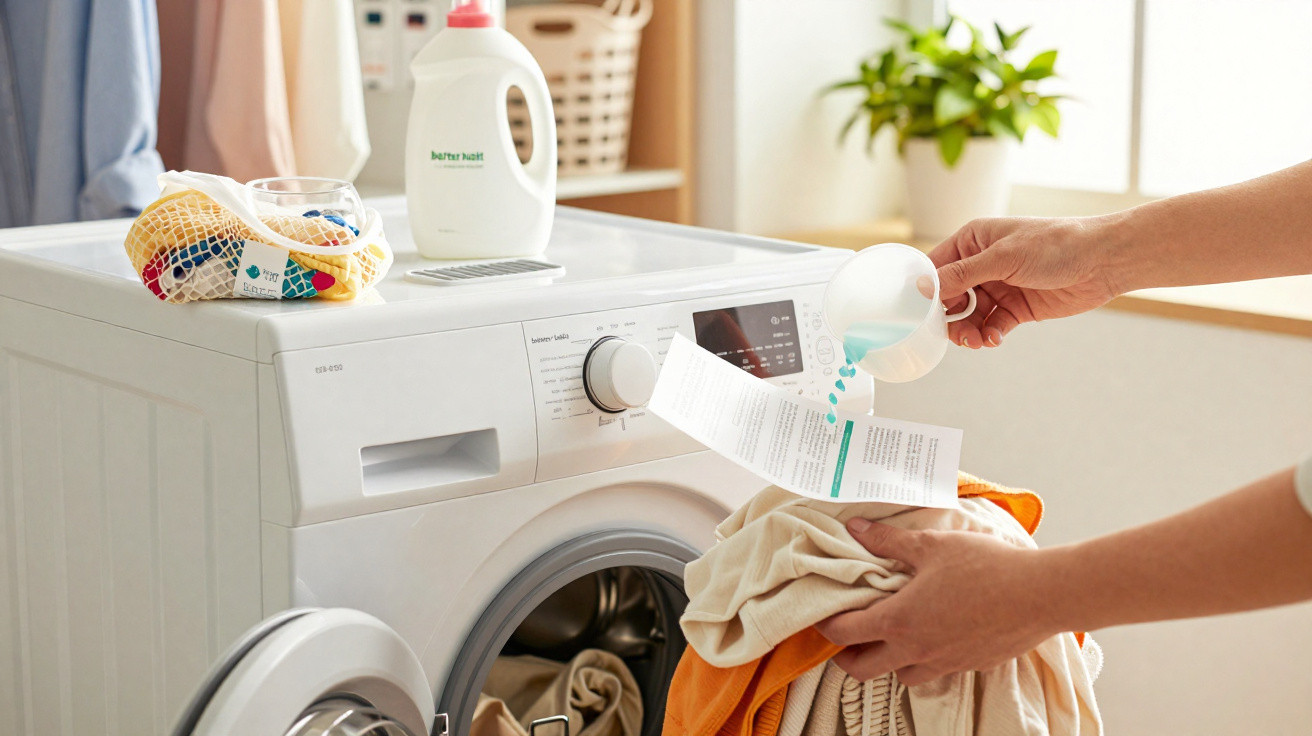
The washing machine drones away in the corner, its door crammed shut after a week of mixed laundry: whites twisted around dark jeans, gym kit clinging to fluffy towels. The owner taps “quick wash”, sets 40°C, then goes straight back to scrolling on their phone, sure they’re being efficient and eco‑minded.
The programme finishes, everything smells “sort of clean”, and the day carries on.
Except… inside the machine, detergent sludge starts building up bit by bit. The rubber seal takes on a grey tinge. T‑shirts lose their shape sooner than they should. And the running costs creep up quietly.
Most people don’t realise this perfectly ordinary routine is one of the most reliable ways to slowly damage a washing machine – and wear out clothes faster, too.
How we quietly abuse our washing machines without noticing
Many of us treat the washing machine like a sealed box: chuck things in, press whichever button seems familiar, and retrieve laundry that passes as “clean”. Brands fill control panels with choices, but in real homes, lots of households stick to the same one or two programmes for everything. The rest might as well be written in code.
On a busy weekday night, uncertainty turns into autopilot. A quick cycle. Extra detergent “just to be safe”. A half‑open drawer with powder caked along the edges.
After a while, it feels so normal you stop thinking about it. You only start to suspect something’s wrong when the washing comes out a bit damp‑smelling, or the machine begins to rattle like an old bus.
A British survey from a few years ago found most people rely on just one or two programmes, even when the machine offers ten or more. Another study reported that a significant share of users regularly overfill the drum, often “to save time”, packing in big bundles of clothes that never really get room to move.
A repair technician in London once told me he can almost identify the household from the drum’s smell: families heavy on softener, sports fans living on low‑temperature cycles, tiny flats where the machine is shut inside a cupboard and never gets aired.
From his perspective, misuse isn’t dramatic. It’s the same small mistakes, repeated endlessly. Unexciting. Routine. But constant.
When washes are always cool, detergent doesn’t fully dissolve. It combines with skin cells, lint and the greasy residue from fabrics, then settles in hoses and around rubber seals. That grey “gunk” is essentially an all‑you‑can‑eat buffet for bacteria and mould.
Meanwhile, stuffing the drum makes the motor strain and the shock absorbers wear out sooner. Instead of tumbling freely, clothes scrape and rub; fibres snap, elastics weaken.
So what you notice – faded colours, flat towels, odd odours – is only the visible layer. Underneath, the machine is quietly ageing years earlier than it should.
Then there’s the eco argument. Cold washes and quick cycles feel greener. Yet a machine that’s overloaded and poorly maintained can end up using more energy over time: you rewash smelly loads, add extra spin cycles, or replace the appliance earlier than necessary.
Bad habits often hide behind good intentions, which is exactly why they’re so easy to miss.
Simple changes that make your machine last longer (and your clothes too)
The most effective “hack” is almost painfully simple: once a month, run an empty hot maintenance wash at 60°C or 90°C with a small amount of detergent or white vinegar. That one habit loosens grease, flushes residue and wipes out a large part of the bacteria living in the drum.
Yes, it costs a bit more energy in that moment. But it helps you avoid the hidden expenses that come with repeated musty washes, clogged filters and pricey call‑outs.
Think of it as brushing your machine’s teeth once a month.
Another key move: don’t ignore the capacity line. Most manuals suggest you should be able to place a flat hand on top of the laundry pile inside the drum.
If you have to shove down with your forearm, it’s overfilled – however tempting it is to “do it all” in one go.
For delicate pieces, choose a laundry bag and a gentle, slow‑spin programme. Put jeans, towels and hoodies together on a sturdier cycle. It can sound over‑fussy at first, but it quickly becomes a quiet form of respect for fabrics you’ve already paid for.
Detergent plays the misunderstood villain in all this. Plenty of people dose “by instinct”, then add more when a load looks dirtier. The outcome is sticky build‑up and clothes that never rinse properly. The machine then has to work harder to clear the suds, and the laundry still doesn’t smell properly fresh.
Try this instead: use the measuring cap and aim slightly below the suggested dose unless the load is genuinely filthy. Modern detergents are concentrated; your machine doesn’t need the foamy avalanche from adverts to do its job.
Liquid detergents can leave more of a film than powder, particularly on cold cycles. And fabric softener, when used every day, can coat fibres so thoroughly that towels stop absorbing water.
Let’s be honest: hardly anyone actually does all the perfect steps every single day, but leaving the detergent drawer open to dry after each wash often helps more than pricey “machine cleaner” products.
And then there are the tiny, easy‑to‑miss behaviours. Leave the door slightly ajar between washes so the drum can dry out.
Every so often, wipe the rubber gasket with a cloth to remove trapped hair, stray coins and that mysterious black fuzz.
One technician summed it up in a single sentence:
“Most breakdowns I see are not bad machines – they’re tired machines that have never been given a chance to breathe.”
That sentence tends to pop back into your head the next time you slam the door shut the second the cycle ends and dash off.
We’re all busy. It’s easy to think, “It’s just laundry, who cares?” Yet a handful of small, low‑effort habits can extend a machine’s life by years.
- Leave the door and detergent drawer slightly open after washing.
- Run one hot maintenance cycle per month.
- Use less detergent than you think you need.
- Check pockets and the rubber seal for objects and lint.
- Respect the drum capacity, especially with heavy items like towels.
The quiet psychology behind bad laundry habits
At a deeper level, washing machines occupy an odd role in our homes. They’re essential, even intimate – dealing with sweat, stains and children’s accidents – yet they’re emotionally invisible.
We don’t look at them with anything like the affection we give a phone or a car. They’re background workers. So we rarely read the manual, rarely try the settings, and rarely ask why “quick wash” has become our default response to a full basket.
There’s a generational gap too. Many younger adults move into places where the machine is already installed, second‑hand, and the instruction booklet is long gone. People inherit routines in fragments: “My mum always washed everything at 40°”, “My flatmate said to use the eco cycle”.
On top of that, marketing sells “fast” and “easy” at every turn: fast fashion, fast delivery, fast cleaning. The slow, quiet care that keeps an appliance going for ten years doesn’t make headlines or go viral.
On a Sunday evening, with the basket overflowing and Monday looming, nobody wants to become a spin‑speed scientist. You just want the job finished. That’s the honest reality in most homes.
But once you see how a few simple tweaks – an empty hot wash, a lighter hand with detergent, leaving the door open – change the smell and feel of your laundry, it lands differently. That heavy white box in the corner starts to feel more understandable, less mysterious.
The payoff is immediate on a sensory level: clothes feel softer without softener overload; sportswear stops turning sour after one workout; the bathroom loses that vague damp smell.
Financially, stretching a machine from 7 to 12 years of use changes the sums for a household budget.
Emotionally, there’s something else as well. Taking care of the machine that takes care of your clothes is a quiet way of looking after your space – and yourself. We’ve all had that moment of pulling out damp‑smelling “clean” laundry and feeling slightly beaten. Avoiding it isn’t about being perfect; it’s about being a touch more aware.
This isn’t about turning everyone into an appliance obsessive.
It’s about noticing that many of us misuse our washing machines not because we don’t care, but because of habit, bad information and the silent pressure of everyday life.
Once you spot the hidden costs – higher bills, shorter appliance life, more waste, clothes that age too quickly – it’s hard to unsee them. A few modest changes, repeated calmly, quietly reverse the pattern.
And perhaps that’s the real shift: not some grand “laundry revolution”, but tiny corrections you pass on to a friend, a flatmate, a parent.
One person starts leaving the door ajar; another commits to a monthly hot wash; someone else finally cleans the filter and finds all the missing coins.
Next time you stand in front of the machine with your finger hovering over “quick wash”, you might hesitate for half a second.
That brief pause – that small question of “Is this actually the best way?” – is where change begins.
| Key point | Detail | Why it matters to you |
|---|---|---|
| Fewer low‑temperature cycles | Alternate with a monthly 60–90°C wash | Cleaner machine, fewer odours |
| Controlled detergent dosing | Measure and reduce the amount slightly | Less residue, better‑rinsed clothes |
| Light airing and cleaning | Leave the door ajar, wipe the seal | Longer lifespan, fewer costly breakdowns |
FAQ:
- How often should I clean my washing machine? Once a month is a solid rhythm for most households: one hot maintenance cycle and a quick wipe of the rubber seal and detergent drawer.
- Is washing at 30°C or 40°C bad for clothes? No, it’s fine for most everyday loads, as long as you occasionally run a hotter wash to clear out residue and bacteria in the machine.
- Do I really need fabric softener? Not always. Many fabrics wash well without it, and towels even perform better when you skip softener or use it only occasionally.
- How do I know if I’m overloading the drum? If you can’t slide a flat hand on top of the clothes inside the drum, it’s too full and your laundry won’t move or clean properly.
- Why does my laundry still smell after washing? Odour usually comes from residue and bacteria in the machine: try a hot maintenance wash, less detergent, and leave the door open between cycles.





Comments
No comments yet. Be the first to comment!
Leave a Comment