
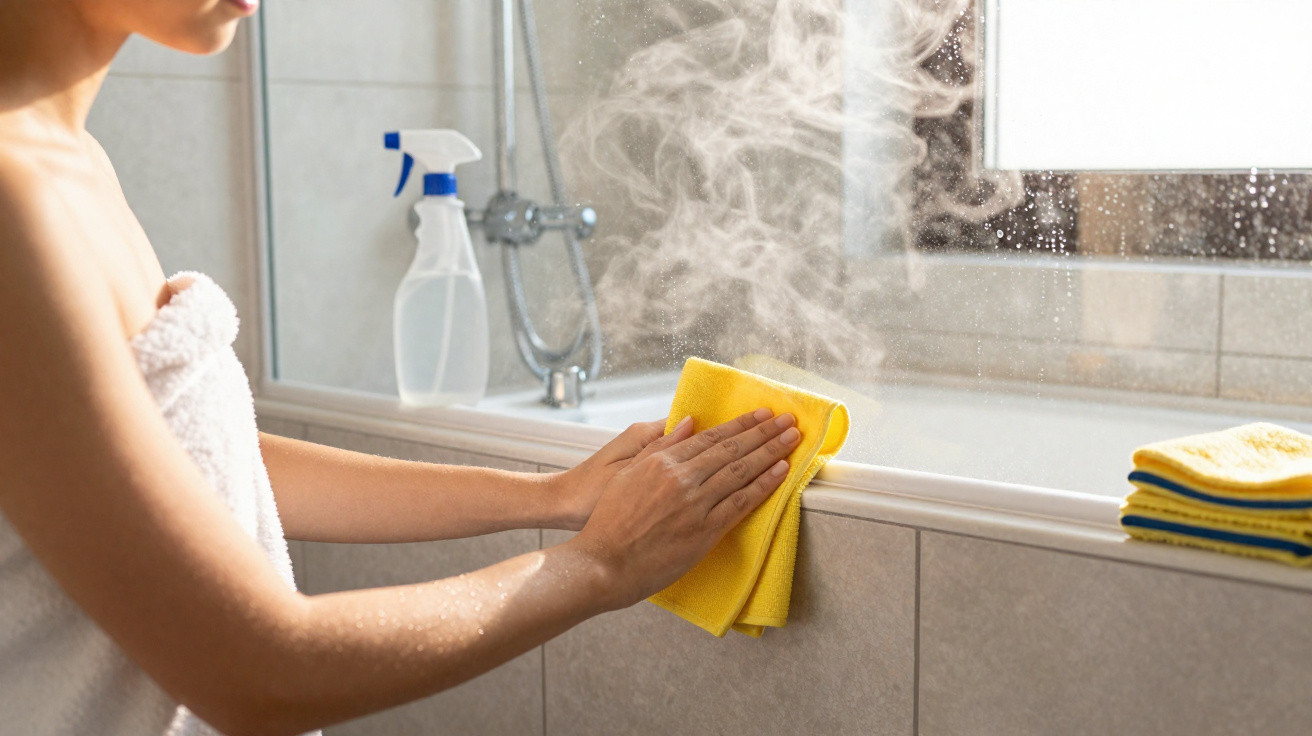
Many people clean their shower regularly - yet still miss one small step that often decides whether the bathroom stays hygienic or ends up with mould.
The shower head shines, the tiles look spotless, everything appears clean. Even so, plenty of households still deal with stale odours, dark edging and recurring mould in the bathroom. Specialists often point to a neglected culprit: wet silicone sealant joints that are simply left to air-dry after showering.
The bathroom blind spot: wet silicone sealant joints
Silicone sealant joints are widely seen as low-maintenance, but in reality they are a moisture magnet. They sit exactly where water splashes every day: inside the shower, around the bath, and by the basin. When water is left sitting on them, conditions become ideal for fungi and bacteria.
Moisture works its way into the tiniest gaps and can remain there for hours - sometimes almost permanently. In bathrooms without effective ventilation, the joints rarely dry out fully. The results are often:
- dark or black discolouration along the joints
- a musty, slightly damp smell, especially after showering
- higher levels of mould spores in the air
- a greater risk of breathing problems for sensitive people
People with allergies, asthma or chronic lung conditions can react particularly strongly to spores and mould. Children and older adults are also among those who may be affected more.
"If you leave silicone sealant joints damp all the time, you risk more than yellow staining - you can create a real health problem in your own bathroom."
Why daily squeegeeing plays the key role
Professionals in bathroom renovation and building hygiene broadly agree: the most effective step happens immediately after showering - and takes only seconds. The idea is to remove water from the tiles and, crucially, from the silicone sealant joints.
The routine is straightforward:
- After showering, use a shower squeegee to pull water off the walls, paying special attention to the joint areas.
- Follow up with a dry, absorbent cloth and wipe the silicone sealant joints directly.
- Ventilate the bathroom well, ideally with a wide-open window or strong air exchange.
This quick sequence drastically cuts residual moisture. The less water that remains on the silicone, the harder it is for mould and limescale to gain a foothold.
How moisture attracts mould and limescale
Where there is water, two troublemakers tend to appear together: limescale and mould. Depending on where you live, tap water can be high in limescale. If it dries slowly along the joints, pale, rough deposits are left behind. At the same time, micro-organisms thrive in places that are damp and slightly textured.
This creates a kind of vicious circle:
- Moisture sits in the joints.
- Limescale builds up and makes the surface more porous.
- Fungi and bacteria settle more easily in these areas.
- Mould spreads faster and penetrates deeper into the material.
Over time, standard cleaners barely make a difference. The joints can look permanently dirty, even after intensive scrubbing.
Bathroom health risk: more than a cosmetic issue
Mould in the bathroom is not just an eyesore. Certain moulds release substances that can irritate the mucous membranes and put strain on the respiratory system. If you spend time every day in a bathroom with a high spore load, you may notice symptoms such as:
- a runny or blocked nose more often
- an urge to cough without an obvious cold
- burning or itchy eyes
- headaches or tiredness after being in the bathroom for a while
Doctors warn that existing allergies may worsen. For people with asthma, a persistently mouldy environment can also intensify symptoms.
"A few too many drops left on the joints can end up costing more than any new tile."
A daily mini-routine instead of an expensive repair
If you dry the joints briefly every day, you can save significant time and money in the long run. A consistent habit helps stop silicone from deteriorating to the point where it needs to be completely replaced.
Common cost traps when joints are neglected include:
| Problem | Possible consequence |
|---|---|
| mould embedded deep in the silicone | replacement of the joints by a tradesperson |
| cracks and loss of waterproofing | water damage in walls or flooring |
| persistent musty smell | extensive mould removal and drying work |
All of this can be reduced substantially with one simple step after showering. If you squeegee and dry consistently, you will need harsh cleaners less often - which is kinder to your skin and your airways too.
How to build a joint check into everyday life
The key is turning the process into a habit. Practical tips that work in real homes:
- Keep the shower squeegee hanging inside the shower, clearly visible.
- Store a separate microfibre cloth nearby, used only for the joints.
- Get flatmates or family involved - everyone who showers should squeegee.
- A simple prompt: remove the water first, then step out of the shower.
Keep it up for a few weeks and it becomes automatic, much like turning off the tap.
Cleaning: what joints can actually handle
At the first sign of dark marks, many people reach for aggressive products. That can damage silicone and make it brittle. Milder options are usually enough - especially if the joints have not been left wet day after day.
Tried-and-tested approaches include:
- a mild vinegar or citric acid solution to tackle limescale
- gentle bathroom cleaners without strongly caustic ingredients
- a soft brush or old toothbrush for the edges
If these no longer work, the mould is often already deep in the material. In that case, replacing it with fresh silicone is frequently the only option - a clear sign that moisture has been left to do its work undisturbed for too long.
Why silicone sealant joints are particularly vulnerable
Silicone can look smooth and watertight, yet it remains slightly elastic and bonds to the surrounding materials. Over time, tiny cracks can form, for example due to temperature changes or slight movement between the bath and the wall. That is exactly where moisture can lodge.
Another factor is that silicone contains plasticisers. Some moulds can effectively use these components as a food source. Combined with standing moisture, this can speed up infestation dramatically.
"Anyone who labels silicone as ‘low-maintenance’ misses that it is one of the most sensitive areas in the bathroom."
More air, less damp: extra steps that help your bathroom
Alongside squeegeeing, the room climate matters a great deal. A few simple measures support faster drying:
- Open the window wide for at least 10–15 minutes after showering.
- Keep the door to the hallway closed at first so moisture does not spread through the home.
- Do not turn the bathroom radiator off completely, so surfaces dry more quickly.
- Leave the shower curtain or shower screen open after showering rather than letting it dry bunched up.
In bathrooms without a window, the extractor fan should run on for longer, ideally controlled by an overrun timer or a time switch. The same rule applies here: dry surfaces are the best defence against mould.
How quickly you will notice changes
If you start removing water from the joints from today onwards, you will often notice a difference within a few days. The joints stay lighter, limescale marks form more slowly, and the typical wet-room smell becomes less noticeable.
In bathrooms that are already heavily affected, it can be worth taking a before-and-after photo to track the change over several weeks. That makes it easier to stick with the habit - and provides clear proof of how much impact a seemingly tiny step can have on the whole bathroom.
Comments
No comments yet. Be the first to comment!
Leave a Comment