
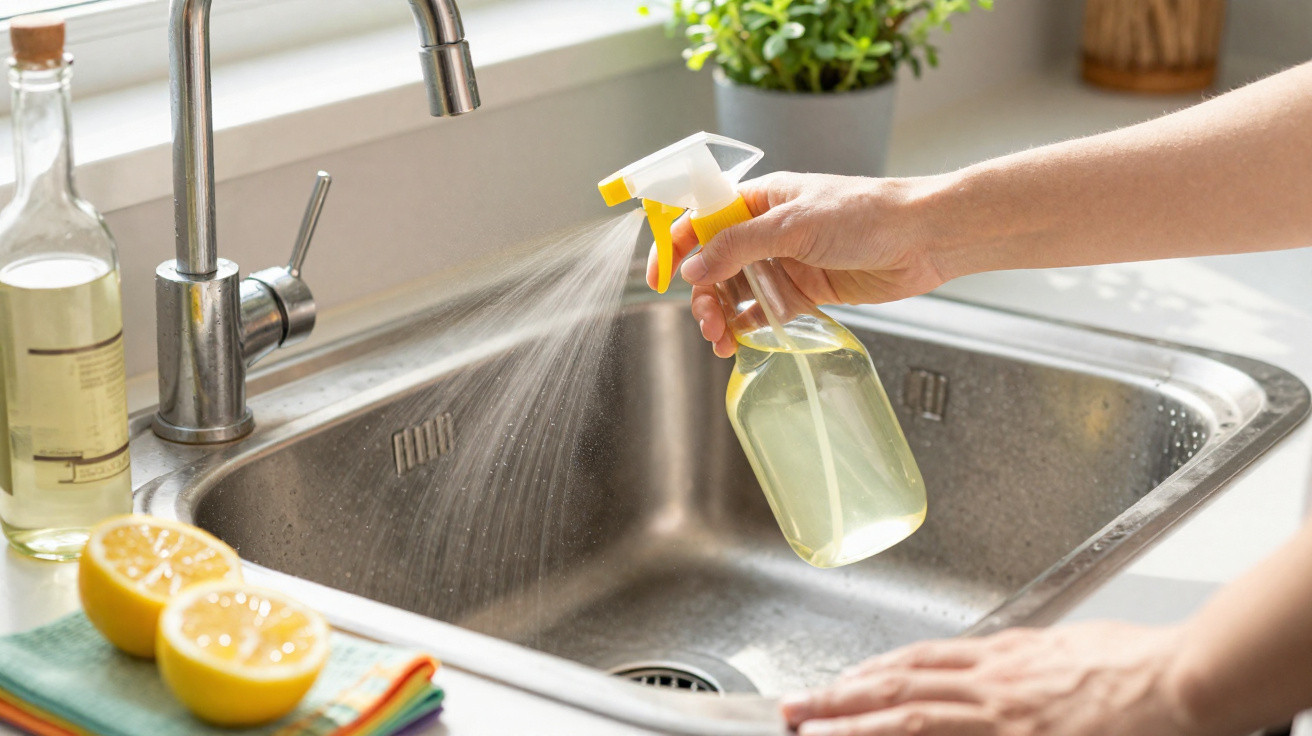
A straightforward homemade mixture gets rid of it - with no heavy scrubbing.
Anyone with hard water knows the tell-tale signs: white rings around the tap, crusty deposits along the sink edge, and dull-looking stainless steel. Many people reach straight for harsh supermarket chemicals. In reality, a simple combination of ingredients found in most kitchens is often enough - an old-fashioned tip many grandmothers used as a matter of course.
Why limescale clings so stubbornly to sinks and taps
Limescale forms when hard mains water evaporates. That water contains dissolved minerals, mainly calcium and magnesium. When the water sits and then dries, those minerals are left behind as a pale, rough layer on metal, ceramic, or stainless steel.
It becomes especially troublesome in spots that are constantly getting wet: around the base of the tap, along the rim of the bowl, and near the plughole. Each use leaves behind a very thin new layer. Over time, that builds into a hard crust that hardly reacts to everyday cleaners.
Kitchens are often hit the hardest. Hot pans, steam, and washing-up with hot water - temperature changes speed up the minerals’ crystallisation. That’s why limescale can build up far faster than, say, on the basin in a guest loo.
Plenty of cleaning products promise quick fixes but can be too aggressive. Strong chemical descalers may damage surfaces, especially delicate finishes such as copper, brass, or brushed metal. They can also irritate hands and airways and are less friendly for the environment.
"If you dissolve limescale with a mild acid mixture, you protect taps, your health and wastewater - and you avoid hours of scrubbing."
The classic grandma mix: vinegar and lemon working together
The approach older generations relied on is a blend of household vinegar, water, and freshly squeezed lemon juice. There’s no mystery to it - it’s straightforward chemistry. Vinegar provides acetic acid and lemon provides citric acid; both attack the alkaline compounds in limescale and gradually break them down.
Used together, these two acids are noticeably more effective than either ingredient on its own. At the same time, the solution stays gentle enough not to ruin taps or the sink, as long as you use it correctly.
How to make the anti-limescale mix, step by step
- Measure out 250 millilitres of white household vinegar
- Add 250 millilitres of water
- Squeeze the juice of one medium fresh lemon and stir it in
- Mix briefly until the liquids are well combined
- Warm the solution in the microwave for about 30 seconds
- Pour into a clean spray bottle
Heating isn’t just a gimmick: in a warmer solution, the acid molecules move faster and penetrate the limescale layer more effectively. That makes the crust loosen more quickly and with less effort.
A spray bottle also helps you apply the mix precisely where it needs to work: around the tap base, into gaps near the plughole, and along awkward edges. You also avoid wasting liquid.
Using it properly: how the limescale almost disappears on its own
Preparation: remove heavy grime first
Before using the vinegar-and-lemon solution, clear away food residue, greasy marks, and loose dirt. A quick wipe with ordinary washing-up liquid or an all-purpose cleaner is usually enough.
The reason is simple: if the acid hits grease or crumbs first, it reacts there rather than on the limescale. The effect is dulled, and the crust stays put.
Spray, wait, wipe
- Roughly dry the surface or squeegee it off.
- Spray all limescaled areas generously - including underneath and from the sides where you can reach.
- Leave for at least 20 minutes; longer is better for thick layers.
- Wipe with a damp microfibre cloth.
- For tight spots, use a soft old toothbrush.
During the waiting time, the acid reacts with the minerals in the limescale and breaks down its structure. That’s why the deposit can be removed with minimal pressure instead of being laboriously scrubbed.
If you’re dealing with very stubborn rings, soak some kitchen roll in the mixture, lay it over the area, and leave it in place for the 20 minutes. Keeping the surface consistently wet boosts the effect.
Rinse and dry - the crucial final step
After wiping, rinse the treated area thoroughly with clean water. This removes both loosened limescale and any remaining acid.
Then dry everything immediately with a clean cloth. This prevents new water spots and creates that “freshly polished” shine. With stainless steel and chrome in particular, it makes a visible difference.
"The mixture dissolves the limescale - drying afterwards keeps the surface free of new marks for longer."
Prevention: stop limescale coming back with minimal effort
If you’d rather not face a crusted-over tap every time, you can reduce the work significantly. A simple routine is enough to prevent build-up.
- Apply the vinegar-and-lemon mix briefly once a week
- After heavy washing-up, quickly dry the tap and sink
- Unscrew tap aerators (outlet screens) regularly and soak them
- Avoid areas where water constantly sits; for example, squeegee edges regularly
If your water is extremely hard, you might also consider a water filter or a small water softener. That reduces the amount of calcium and magnesium in your mains supply and protects not only taps but also the kettle, dishwasher, and washing machine.
Where the mix also works - and where you should be careful
The vinegar-and-lemon solution isn’t just useful for the kitchen sink. It also tackles limescale effectively in places such as:
- Bathroom taps
- Shower heads and shower hoses
- Limescale lines around the washbasin
- Small limescale drips along tile edges
Even so, a bit of caution is important. Very sensitive natural stones such as marble, limestone, or certain types of slate don’t tolerate acid well. Dull patches or discolouration can appear. The same can apply to some special coatings, including certain designer tap finishes.
One simple rule helps: if you’re unsure, test the mixture on an inconspicuous spot first. If the surface stays unchanged, it’s usually safe to use.
Why microfibre cloths and toothbrushes make such a difference when cleaning
The right solution is only half the story; the tools matter just as much. Microfibre cloths have very fine fibres that pick up and hold dirt particles effectively. Combined with the acid mixture, they remove remaining traces of limescale particularly well.
A soft toothbrush reaches edges, seams, and recesses that a cloth can’t get into: around the tap base, at the transition between the plughole and the bowl, and inside the threads of removable screens and inserts. These are the places where limescale often forms first and proves most stubborn.
How to reduce limescale build-up in everyday life
A few small habit changes can noticeably cut down limescale. Give the sink a quick rinse with cold water after washing up, run a towel over the tap and sink rim once, and avoid standing water in the bowl and drain whenever possible - these steps take seconds but save a lot of cleaning later.
It’s also worth looking elsewhere in the home: the same deposits that irritate you at the sink also build up in the kettle, steam iron, or coffee machine. Acids are used there too - often in the form of pricey descalers. The principle is identical: dissolve minerals with acid before they permanently damage pipes and surfaces.
This old kitchen blend of vinegar, water, and lemon shows just how effective simple household remedies can be. It cuts down on harsh chemicals, costs next to nothing, and can be mixed in minutes. And it delivers what many people want: clean taps and a gleaming sink - without hours of scrubbing.


Comments
No comments yet. Be the first to comment!
Leave a Comment