

Across large parts of Europe, there’s a quietly shared, low‑tech trick among homeowners that keeps PVC and aluminium roller shutters looking cleaner for months on end - even after storms - without resorting to a pressure washer or hours of scrubbing.
Why roller shutters get filthy so fast
Roller shutters are positioned exactly where airborne muck eventually ends up: on the outside of the property, exposed to wind and rain throughout the year.
Rainwater is rarely “clean”. As it falls, it picks up limestone, particles from pollution, traffic soot and even tiny oily residues from nearby roads or chimneys. Once the water evaporates, whatever it carried is left behind.
On PVC and aluminium, these deposits build up in layers. With time, they form a flat, dull film that attracts and holds even more dirt. That’s why shutters that started out bright white can gradually look grey, marked or streaky - particularly on streets with heavy traffic.
Many common cleaning habits can actually accelerate the problem. Harsh detergents, bleach sprays or abrasive scouring pads may create microscopic scratches. Those fine marks leave the surface slightly rougher, so the next breeze deposits dust that clings more readily.
Roller shutters do not only look dirty because of pollution; they often re‑soil quickly because previous cleanings stripped away any protection and roughened the surface.
As the surface becomes a little more porous, it takes more effort to get it clean again. That often leads to harder scrubbing and stronger products, which keeps the cycle going. Over the long term, this can also dull colours and contribute to weakened seals.
The three‑ingredient mixture that does the heavy lifting
With that in mind, it’s easy to see why a gentler method that lasts longer appeals. The blend many DIY‑minded homeowners use is remarkably basic: warm water, liquid black soap, and white vinegar.
What goes into the bucket
- 5 litres of warm water
- 2 tablespoons of liquid black soap
- 1 glass of white vinegar
Black soap is a traditional, plant‑based cleaner widely used in France and North Africa. It contains natural surfactants that bind to greasy grime and lift it away without attacking the PVC or the aluminium beneath.
White vinegar is mildly acidic, which helps break down mineral staining left behind by hard water and rainfall. It also loosens limescale traces responsible for those pale, stubborn drip lines down the slats.
Using warm water helps the ingredients spread easily and penetrate built‑up dirt, so the shutters can be cleaned with minimal effort.
This three‑ingredient mix both cleans and leaves behind a subtle film that slows down how quickly dirt sticks back onto the shutters.
How to apply it without wrecking your back
At ground level, it’s a simple job. For upstairs shutters, a telescopic handle fitted with a microfibre head is safer and quicker than leaning out with a sponge.
Use the following approach:
- Lower the roller shutter fully so every slat is accessible.
- Brush away cobwebs and loose dry debris using a soft brush or dry cloth.
- Dip a sponge or microfibre cloth into the prepared solution, then wring it out slightly.
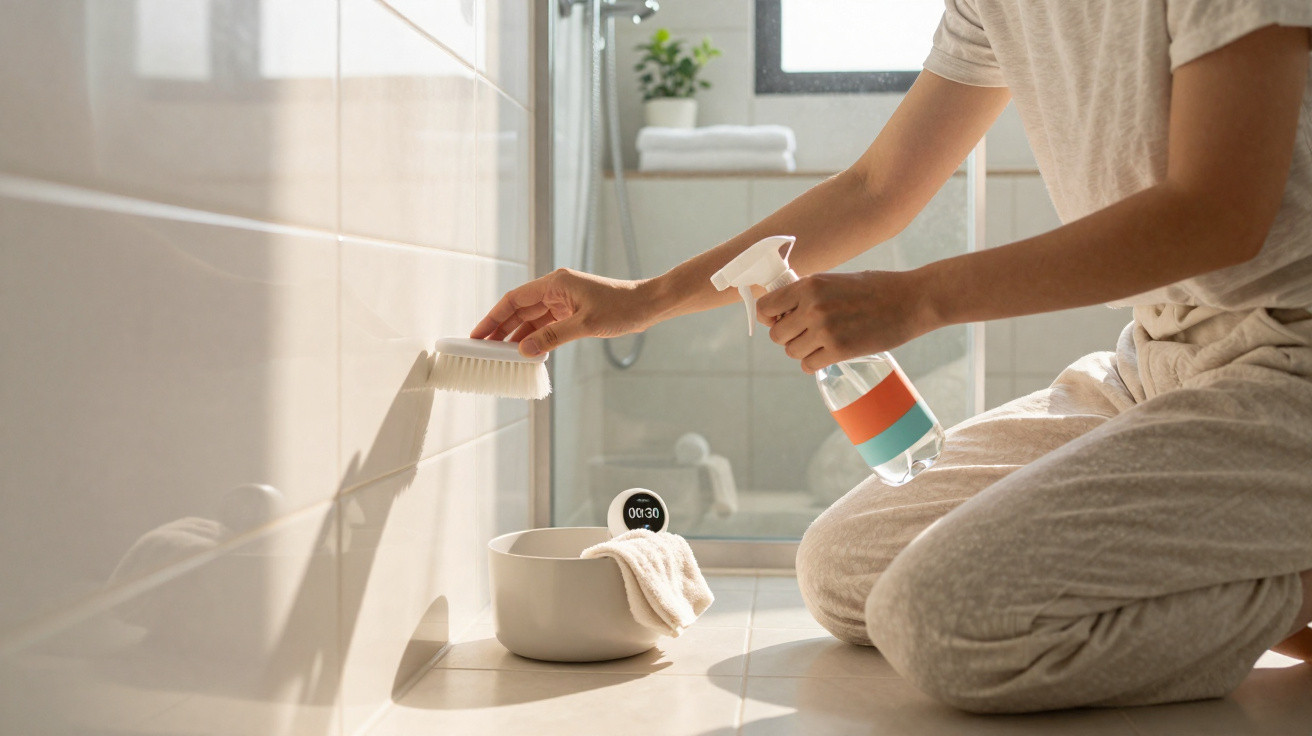
- Wipe from the top down, without heavy pressure. Allow the mixture to sit on each section for a couple of minutes.
- Rinse using clean water - either a gentle hose spray or a second cloth dampened with fresh water.
- Let it air‑dry, or dry with a clean microfibre cloth to prevent fresh water marks.
That short wait before rinsing matters. Over those few minutes, the vinegar works on mineral residue while the black soap surrounds oily particles, allowing them to lift away with very little rubbing.
How long the protective effect lasts
Once you’ve rinsed and dried, a very fine, almost invisible layer from the black soap remains on the shutter. It feels smooth and is slightly hydrophobic.
On a surface like that, dust struggles to take hold. Raindrops run down more evenly, taking some new dirt with them instead of leaving heavy streaks.
Homeowners who use this method often halve the number of big cleaning sessions needed each year for their shutters.
If the façade faces a busy road, the improvement is easy to spot. Rather than dark marks returning after each storm, the shutters are more likely to stay evenly coloured for weeks - sometimes months - depending on the local weather and pollution levels.
For many households, using this gentle mixture around twice a year - usually in spring and autumn - is sufficient. In between, a quick wipe with warm water can deal with the odd mark, particularly around window sills where grime tends to collect faster.
Why you should avoid pressure washers and harsh chemicals
When dirt looks thick on upstairs shutters, a pressure washer can seem like the obvious solution. It removes grime immediately, but it also introduces several hazards.
| Method | Main benefit | Main risk |
|---|---|---|
| Pressure washer | Very fast cleaning | Can damage seals, paint and mechanisms |
| Bleach or ammonia cleaners | Strong stain removal | Fades colour, attacks PVC and aluminium surface |
| Black soap + vinegar mix | Gentle clean and light protection | Needs a short contact time before rinsing |
A high‑pressure jet can drive water into the shutter box, reach moving parts, or soak the insulating foam inside the slats. Over time, that can lead to rust, squeaking or warping.
Aggressive chemical products cause different damage. Bleach and ammonia can react with plastics and painted finishes, leaving light patches, streaks or a rough texture that indicates the surface has been affected - even if it appears cleaner initially.
The three‑ingredient approach avoids these issues. The work is done by mild chemistry rather than brute force. The materials are preserved, along with any factory finish intended to resist UV exposure.
Real‑life scenarios: when this hack saves you the most time
If you live near main roads, rail lines or industrial areas, soot and fine particles can settle quickly on outdoor surfaces. With standard methods, keeping roller shutters looking respectable can become a monthly job.
Thanks to the protective film left by black soap, those same homes can usually extend the time between deeper cleans. In practice, many people move from six or seven heavy scrubbing sessions a year down to two or three, with small touch‑ups after major storms.
For coastal properties, salt spray combines with sand and clings stubbornly to PVC. The mild acidity of white vinegar helps dissolve salt residue, while the gentle surfactants in black soap deal with oily traces from boats or nearby roads.
Landlords and building managers can benefit too. In a block of flats with dozens of roller shutters, shaving just a few minutes off the time spent on each window quickly adds up to hours saved across an entire façade.
Extra tips for safer, longer‑lasting shutters
Roller shutters aren’t purely decorative. They contribute to insulation, security and noise reduction, so keeping them in good order helps them do all three effectively.
Alongside cleaning, a brief check each time can help you avoid expensive fixes. Watch for slats that are starting to warp, end caps that are cracked, or rubber seals that are beginning to crumble. Spotting these early makes it easier to replace small components before a shutter jams completely.
It’s also worth noting the role of water hardness. In areas with very hard water, limescale marks are more common. In those locations, including vinegar in the mix is especially helpful, and rinsing with collected rainwater (if available) can further reduce fresh mineral deposits.
Some homeowners use the same three‑ingredient mixture on other exterior items too, such as PVC window frames, plastic garden furniture or aluminium railings. The idea is unchanged: clean gently and leave a faint protective layer, without scratching or stripping the material.
Used sensibly - two or three times a year, with soft tools and without pressure jets - this approach can help extend the life of roller shutters, keep façades looking brighter and dramatically reduce the dreaded weekend scrubbing sessions that few people enjoy.


Comments
No comments yet. Be the first to comment!
Leave a Comment