
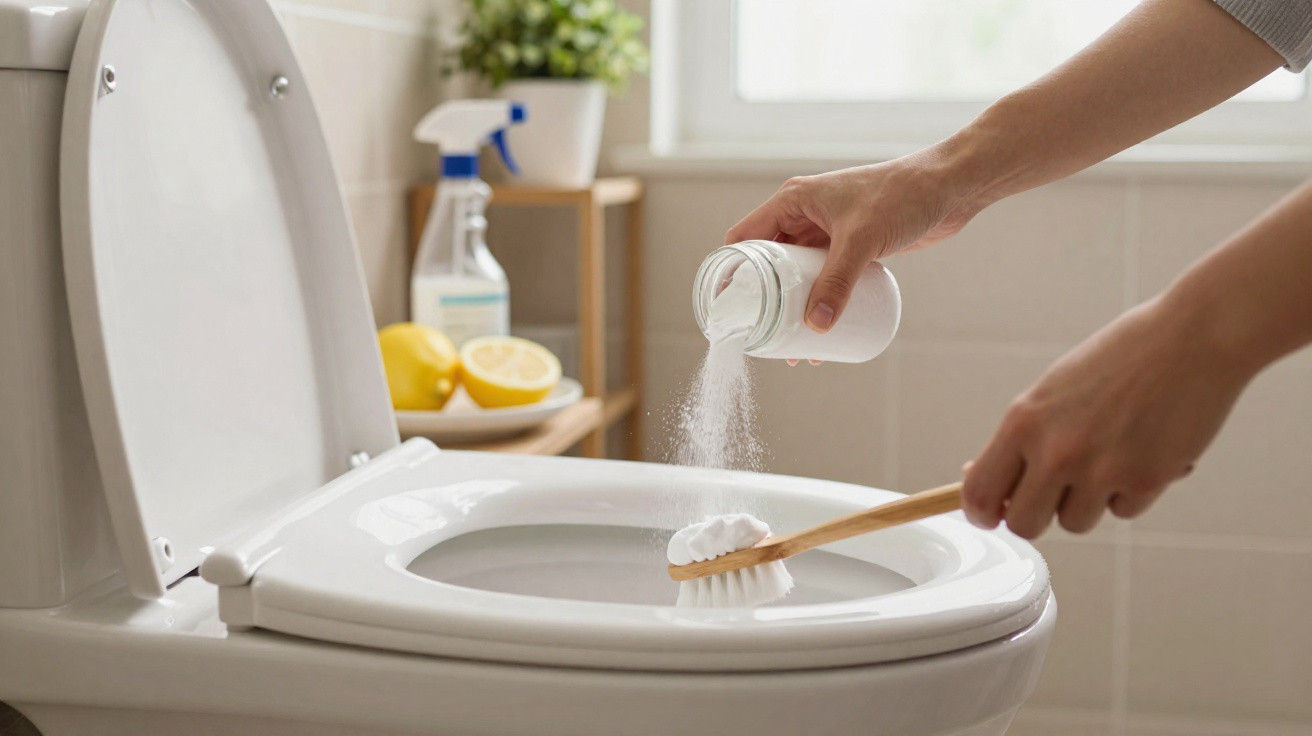
Sprinkling baking soda into the toilet once a week can help neutralise smells, lift light grime and reduce surface marks that standard disinfectant does not always tackle on its own. Because baking soda acts as a mild abrasive and a deodoriser, it is handy for keeping the ceramic fresh between deeper cleans. It is not a substitute for disinfection when there is a contamination risk, but it does help improve cleanliness around the bottom of the bowl, the inner rim and the waterline.
What does baking soda fix inside the toilet?
Baking soda mainly targets odours, organic residue and dirt that clings to the porcelain. While many disinfectants mask smells and lower the number of microorganisms, baking soda helps break down the dull film that holds odour and makes the bowl look stained.
It can also make a difference to light marks caused by standing water, minerals and everyday use. If the toilet has old rust staining or heavy limescale, results will be limited; in those situations you will need a product designed for the specific type of deposit.
What is the right amount to use?
For weekly upkeep, tip about 120 ml (roughly ½ cup) of baking soda directly into the toilet bowl. That amount is enough to cover the water and part of the inside surface without leaving piles of powder or wasting product.
A simple order of steps works best:
- Pour about 120 ml (roughly ½ cup) of baking soda into the bowl.
- Use the toilet brush to spread the powder around the inside.
- Focus brushing on the waterline and the bottom of the bowl.
- Leave it to work for 10 to 15 minutes before flushing.
- Brush again if there is still a smell or visible marks.
How long should you leave baking soda to work?
For routine cleaning, 10 to 15 minutes is the sweet spot. This gives the baking soda time to neutralise odours and soften some of the build-up before the final brush.
If the toilet smells stronger or has light staining, you can extend the time to 30 minutes. For weekly use, there is no real need to leave it overnight, as the extra cleaning benefit is usually small and the routine becomes less practical.
How can you combine it with other ingredients safely?
You can pair baking soda with white vinegar to create fizzing that helps loosen grime under the rim. For best results, add the baking soda first and then pour in the vinegar-do not premix them in a container before applying.
To boost cleaning, do this carefully:
- Add about 120 ml (roughly ½ cup) of white vinegar after the baking soda.
- Wait for the foam to subside before brushing.
- Leave it for another 10 minutes, then flush.
- Use citric acid instead of vinegar when limescale is more obvious.
- Never mix vinegar, baking soda or acids with household bleach or chlorine-based products.
How often should you repeat the clean?
Once a week is a sensible rhythm for bathrooms with typical use. In homes with more people, poor ventilation or highly mineralised water, you can do it twice a week, always followed by brushing and a full flush.
The best results come from consistency: baking soda for odours and light dirt, vinegar or citric acid for mineral deposits, and an appropriate disinfectant when the goal is proper hygienic disinfection. This approach keeps the toilet bowl with fewer marks, less trapped smell and less build-up on the porcelain without relying on harsh products every time.

Comments
No comments yet. Be the first to comment!
Leave a Comment