
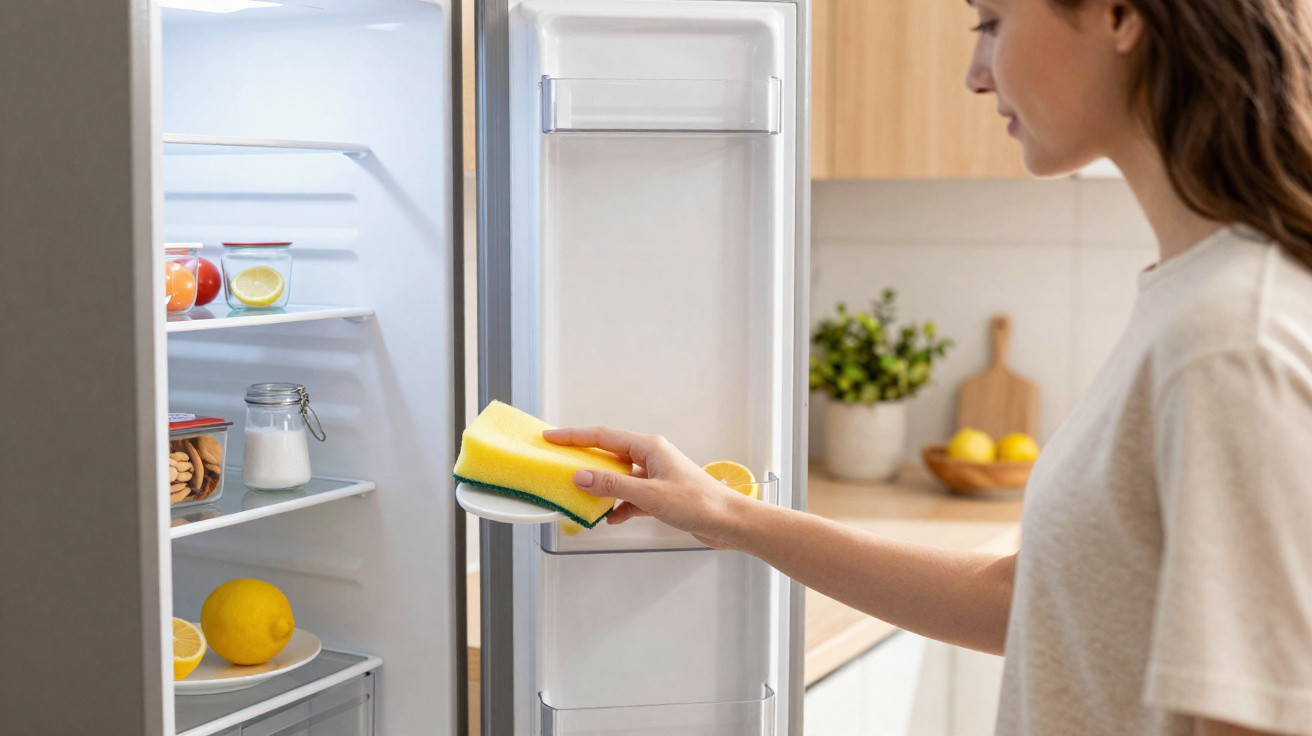
If you’re forever pulling slimy cucumbers out of the salad drawer or getting fed up with musty smells in the fridge, it’s tempting to reach for pricey specialist cleaners. Yet one very ordinary item found in most kitchens often does the job: a standard washing-up sponge. Used properly, it can help keep moisture under control, keep food fresh for longer, and noticeably extend the time between deep cleans.
Why a sponge in the fridge actually makes sense
Moisture is constantly forming inside any fridge. Each time you open the door, warmer air enters and hits the cold interior surfaces, creating condensation. That dampness then settles on the walls, glass shelves and in the vegetable drawers.
"Too much moisture in the fridge speeds up mould, spoils fruit and vegetables, and encourages unpleasant smells."
This is exactly where a sponge helps. It’s made to hold liquid. In the fridge, it absorbs some of the excess moisture from the air and from surfaces. With a drier environment, you’ll typically notice several benefits:
- Vegetables are less likely to rot and stay crisp for longer.
- Water droplets form less often on glass shelves and interior walls.
- Smells from strongly scented foods spread less intensely.
- Bacteria and mould have poorer conditions for growth.
So there’s no “magic” involved-just straightforward physics: the sponge works like a small moisture trap inside the appliance.
How to position the washing-up sponge correctly
For this to work, you can’t just wedge any old, half-falling-apart sponge into the door. Condition, placement and upkeep are what matter.
The most important ground rules
A basic household sponge is suitable-ideally without a scouring pad, or with a coloured scouring layer as long as it’s clean. Most important is the sponge’s condition at the start.
- Never use a used, greasy sponge.
Leftover washing-up liquid, grease and food residues would be more likely to increase odours and introduce germs. - The sponge must be completely dry.
A damp sponge can’t take on much more moisture inside the fridge. - Place it on a glass shelf or next to the vegetable drawer.
These areas are where moisture tends to collect most. - Don’t press it against the back wall or air vents.
Air circulation needs to stay clear so the fridge can run efficiently.
A handy spot is in the corner of a glass shelf above the vegetable drawer: it’s barely noticeable, but it can do its job undisturbed.
How often the sponge should be replaced
A common mistake is leaving this sort of helper in place for too long. In a fridge, that’s unwise: once a sponge is saturated, it not only stops working well, it can become a breeding ground for bacteria.
"As a rule of thumb: check every two days, wring it out or swap it-at the latest when the sponge clearly feels wet."
A practical routine:
- Take the sponge out of the fridge every one to two days.
- Rinse and wring it out thoroughly under hot water.
- Let it dry properly-on a radiator, for example, or in a well-ventilated spot.
- Put it back only once it is completely dry.
If you don’t want to keep drying the same sponge, keep several ready and rotate them: one dries while another sits in the fridge.
Does the trick really help with bad smells?
A sponge isn’t an air freshener and it doesn’t create a pleasant fragrance. Instead, it helps quietly by reducing one major cause of odours: moisture.
When humidity is high, food tends to spoil faster and releases stronger smells. A drier fridge slows that process down. Many households report that, with consistent use of the sponge, musty notes become much less noticeable.
One thing remains true, though:
"Without regular cleaning, even the best fridge trick is useless-the sponge is only one building block."
If spilled sauce is left stuck to a glass shelf for weeks, or forgotten leftovers sit in the back corner, you won’t get a fresh-smelling fridge just because a sponge is inside.
How the sponge works alongside simple household remedies
Cleaning professionals often rely on a mix of moisture control and natural odour binders. These options are particularly tried and tested:
- Sodium bicarbonate (the ingredient in baking powder): place some in an open bowl on a shelf; it absorbs odours very effectively.
- Ground coffee: also in a small bowl; useful for strong smells, such as fish or cheese.
- Lemon slices: mildly deodorising and can give a short-term fresh scent.
In this set-up, the sponge’s role is to dampen humidity, while powders and bowls capture airborne substances that carry odours.
How to clean the fridge so the trick works
To get the most out of the sponge approach, it’s best to start with a properly cleaned appliance. Clean thoroughly once, then the sponge and household remedies help you keep that standard for longer.
| Step | What to do |
|---|---|
| 1 | Empty the fridge, switch it off, and put sensitive items into a cool bag. |
| 2 | Remove all shelves, drawers and compartments, then wash with warm water and a little mild washing-up liquid. |
| 3 | Wipe the interior walls with a mixture of water and a small amount of sodium bicarbonate. |
| 4 | Let everything dry, and only then restock the fridge. |
| 5 | Finally, place the dry sponge back in its spot inside the fridge. |
Repeat this process every few months and keep up light cleaning in between, and you’ll usually find unpleasant smells develop far less often.
Which sponge types are suitable-and which aren’t
Not every sponge is a good fit for the fridge. Some types bring more drawbacks than benefits.
Suitable options
- Plain foam sponges with no added fragrances
- Natural cellulose sponges with no antibacterial coating
- Cleaning sponges without a highly abrasive scouring surface
They absorb a lot of water, rinse out easily and tend to dry relatively quickly.
Better left in the cleaning cupboard
- Strongly perfumed sponges: the scent can transfer to food.
- Sponges with silver or copper coatings: not necessarily dangerous, but unnecessary in the fridge.
- Old, discoloured kitchen sponges: they introduce germs straight into the appliance.
If you want to be cautious, buy a small pack of sponges just for the fridge and label them clearly.
Risks, limits and sensible add-ons
As helpful as it is, a sponge doesn’t replace careful storage. Open bowls of onions, half-wrapped cheese, or meat in leaky containers will still smell-and spoil more quickly-even if the air is drier.
A few simple habits make a real difference:
- Store food in containers with tight-fitting lids.
- Use leftovers promptly or freeze them.
- Keep an eye on the fridge temperature (around 4 °C is ideal).
- Keep vegetables in the designated drawers rather than scattered loosely across the fridge.
If you already use moisture absorbers in cupboards, you’ll recognise the same principle here-except using a sponge in the fridge is far cheaper and more flexible.
This trick is also particularly useful for smaller households or people cooking for one. Food often sits for longer because not everything is used immediately. Anything that slows spoilage and reduces odours can save money over time. A simple sponge costing only a few pence can help you throw away less and keep the fridge noticeably fresher.




Comments
No comments yet. Be the first to comment!
Leave a Comment