
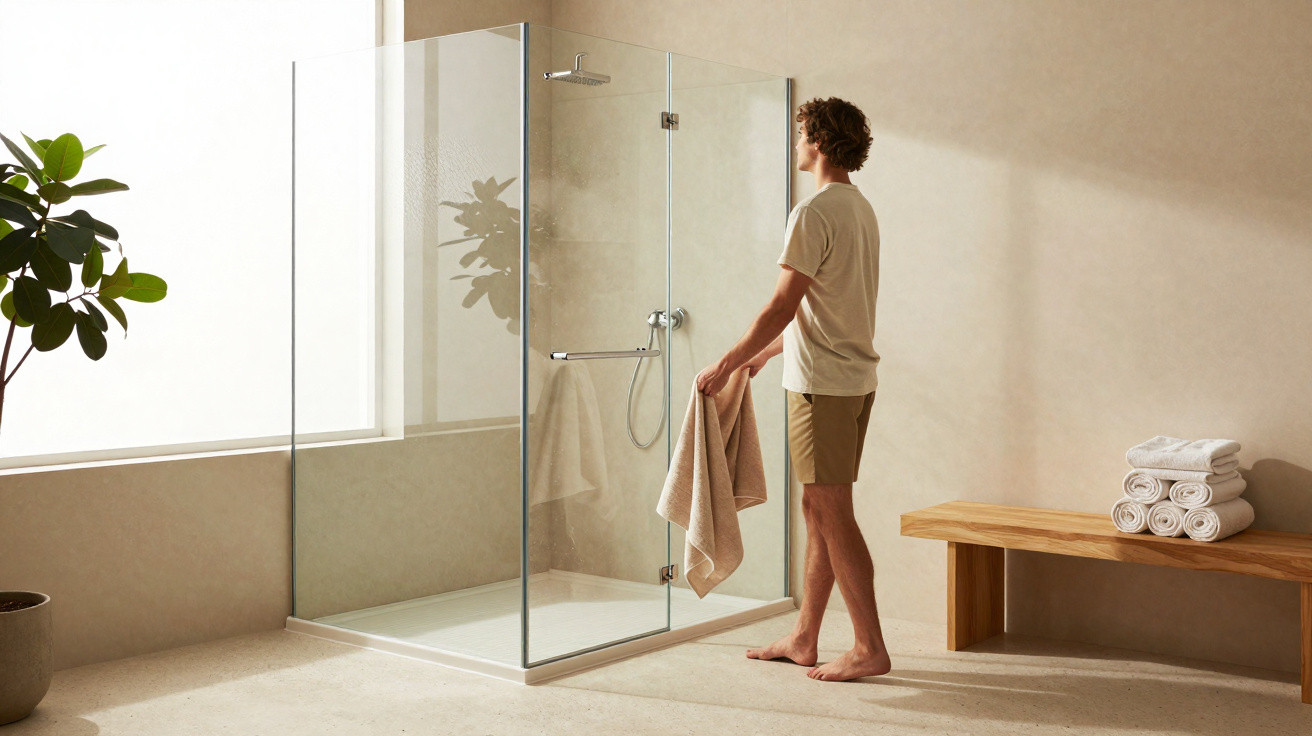
The traditional bathroom partition is increasingly being replaced by more open, easy-to-clean solutions with a lighter visual feel. In 2026, walk-in showers, continuous finishes and fixed panels with textured glass are emerging as options that make the room feel larger, improve movement, and bring the bathroom closer to a spa-style look.
Why is the traditional bathroom partition falling out of favour?
A bathroom partition with lots of tracks, frames and doors can look heavy, collect grime in corners and undermine the sense of space. In small bathrooms this is even more noticeable, because every visual barrier makes the room feel more closed-in.
The newer approaches aim to reduce interruptions between the dry zone and the wet zone. The focus is on making the shower easier to use, cutting down on cleaning effort, and creating a brighter feel, with light travelling more freely across walls, flooring and the vanity.
How do open or walk-in showers work?
Open showers-also known as walk-in showers-remove sliding doors and bulky structures. They work best when the floor has a properly calculated fall, a suitable drain, and a slip-resistant finish in the showering area.
- They make the bathroom appear bigger because they reduce breaks in the line of sight.
- They make it easier to step in and out, with no floor tracks.
- They reduce places where soap scum and slime build up, especially in corners and rubber seals.
- They require careful planning to prevent splashes spreading beyond the wet area.
Why have continuous materials become so popular?
Continuous materials-such as microcement, natural stone and finishes with minimal joints-help create a surface that looks cleaner to the eye. The practical benefit is upkeep: less grout means fewer areas that can darken, develop mould, or trap soap residue.
This trend also changes the room’s thermal and visual feel. Sand, beige, stone-grey, soft terracotta and olive green can make a bathroom feel less cold than clinical white, particularly when paired with light wood, matt metalwork and indirect lighting.
When is it worth choosing fixed panels and textured glass?
Fixed panels are a strong option for anyone who doesn’t want to give up separation around the shower entirely. They block some splashes without fully enclosing the shower, and frameless glass keeps the look lighter than a conventional bathroom partition.
- Clear glass: recommended to make small bathrooms feel more spacious.
- Fluted glass: keeps a little more privacy without cutting off the light.
- Frosted glass: softens the view into the shower and suits minimalist décor.
- Frameless fixed panel: reduces hardware and makes day-to-day cleaning simpler.
What to check before replacing the partition
Before removing a bathroom partition, review three technical points: the floor fall, the drain position and ventilation. Without these basics, the change can create problems with damp, splashes onto the vanity unit and slippery flooring outside the shower area.
The best outcome comes when aesthetics and everyday use are aligned: an open shower where there’s enough space and correct drainage, continuous materials where easy cleaning matters most, and a fixed panel where water still needs to be contained. This way, the bathroom feels larger, safer and more in tune with real daily routines-not just good in photos.
Comments
No comments yet. Be the first to comment!
Leave a Comment