
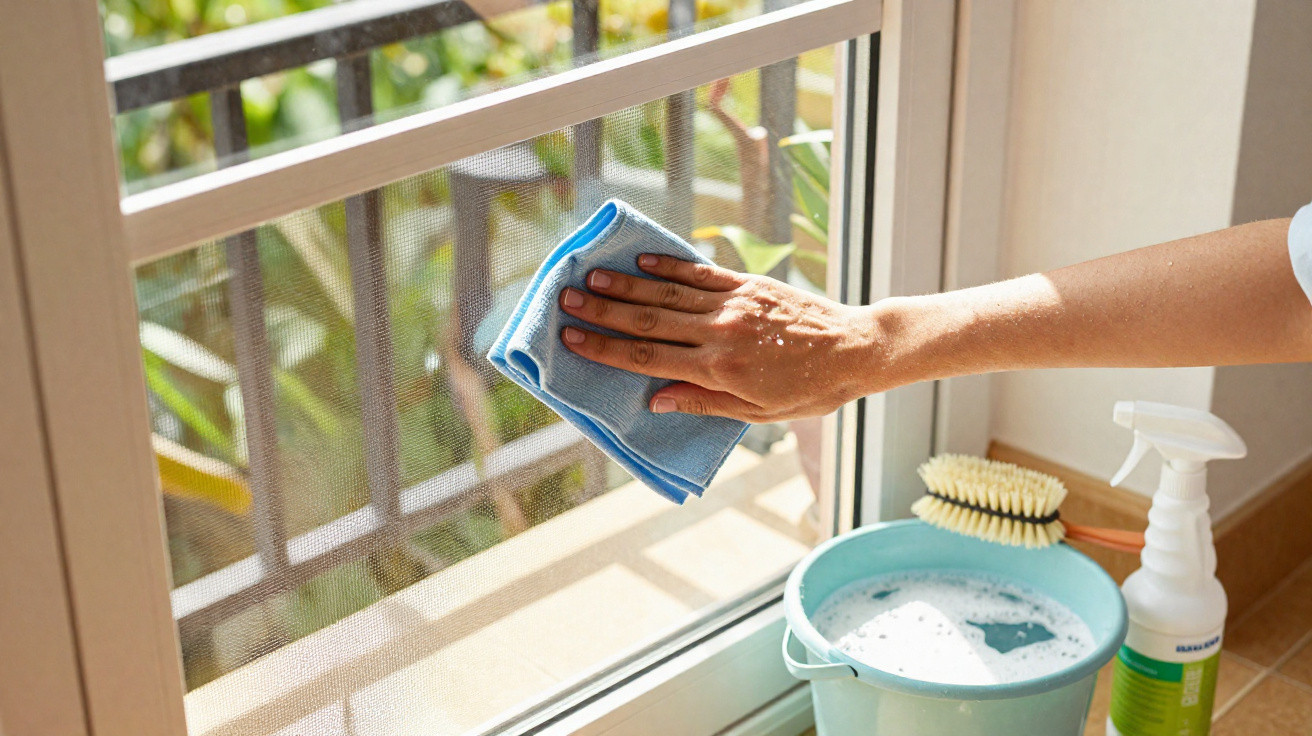
Insect screens help keep mosquitoes and other unwanted visitors outside. Over time, however, they collect dust, pollen and other particles that can restrict airflow. Cleaning them regularly keeps the mesh working properly and helps rooms feel fresher and better ventilated.
Why do insect screens collect so much dirt?
Even when they look clean at a glance, screens act like a natural filter. Dust, soot, pet hair, pollen and tiny insects get caught in the mesh, building up into a film that reduces air movement and can make the area look less tidy.
As well as improving ventilation, routine cleaning can extend the screen’s lifespan by preventing grime from becoming embedded in the fibres and harder to remove over time.
How to clean an insect screen without damaging it
It’s best to remove loose dust before washing so the dirt doesn’t spread or turn into sludge. Then mix water with a mild washing-up liquid, and use a soft-bristled brush or a gentle sponge to clean the entire surface carefully.
Once you’ve finished, rinse with clean water and allow the screen to air-dry fully before putting it back in the window or door.
- Remove excess dust using a vacuum cleaner or a soft brush.
- Mix a solution of water and mild washing-up liquid.
- Gently scrub the screen using light strokes.
- Rinse to remove any soap residue.
- Wait until it is completely dry before reinstalling the screen.
How often is it worth cleaning insect screens?
How often you need to clean them depends on where your home is. Properties near busy roads, gardens or dusty areas usually see faster build-up, so screens will need attention more frequently.
As a general rule, a thorough clean every two or three months is enough to keep air circulating well. If you notice visible dust or a drop in airflow, it’s sensible to bring the clean forward.
- Give the screen a quick clean whenever you notice dust building up.
- Wash it thoroughly every two or three months.
- Check for tears while you clean.
- Avoid abrasive products or very stiff brushes.
- Let the screen dry completely before refitting it.
Is it worth adding insect screen cleaning to your household routine?
Keeping insect screens clean is a simple habit that can improve airflow, reduce dust build-up and help windows look better for longer. Regular maintenance also makes it easier to spot small issues before they affect insect protection.
Setting aside a few minutes to clean the screens can make rooms more comfortable and ensure they keep doing their job without restricting ventilation. With basic products and a gentle approach, it’s an easy task to fit into a normal household routine.



Comments
No comments yet. Be the first to comment!
Leave a Comment