
Among the products most commonly used in household routines, bicarbonate of soda stands out for its ability to neutralise odours and help lift grime. Meanwhile, hydrogen peroxide at a low concentration is often linked with gentle disinfection and light surface brightening. Together, they form a popular pairing for anyone looking for cleaning options that are straightforward, inexpensive, and a little more versatile than many ready-made shop products.
What is the mixture of bicarbonate of soda and hydrogen peroxide used for?
The blend of bicarbonate of soda and hydrogen peroxide is typically used to boost cleaning and whitening in places where dirt clings easily, such as grout lines, floors, and kitchen items. 3% hydrogen peroxide adds a moderate disinfecting effect, while bicarbonate of soda provides mild abrasion and helps to neutralise odours.
In everyday use, this combination often turns up in tasks such as scrubbing grout, refreshing saucepans and cutlery, and supporting the removal of marks on light-coloured fabrics. When used correctly, it can deliver noticeable results-particularly on surface-level dirt, recent discolouration, and lingering smells on washable surfaces.
Watch a video on the YouTube channel Almanaque SOS discussing the chemical power of homemade fizzy mixtures for brightening surfaces and shifting built-up grime from the hardest-to-reach corners of the home:
https://www.youtube.com/watch?v=M9mF2c5R9U4
How do you prepare and apply bicarbonate of soda with hydrogen peroxide safely?
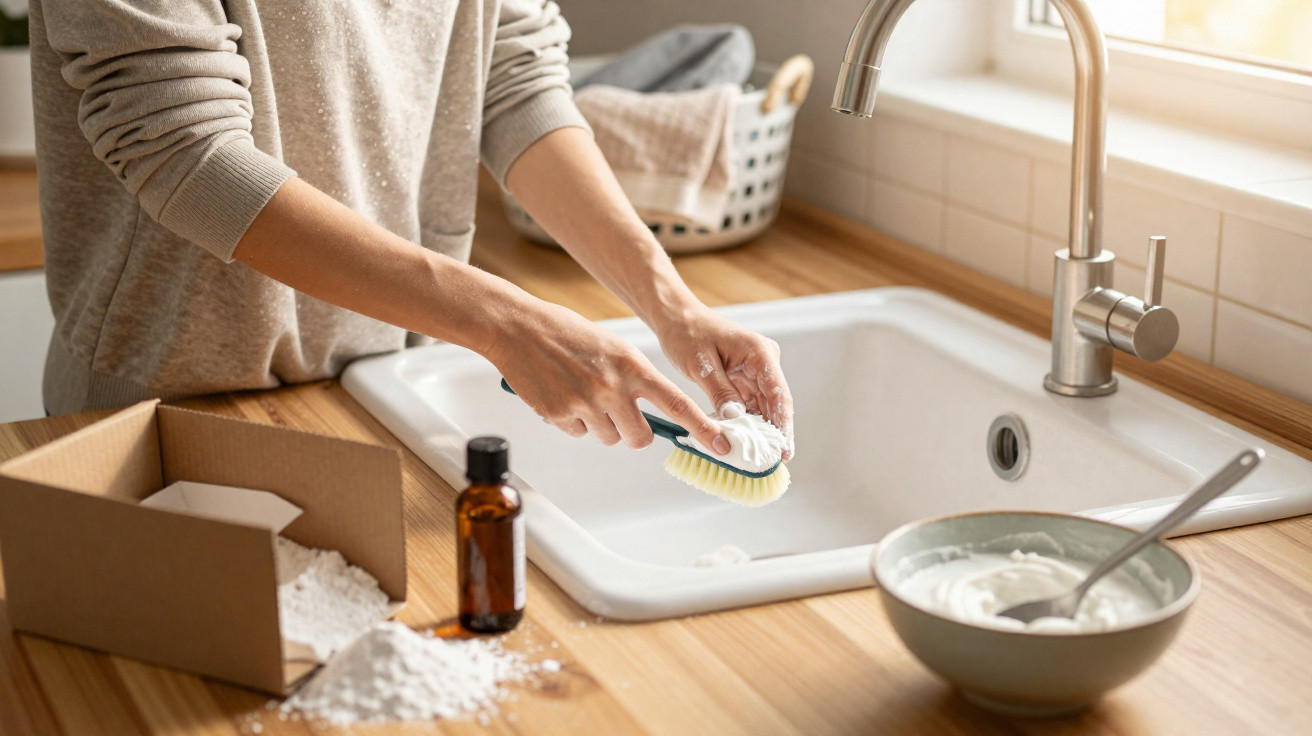
If you want to try this mixture at home, the most common recommendation is to use 3% hydrogen peroxide, which is readily available from pharmacies. Generally, you make a paste using equal parts bicarbonate of soda and hydrogen peroxide, mixing until it becomes creamy; wearing gloves is advisable for longer cleaning sessions or when working across larger areas.
Once the paste is ready, it is usually applied with a stiff-bristled brush to grout and other hard-wearing surfaces, left for a few minutes, then scrubbed and thoroughly rinsed. For kitchen items such as baking trays and pans, the usual approach is to spread the paste, wait briefly, scrub with a sponge, and rinse everything away under running water-always testing first on more delicate materials.
How do you use bicarbonate of soda and hydrogen peroxide on clothes and fabrics?
For laundry care, many people use this combination on white or pale items that have yellowed or developed specific stains. A common method is to dissolve one or two tablespoons of bicarbonate of soda in warm water, add a moderate amount of 3% hydrogen peroxide, and soak the garments for a limited time, while always following the care-label instructions.
Certain fabrics need extra caution, as they may fade, spot, or become stiff if left in the solution for too long. To help guide use, it is worth paying close attention to these typical material considerations:
- Fully white items tend to respond better to gentle brightening.
- Synthetic fabrics, such as polyester, require a shorter soaking time.
- Clothing with metal embellishments or glued-on details is not suitable for soaking.
What other combinations with bicarbonate of soda can help with cleaning?
Beyond pairing it with hydrogen peroxide, bicarbonate of soda is also used with other everyday ingredients-such as dried used coffee grounds-to enhance cleaning on certain items. Used coffee grounds, once properly dried, can still help to neutralise odours slightly and provide a gritty texture that can be useful for scrubbing tougher surfaces.
By combining dried used coffee grounds with bicarbonate of soda and a small amount of water, you can create a grainy paste that some people use on pans, baking tins, and cutlery with stubborn residue-using controlled pressure and rinsing very thoroughly. With attention to the needs of each surface and the use of basic gloves, these homemade mixtures can be added thoughtfully to a routine as a low-cost, supplementary tool for organising household cleaning.


Comments
No comments yet. Be the first to comment!
Leave a Comment