
Many people spend ages scrubbing the bathroom, yet a faint toilet odour still lingers in the air. It can feel especially awkward when guests are about to arrive. The good news is that a few simple kitchen staples can neutralise smells quickly - without reaching for harsh chemicals.
Why the toilet can still smell even after cleaning
Most households clean the loo regularly with standard bathroom cleaners. Even so, an underlying odour sometimes remains. The cause is often not just the bowl itself; deposits can build up in places that are easy to miss:
- under the rim of the toilet bowl
- in tiny cracks and pores in the ceramic
- in the siphon and waste pipe
- along silicone seals and awkward spots around the base of the toilet
Smells settle into these areas and can be released again every time you flush. Many conventional cleaners mainly mask odours rather than actually binding and removing them.
"The key to a pleasant-smelling bathroom is using products that genuinely neutralise odours - not simply smother them in perfume."
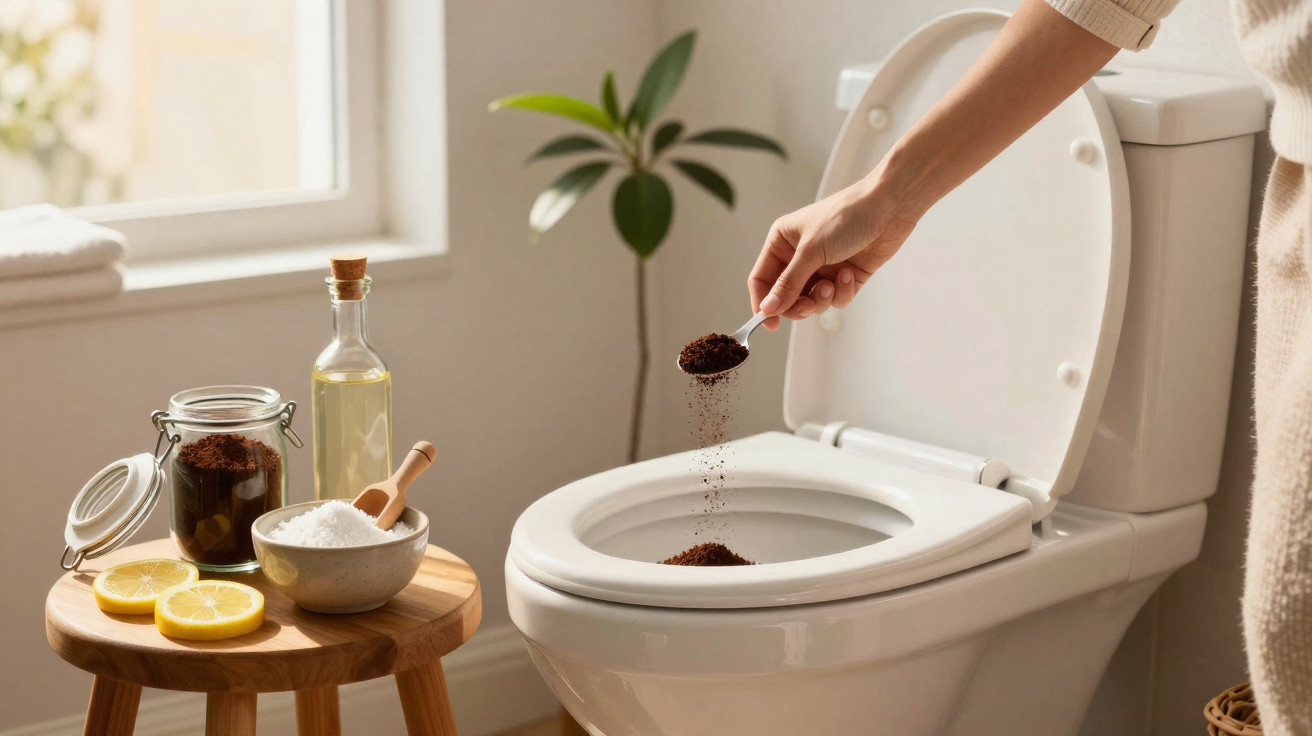
The fastest SOS fix: coffee grounds in the toilet
It may sound like a social-media gimmick, but there is a sensible reason it works: freshly ground coffee can absorb and overpower strong smells. That same trait can be put to use in the toilet.
How the coffee trick works, step by step
- Open the bathroom window briefly and flush once.
- Sprinkle 2–3 teaspoons of ground coffee (not instant) directly into the clean toilet bowl.
- Use the toilet brush to spread it around so some reaches under the rim.
- Leave it for 15 minutes - ideally with the door closed.
- Flush well once the time is up.
Afterwards, the room tends to smell pleasantly of coffee - similar to hotels that rely on fragrance in their facilities. Many people say the typical “toilet smell” is noticeably reduced for several hours.
Which coffee is best?
- Ground filter coffee: ideal, with a particularly strong aroma
- Espresso grounds: also works, but is usually more expensive
- Older coffee from a tin: still usable, though the scent will be weaker
Important: don’t tip large amounts of coffee into the loo, and don’t do it every day. Small quantities that disperse easily when flushed are generally considered unproblematic in a normal household setting.
Bicarbonate of soda and vinegar: a classic for stubborn build-up
If you’re out of coffee, or the toilet looks visibly dirty, many people fall back on a tried-and-tested pairing: bicarbonate of soda (or baking soda) and household vinegar.
How to use the mixture correctly
- Scatter about 120 ml (½ cup) of bicarbonate of soda into the dry toilet bowl.
- Pour in vinegar slowly until it starts fizzing vigorously.
- Use the brush so the foam coats the sides of the bowl.
- Leave it for at least one hour - overnight is better.
- The next morning, brush again and flush thoroughly.
"The combination of bicarbonate of soda and vinegar loosens many deposits, reducing the source of the odour directly on the surface."
This approach is particularly useful if you’re dealing with limescale, urine scale, or dark tide marks. As well as cutting smells, it can leave the bowl looking noticeably cleaner.
Citric acid: cleanliness and freshness in one go
If you dislike the sharp smell of vinegar, citric acid is a popular alternative. Sold as a powder in supermarkets, it’s effective against limescale and mineral build-up.
How to use citric acid in the toilet
- Add three tablespoons of citric acid powder to the toilet.
- Pour in a little warm water so it dissolves more easily.
- Leave it to work for around 15–30 minutes.
- Finish with the brush and flush.
The result often feels much fresher, and limescale rings may fade or disappear entirely. If you have sensitive skin, wear gloves, as citric acid can irritate.
Practical tips for a bathroom that stays fresh
A quick scent trick can help before guests arrive, but it doesn’t replace basic hygiene. A handful of routines can make a lasting difference to the air in your bathroom.
Habits that make the biggest difference
- Ventilate regularly: After each toilet use, open the window briefly; in windowless bathrooms, let the extractor fan run for longer.
- Clean the brush: The holder and the brush are often hidden sources of odour. Once a week, wash them in hot water with a little vinegar or washing-up liquid.
- Close the lid: Always shut the lid before flushing to reduce the spread of odour particles.
- Flush the drains: Now and then, run hot water and a little bicarbonate of soda through the sink and shower so smells don’t collect there.
If you have pets or small children, it’s often best to avoid heavily perfumed toilet blocks. Many are sensitive to them, and a mix of fragrance and cleaning products can unnecessarily burden the air in the room.
When home remedies are no longer enough
If a strong smell persists despite cleaning, it may point to a different issue:
- partially blocked waste pipes
- faulty or dried-out trap seals
- leaking silicone seals behind or underneath the toilet
In these situations, a fast fragrance fix may help briefly, but it won’t address the cause. It’s worth checking the installation - and if in doubt, asking a plumber to inspect the pipework.
How to combine home remedies sensibly
Coffee, bicarbonate of soda, vinegar and citric acid each shine in different ways. Used in a sensible order, they can deliver the best overall result. Here’s one possible “bathroom upgrade” routine before visitors arrive:
| Phase | Measure | Duration |
|---|---|---|
| Basic clean | Leave bicarbonate of soda and vinegar to work in the bowl | overnight |
| Descaling | Use citric acid against visible build-up | 15–30 minutes |
| Odour finish | Use coffee grounds shortly before guests arrive | approx. 15 minutes |
The key is not to mix everything together at random. Between each step, flush thoroughly once.
Risks and limits of DIY cleaning tricks
As handy as household remedies are, they do have limits. Regularly putting too much coffee in the toilet - or pouring fats from the kitchen down the loo - can contribute to build-up in the pipes over time. Highly concentrated citric acid can also damage taps and fittings if left on them for too long.
If you live in a hard-water area, you may hit the ceiling with home remedies sooner. In that case, a targeted limescale remover used at longer intervals can make sense, while coffee scent and bicarbonate of soda remain useful for routine upkeep.
Why the coffee trick is so popular
Its appeal is mainly how effortless it is: most people already have coffee at home, and the smell is familiar and pleasant to many. Unlike artificial air fresheners, it doesn’t create a “chemical” note that mixes with existing odours. As a result, the bathroom can feel instantly cleaner - even if you’ve only given the toilet an extra freshness boost.
So if you want to give guests that “hotel bathroom” feeling next time, you don’t need pricey diffusers or specialist products. One spoonful of ground coffee, a few minutes of waiting, and the unpleasant toilet smell fades into the background.
Comments
No comments yet. Be the first to comment!
Leave a Comment