
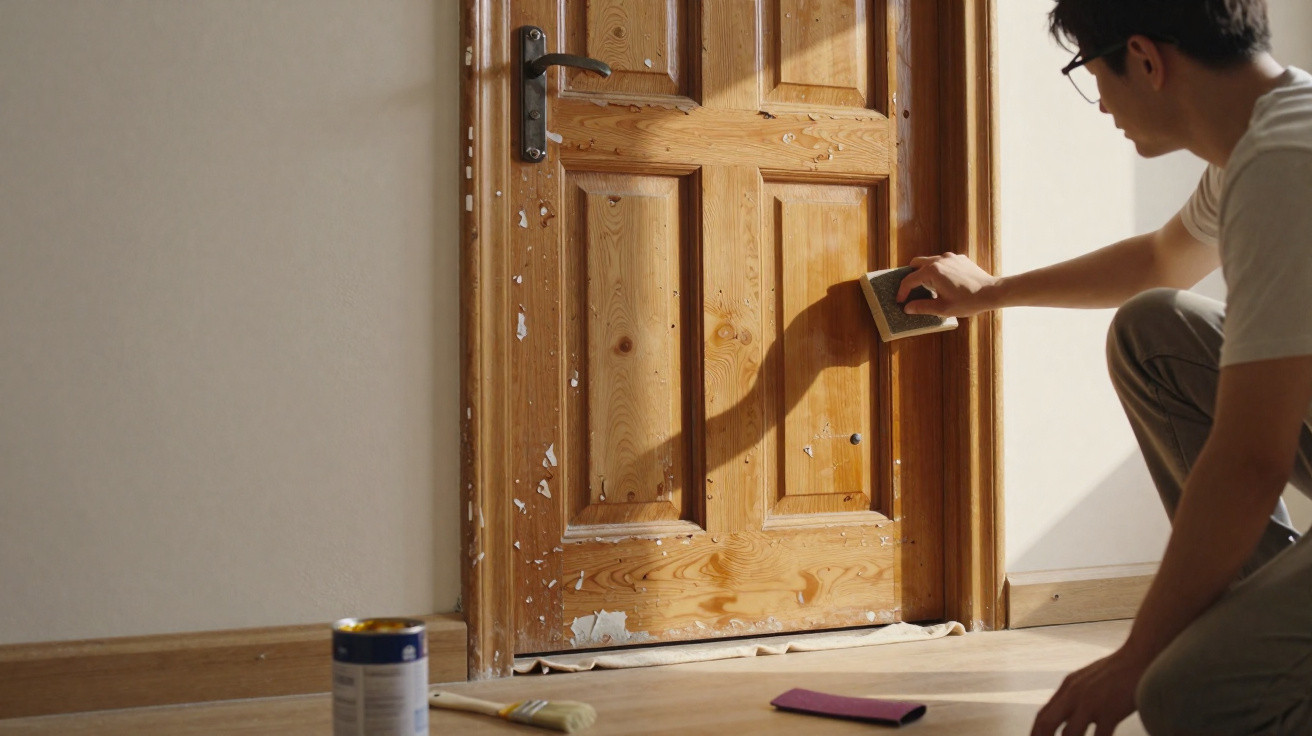
When a wooden door starts looking tired-peeling, flaking or stained-many people assume it needs replacing straight away. In plenty of situations, though, you can bring it back to life at home with straightforward methods and a few basic precautions, restoring an even finish, improving protection against moisture, and even changing the colour or overall style to suit the room.
What should you check before revitalising an old wooden door?
Before you do anything, it is worth assessing the door’s overall condition. Timber that is badly warped, has rotten sections, or is riddled with woodworm holes may need partial replacement or structural strengthening, not just a cosmetic refresh.
On the other hand, doors that are simply peeling, scratched, or have sun-damaged varnish usually respond very well to a simple renewal process. During this first inspection, noting what the existing finish is and looking for signs of moisture will help you avoid having to redo work later.
- Existing finish: paint, gloss or matt varnish, stain, or wax will affect how removal needs to be done.
- Build-up of layers: many coats of paint may mean using a chemical paint stripper.
- Moisture and staining: dark patches near the floor can signal water ingress or rot.
- Mechanical damage: chips, cracks, and holes that call for filler or localised timber replacement.
How to revitalise an old, peeling wooden door step by step
This is a job that rewards patience: each stage affects the next, especially sanding and cleaning. Even if you have never done it before, sticking to a clear order helps prevent visible sanding marks, patchy colour, and early peeling.
Remove the door, ironmongery and accessories
If you can, lift the door off the frame and support it on trestles. Take off hinges, handles, locks and pull handles, or protect everything with masking tape to stop splashes.Deep-clean the surface
Wipe with a cloth lightly dampened with water and mild washing-up liquid to remove dust and grease. If the dirt is heavier, use a soft sponge, then rinse and dry thoroughly.Sand according to the timber’s condition
To strip very worn paint or varnish, start with 60- or 80-grit paper, sanding with the grain. Then smooth it out with 120, 180 or 220 grit, removing dust between grits using a dry cloth or a vacuum.Fix imperfections
Fill deeper scratches, screw holes and small chips with wood filler close to your intended final tone. Once dry, sand level using fine paper.Choose the new finish
Pick the product based on whether the door is indoors or outdoors and the look you want:- Enamel or acrylic paint: completely covers the timber, ideal for strong, solid colours.
- Varnish: keeps the grain visible, with gloss, satin or matt options.
- Wood stain: soaks into the wood and offers better protection from sun and rain.
Apply the chosen product
In many cases it is worth applying a sanding sealer or suitable primer/undercoat before paint or varnish. Use a roller for larger areas and a brush for corners, lightly sanding between coats with 320-grit paper or finer.Let it dry and reassemble
Wait until it is fully dry, following the manufacturer’s guidance. Only then refit the ironmongery and hang the door again, avoiding knocks that could mark the fresh finish.
Watch a video on the YouTube channel How to Do It on the Building Site that goes through the complete step-by-step process for sanding and restoring old wooden doors in a very easy way.
Which precautions help the revitalised door last longer?
Afterwards, a few simple habits will help the finish stay looking good. The aim is to reduce rubbing, limit excessive water, and stick to gentle cleaning products, because these factors directly affect how long timber lasts.
- Avoid repeated banging: fit rubber door stops on the skirting board or wall.
- Manage moisture: in damp areas, use a threshold, draught strip, or a suitable bottom seal/spacer.
- Gentle cleaning: a soft cloth slightly damp with mild washing-up liquid is enough day to day.
- Planned maintenance: with wood stain and some varnishes, recoat every few years, especially on external doors.
When is it worth restoring a wooden door, and when is replacement better?
In many cases, revitalising is cheaper and more sustainable than buying a new door-particularly with solid doors or older decorative designs that are hard to source. However, if the structure is failing, a partial or full replacement may be safer and longer-lasting.
By checking carefully for warping, active woodworm, and advanced rot, you can make a more confident choice between restoring, reinforcing, or replacing. That way the door suits the space better, gains extra years of use, and keeps the distinctive appeal of well-cared-for timber.




Comments
No comments yet. Be the first to comment!
Leave a Comment