
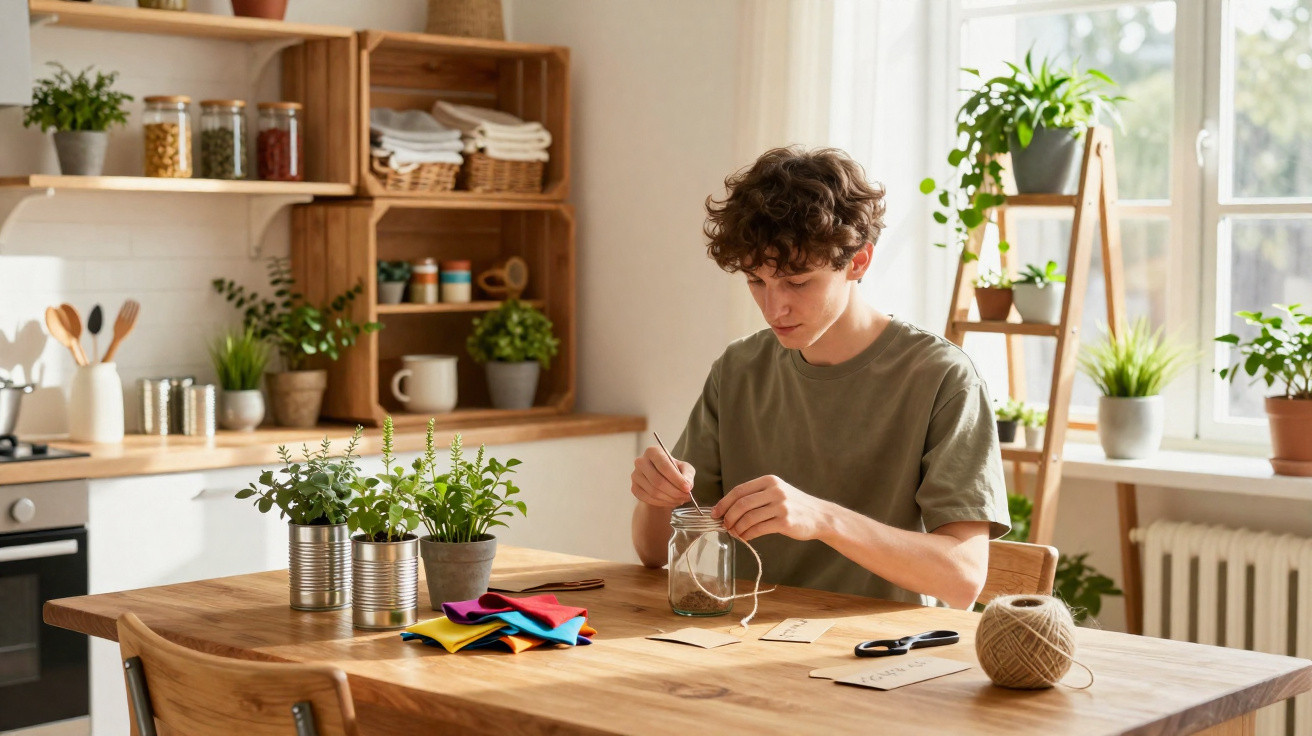
Many things that usually go straight into the bin can still be genuinely useful around the house. A handleless sieve, a dented colander, an old cake tin, a forgotten frame, a wooden crate, a bucket or an empty can can all be turned into practical solutions for organisation, décor and gardening-helping you cut waste, save money and add character to your rooms.
How do you decide whether an object can be reused at home?
Before you set anything aside to keep, check that it is sturdy and safe: avoid items with serious cracks, heavy corrosion, or broken parts that could cause injuries or failures in use. If the structure is sound, reusing it becomes a realistic option in several areas of the home.
It also helps to look at both the material and the shape. Cans, metal buckets, wooden crates, picture frames, and sieves or colanders made from aluminium or stainless steel are typically hard-wearing. Deep containers are useful for storing bits and pieces, perforated items can become holders or supports, and flat surfaces can be repurposed into wall pieces or shelves.
Which everyday objects have the greatest potential for reuse?
Certain items come up again and again because they are adaptable and easy to modify. Metal sieves can become plant supports, lightweight lampshades, or unusual wall art, while older colanders work well as planters, hanging lights, or organisers for kitchen utensils.
Cake tins and baking trays are also standout options: they can be used as decorative trays, bases for candles, or shallow shelves. Old frames, in turn, can hold mesh or thin grilles to create memo boards, jewellery organisers, and decorative panels for living rooms, hallways or a home office.
How can you combine décor, organisation and functionality?
Reuse works best when it looks good and also earns its place-especially where space is limited. A cake tin mounted on the wall can act as a small shelf for herbs and spices, and a metal sieve hung with hooks can become a panel for lightweight utensils, freeing up worktops.
If you want quick ideas that are easy to adapt, these practical options help you organise and decorate at the same time:
- Frames as organisers: with mesh or cords, they can hold earrings, photos, notes or keys.
- Stacked wooden crates: they create modular shelving for books, plants or decorative objects.
- Decorated cans: ideal as pencil pots, cutlery holders or desk organisers.
- Small buckets on the wall: fixed with hooks, they help keep bathrooms and kitchens tidy.
What precautions should you take before reusing older materials?
Before putting any reused object into service, give it a thorough clean-particularly if it has been in contact with food, chemicals or very damp areas. Washing, drying completely and sanding down rough sections lowers the risk of contamination, splinters, cuts and everyday accidents.
You should also confirm that the material can cope with the intended weight (plants, books or tools) and that there are no sharp edges, extensive rust or deep cracks. In homes with children or pets, take extra care with small parts, exposed metal points and flaking paint, adapting what you can and discarding anything that cannot be made safe.
Comments
No comments yet. Be the first to comment!
Leave a Comment