
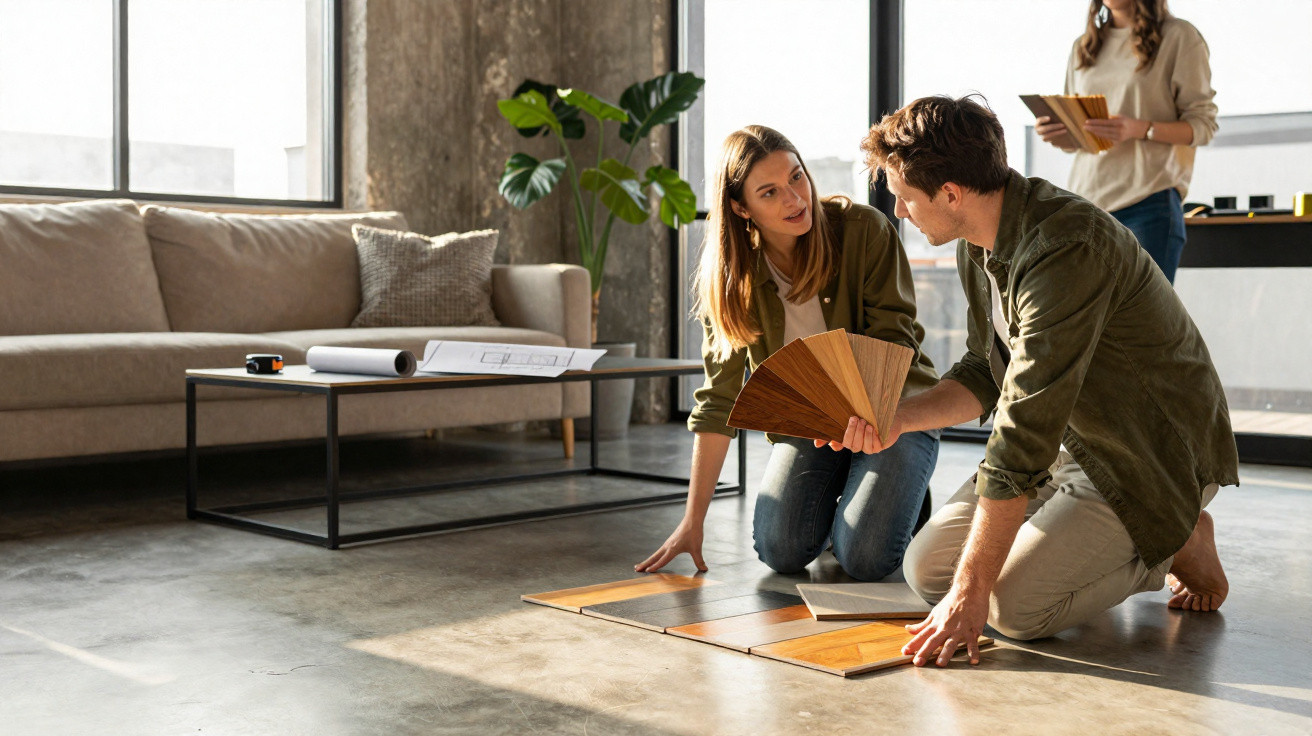
Laminated floors and parquet finishes were once firm favourites in many homes, but interior design priorities have shifted. These days, people renovating tend to prioritise practicality, durability, easy cleaning and a more up-to-date look for the living room, bedroom, kitchen and open-plan areas.
Why are laminated floors being removed from some homes?
Laminated floors are still a familiar choice in home refurbishments, yet more homeowners have started to doubt how well they stand up in humid environments, with pets, and in busy, high-traffic spaces. Day-to-day life often demands surfaces that cope better with stains, scratches and regular upkeep.
The shift is also tied to décor preferences, thermal comfort and even perceived property value. Before you replace the old finish, it helps to check for a few common warning signs:
- Warped planks or visible gaps between boards;
- Furniture marks, scratching and a loss of shine;
- Difficulty matching the floor with modern furniture.
Does parquet still suit today’s décor?
Parquet brings classic character and a cosy look, particularly in living rooms and bedrooms. Even so, this type of flooring typically requires attention with wax, restoration work and protection from water, which can feel demanding for anyone aiming for a more functional home.
In contemporary schemes, parquet is often kept when it is well preserved or when it forms part of the home’s identity. When that is not the case, many owners opt for finishes that go down simply, look more uniform and call for fewer repairs over time.
Which trend is winning over people who are renovating?
The latest trend in finishes favours continuous-looking surfaces, an urban feel and low-fuss maintenance. That is why options with a burnt cement look, satin porcelain tiles, high-traffic vinyl and industrial-style finishes have become more common indoors.
This trend appeals because it works well with fitted furniture, warm lighting, neutral walls and minimalist décor. In practical terms, homeowners want solutions that keep the house attractive without turning everyday cleaning into a struggle.
Why are industrial floors showing up in residential projects?
Industrial floors stand out for their modern appearance and the sense of spaciousness they can create. Drawing inspiration from warehouses, shops and commercial spaces, they have moved into homes thanks to their durability, understated finish and the ease with which they can be matched to different styles.
Before choosing industrial floors, it is worth considering the room type, the amount of natural light and the level of comfort you want. They tend to work especially well when the design needs a neutral base to showcase furniture, rugs, plants and decorative objects.
- They suit open-plan living rooms and open kitchens.
- They make cleaning easier in frequently used areas.
- They deliver a modern look without visual clutter.
How do you choose the best covering to add value to your home?
The right choice depends on the household’s style, the budget and the maintenance routine. While laminated floors can suit those looking for visual warmth, parquet generally needs more ongoing care, and the trend for continuous finishes supports more practical spaces.
Ultimately, industrial floors show how homes are increasingly shaped by functionality, clean aesthetics and durability. When planning a refurbishment, treat the floor finish as a key part of the décor, everyday movement through the space and comfort in every room.



Comments
No comments yet. Be the first to comment!
Leave a Comment