
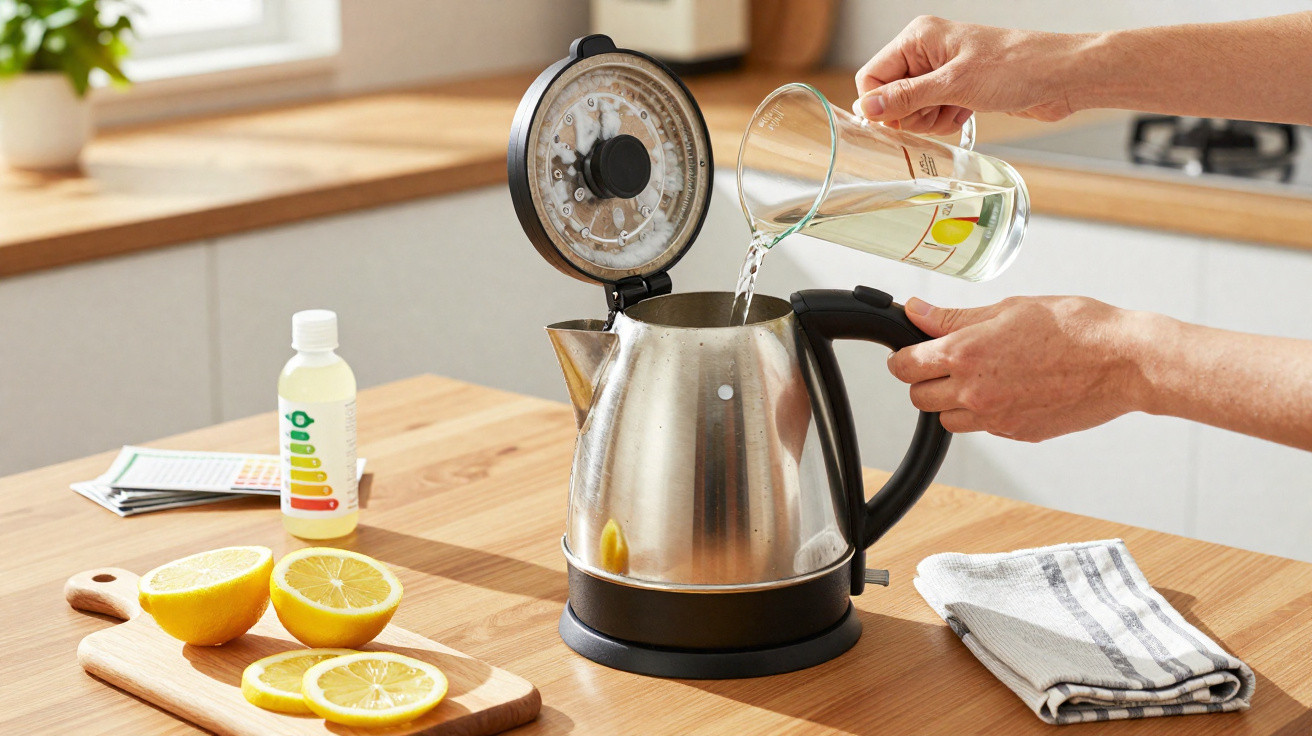
Descaling an electric kettle removes the mineral film that builds up on the base, inner walls and the heating element. When this deposit is left to thicken, the kettle can take longer to bring water to the boil, release tiny pale flecks into the water, and make the heating system work harder.
Why does limescale form inside the kettle?
Water contains dissolved minerals, mainly calcium and magnesium salts. When you boil water, some of it evaporates, but those minerals stay behind in the jug and gradually form a crust - a deposit rich in calcium carbonate. The harder the local water supply, the faster this build-up is likely to appear.
At first, the layer may show up as small whitish specks; over time it can become thicker and rougher. On kettles with an exposed element, the deposit forms directly over the element itself. On flat-base models, it tends to stick to the metal plate that transfers heat.
- White or yellowish marks on the bottom
- Small loose particles in the boiled water
- An internal surface that feels rough to the touch
- Longer time needed to reach the boil
- Different noises during heating
How does build-up increase energy consumption?
Limescale acts like an insulating barrier between the heating element and the water. Heat has to pass through this layer before it reaches the liquid, which can extend boiling time and increase electricity use over repeated boils. Regular removal also helps prevent mineral flakes from breaking off and ending up in your cup.
Which product should be used for descaling?
The safest approach is to follow the kettle’s instruction manual. Many manufacturers allow diluted white vinegar or citric acid, while others approve only a dedicated descaling product. For that reason, it isn’t accurate to say vinegar damages every kettle, but frequent use - especially if it’s strong or left for too long - may not be compatible with certain metals, coatings and seals.
Commercial descalers typically use acids at controlled concentrations to dissolve carbonates. Some formulas also include ingredients designed to reduce corrosion, but the product must be suitable for items that come into contact with drinking water and must be used exactly at the dilution stated.
- Switch the kettle off and unplug it before cleaning
- Check which products the manufacturer authorises
- Follow the amount and contact time shown on the label
- Do not mix descaler, vinegar or citric acid with each other
- Do not use wire wool or an abrasive sponge on the element
- Never immerse the electrical base in water
How do you do the process and remove any residue?
The solution needs to cover the area affected by the deposit and sit for the recommended time, typically 10 to 15 minutes, without exceeding the kettle’s maximum fill line. Then pour the liquid away, rinse several times, fill the kettle with fresh water, bring it to a full boil and discard that water. Using a solution that’s compatible with the appliance helps you avoid scrubbing the element and scratching the inside.
Is it really necessary to repeat the cleaning every month?
Once a month is a useful rule of thumb for kettles used daily in hard-water areas. In homes where deposits appear quickly, you may need to descale more often; where the water contains fewer minerals and the kettle is used only occasionally, descaling can be done only when marks, crusts or a noticeable increase in boiling time appear.
A kettle descaler helps protect the appliance most effectively when used before the crust becomes thick. Emptying leftover water after use, letting the inside dry, and checking the base regularly all reduce build-up, keep heat transfer more efficient, and stop mineral fragments being poured into coffee or tea.


Comments
No comments yet. Be the first to comment!
Leave a Comment