
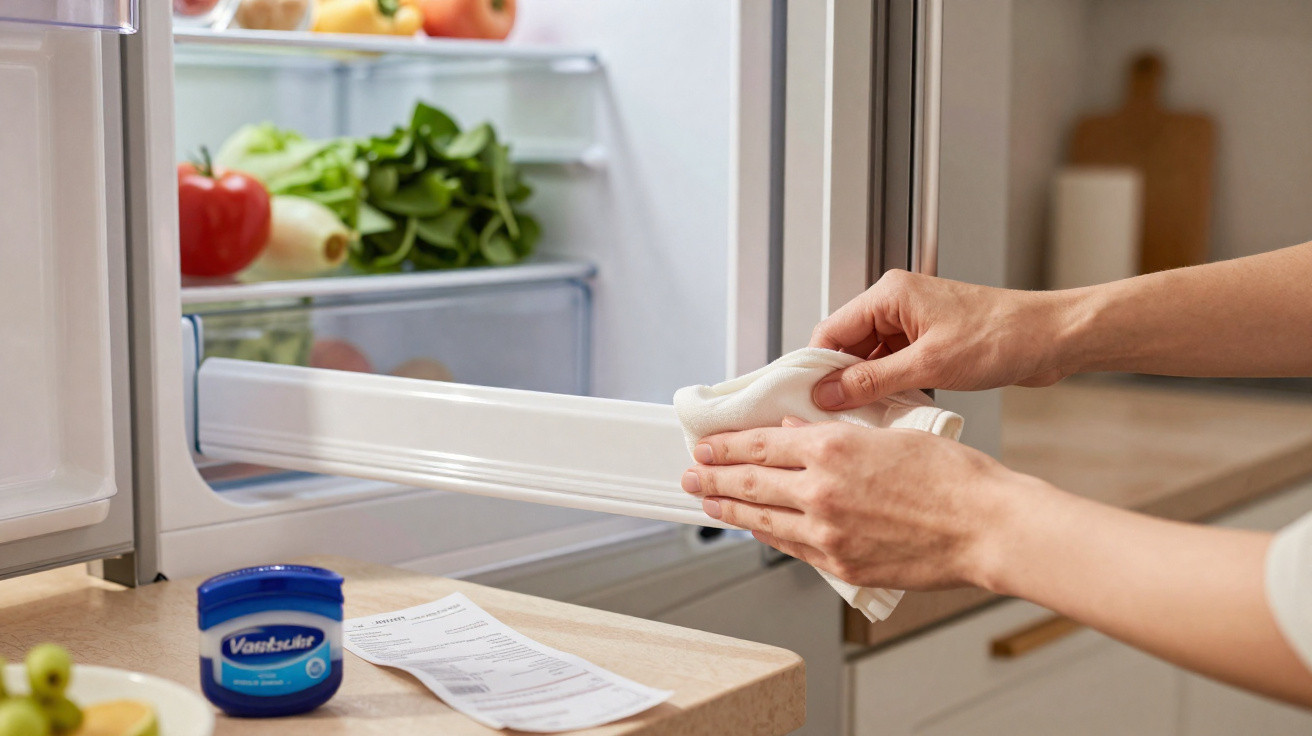
A very thin film of solid petroleum jelly on the fridge door seal can lower friction and help keep the gasket supple on models where the manufacturer permits this kind of care. It can improve how the door shuts, but it should only be done after cleaning and strictly in line with the appliance manual, because some brands advise different products-or recommend only water and a mild detergent.
What is the purpose of putting petroleum jelly on the fridge door seal?
Petroleum jelly can lubricate the areas where the gasket slides or folds as you open and close the door. On certain refrigerators, using a tiny amount-mainly on the hinge side-may help stop the rubber from sticking, squeaking, or wearing due to excessive rubbing.
- Reduces friction at the seal’s contact points;
- May help the gasket retain flexibility;
- Prevents some seals from sticking to the cabinet;
- Makes movement easier around the hinge area;
- Helps maintain even contact when the seal is still intact;
- Works as a complement to routine seal cleaning.
Does petroleum jelly restore a dried-out or cracked seal?
It may provide a short-lived improvement in glide and surface flexibility, but it will not rebuild sections that are cracked, misshapen, or hardened. If there are splits, loose areas, or gaps where air can pass through, the long-term fix is usually to realign or replace the gasket.
Petroleum jelly is a semi-solid mixture derived from hydrocarbons. While some manufacturers allow a thin layer on specific parts of the seal, others specify a suitable paraffin product or cleaning only. For that reason, the guidance in your model’s manual should take priority over any household tip.
How do you apply it without damaging the seal?
Unplug the appliance from the mains if cleaning involves moving parts or working close to electrical components. Clean the seal with a soft cloth, warm water, and a small amount of mild washing-up liquid, getting into the folds where crumbs and residue collect. Rinse away the soap and wait until the surface is completely dry.
- Check the manufacturer’s instructions first;
- Choose pure petroleum jelly with no fragrance or medicated additives;
- Put a very small amount on a soft cloth;
- Spread an almost invisible layer, avoiding build-up;
- Focus on the hinge side if the manual advises it;
- Wipe off any excess so it does not trap dust and grime;
- Do not use cooking oils, solvents, or abrasive products.
How do you do the paper sheet test?
Trap a sheet of paper between the seal and the cabinet, then close the door. When you pull the paper, you should feel resistance. Repeat this in multiple places-top edge, sides, and lower corners-because a leak may affect only one section.
If the paper slides out easily, clean the gasket and check whether food items, shelves, or drawers are preventing the door from closing properly. Also confirm that the fridge is level. If the paper remains loose, the seal may be warped, poorly seated, or worn and may need professional assessment.
Why does a good seal reduce energy use?
Gaps allow warm, moist air to enter continuously. The refrigerator then has to run longer to bring the internal temperature back down, which can lead to condensation or ice build-up, increase electricity consumption, and make it harder to keep food properly preserved.
As well as checking the gasket, it is worth doing a few other simple checks before requesting a repair. Maintenance with petroleum jelly is only advisable when it is approved for that specific model and the seal is still undamaged. A cracked or deformed seal should not be disguised with lubricant-it needs repairing or replacing.





Comments
No comments yet. Be the first to comment!
Leave a Comment