
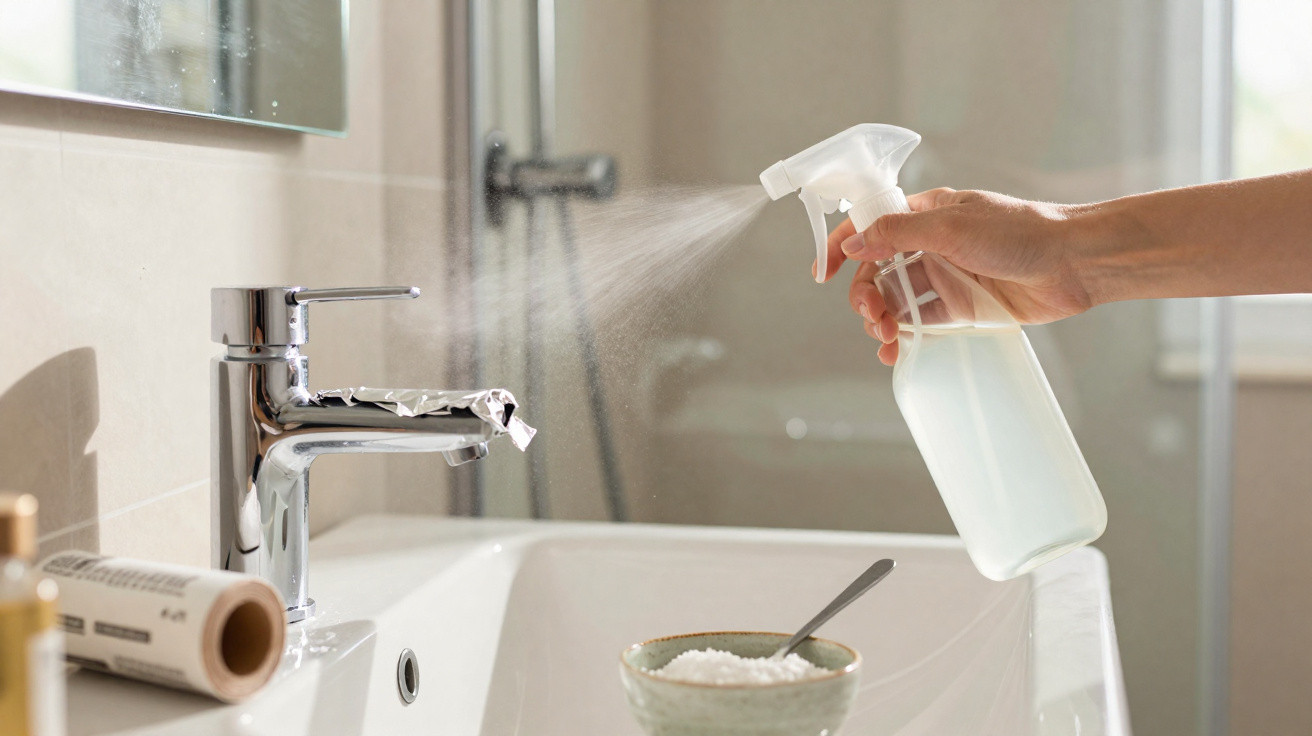
Limescale is what leaves those white or yellowish marks on taps, shower heads and glass once water has dried. To get rid of it without relying on overly harsh cleaners, you can soften the mineral deposit with white vinegar and then finish with gentle mechanical action, always taking the material and finish of each surface into account.
Why does limescale build up in the bathroom?
Hard water contains high levels of calcium and magnesium salts. When droplets dry on metal fittings, sanitaryware and glass, some of those minerals stay behind, forming a dull film that gradually thickens over time.
You will often notice build-up around water outlets, at the base of taps and on shower-screen areas hit by splashes. The longer the crust is left to dry out, the more effort is usually needed to lift it.
- Whitish marks on glass;
- Crusty build-up around tap spouts;
- Loss of shine on metal parts;
- Shower holes partly blocked;
- Marks that return after the water evaporates.
How does white vinegar help to soften the deposits?
Vinegar is acidic enough to react with some mineral build-up. For light staining, you can leave a cloth dampened with vinegar on the area for a few minutes before rinsing. On taps with specialist coatings, natural stone, and surfaces that do not tolerate acids, it is essential to check the manufacturer’s guidance and test first in an inconspicuous spot.
What is the correct way to use aluminium foil?
Once you have washed the item with mild washing-up liquid and softened the crust, you can use a loose ball of aluminium foil with light movements on durable, compatible metals. Keep the area wet throughout, because rubbing on a dry surface increases the risk of marking the finish.
Using aluminium foil to remove mineral staining should be limited to metal parts that have been tested beforehand. For a glass shower screen, the safest choice is a microfibre cloth or a non-abrasive sponge-especially if the glass is frosted, screen-printed, etched, or has a protective film.
- Wash first with water and mild washing-up liquid;
- Apply white vinegar only to compatible materials;
- Leave it for a few minutes, without letting it dry;
- Keep the surface wet while rubbing;
- Use gentle motions and stop if the shine changes;
- Rinse thoroughly and dry with a microfibre cloth.
Should vinegar and bicarbonate of soda be used together?
There is no need to combine the two in the same container, because the reaction between vinegar’s acid and bicarbonate of soda reduces part of the effect of both. Vinegar is better for softening mineral deposits on acid-compatible surfaces, while a bicarbonate paste can work as a mild abrasive on hard-wearing surfaces-always after a patch test and without scrubbing forcefully.
How can you stop the marks coming back quickly?
The most effective prevention is removing water before it evaporates. Using a small squeegee on the shower screen and drying taps, valves and metal bases with a soft cloth reduces how many minerals are left behind.
Weekly cleaning with mild washing-up liquid also helps stop thin layers from turning into stubborn crusts. By combining frequent drying, good bathroom ventilation and care suited to each finish, the mineral deposit is far less likely to build up for weeks around the shower, the taps and the glass.

Comments
No comments yet. Be the first to comment!
Leave a Comment