
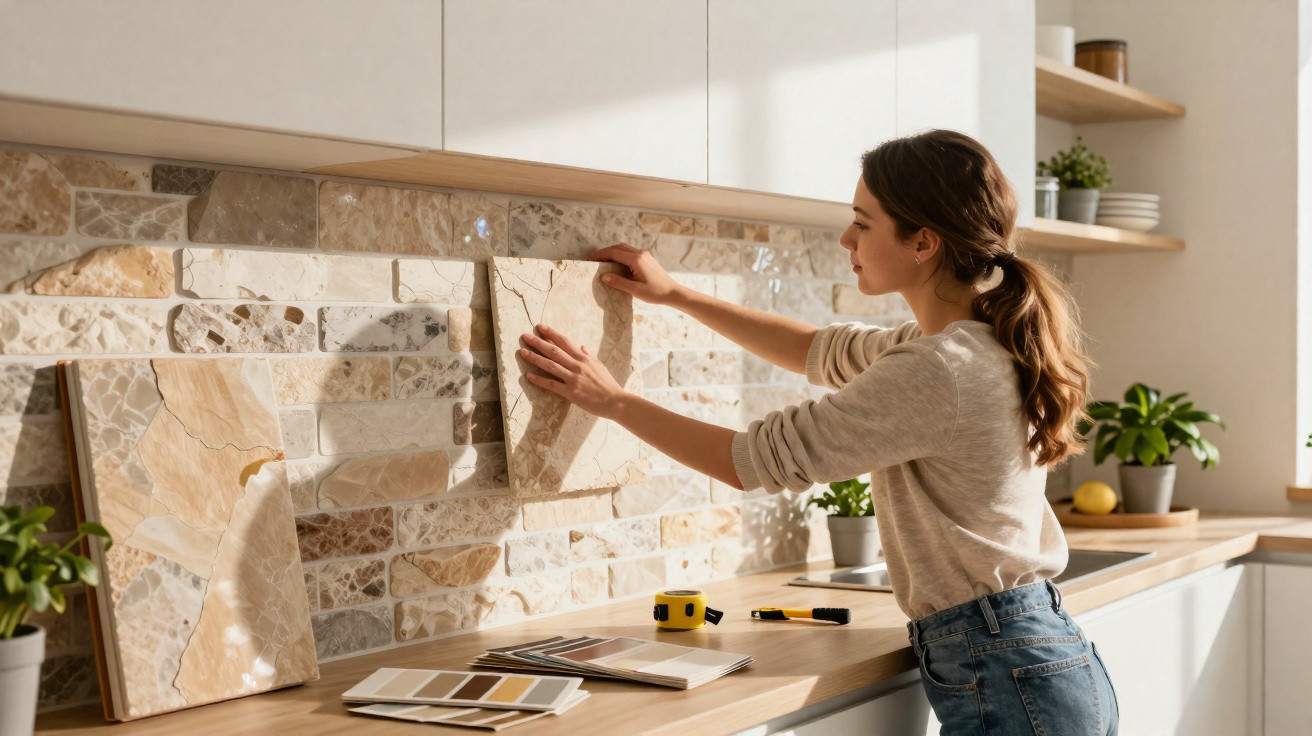
In today’s kitchens, the classic glossy white tile is steadily giving way to natural stone cladding or a stone-effect finish, typically in neutral, concrete-like greys or earthy shades. You’ll see this look delivered in everything from large-format slabs to smaller pieces, used behind the sink, around the hob, or in selective bands-creating a more refined setting while keeping everyday practicality, ideal for refreshing a kitchen without starting from scratch.
Why has stone-effect wall covering gained ground in kitchens?
Stone-effect wall covering has moved into the spotlight because it creates cleaner, more continuous surfaces, with fewer visual breaks than small tiles. It also introduces warmer or soft grey tones that sit naturally alongside timber, metal and glass. The result is a more balanced, individual look-contemporary yet welcoming-even in straightforward projects and smaller floorplans.
It also helps avoid the “utility room” feel often associated with shiny white tiles. Natural stone, stone-look porcelain, and cement-style finishes bring subtle variation: gentle shading, understated veining and slight irregularities, so each kitchen feels distinctive and pleasing in both daylight and artificial lighting.
How does stone cladding add personality and style?
Stone cladding has become shorthand for a more premium kitchen because it combines appearance with usability. Rather than relying on an all-white backdrop, the room gains a richer visual base that better complements stainless-steel appliances, colourful or wooden cabinetry, and even simple decorative items placed on the worktop.
In many current designs, this type of finish is paired with an LED strip under the wall units to pick out texture and relief. To see how these details shift the feel of a space, it helps to focus on a few practical points that matter day to day:
- Texture: adds depth and makes the area behind the worktop more engaging, even with minimal accessories.
- Elegant neutral colours: beige, grey and sand tones suit styles from rustic through to minimalist.
- Visual unity: carrying the same material across the splashback, worktop and selected wall bands makes the scheme feel more coherent.
- A smoother transition to the living area: in open-plan kitchens, a stone-effect finish helps the kitchen relate to the living-room flooring and joinery.
How can you update a kitchen with stone cladding without a major refurbishment?
You don’t have to knock everything out to swap white tiles for a more up-to-date finish. In many homes, the change is limited to the most visible wall or just the splashback above the worktop; that alone can significantly alter how the space reads, and it’s often achievable quickly with less mess and disruption.
If you want a fast solution, some options can be installed over the existing covering, provided the surface is secure and level. Among the most common approaches for a smart update are:
- Large-format porcelain slabs: laid with minimal grout lines, they deliver an almost seamless surface.
- High-performance adhesive covering: designed to mimic stone or polished concrete, best for areas away from direct flames.
- Thin or laminated natural-stone panels: fitted using specific fixing systems, they create strong visual impact with little thickness.
How do you choose the ideal stone-effect wall covering for each type of kitchen?
Choosing a stone-effect covering depends on the size of the room and how heavily it’s used. Smaller kitchens tend to benefit from lighter shades and discreet veining, while larger spaces can handle bolder marble-inspired patterns without feeling overwhelmed. In open-plan layouts, it’s worth echoing colours already found in the sofa, living-room floor and fitted joinery to keep a continuous flow.
For kitchens used every day, porcelain with a softer texture makes cleaning easier and stands up well to grease, water and steam-so long as the manufacturer’s guidance is followed. Putting your budget into the main wall, the splashback, or a standout vertical strip is a practical way to modernise gradually, strengthen the home’s character, and keep the space functional, attractive, and clearly “designed with intention”.




Comments
No comments yet. Be the first to comment!
Leave a Comment