
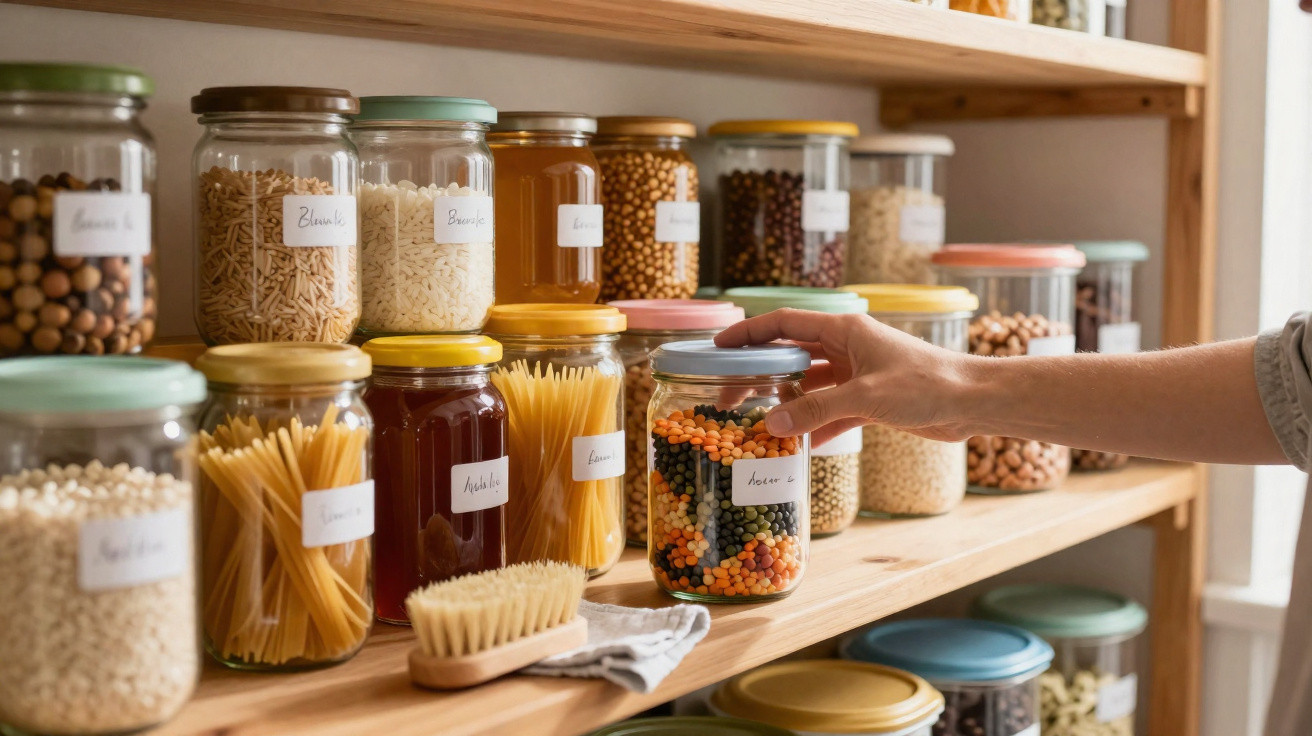
Keeping glass and plastic jars at home is often dismissed as nothing more than a pile-up of empty packaging. In reality, this habit can become a practical way to organise the pantry without spending anything extra, helping you keep grains, pasta, seasonings, seeds and biscuits better protected, easier to see and quicker to reach in everyday use.
How do you start to organise the pantry with reused jars?
For reuse to work well, begin by sorting your jars by material and by condition. Glass with a lid that still seals properly is ideal for grains, seeds and dried seasonings, because it closes more tightly and doesn’t hold onto smells. Good-quality rigid plastic, on the other hand, can be useful for pasta and biscuits.
It’s also worth paying attention to shape: stackable jars take up less room and make it easier to use vertical space on shelves. Whenever you can, choose clear containers so you can check what’s inside without opening the lid, which also reduces the chance of foods being forgotten at the back of a cupboard.
How do you choose sizes and positions for more practical use?
A straightforward way to make daily routines easier is to organise by how often you use each item. Foods you reach for regularly-such as rice, beans, coffee and sugar-can go into larger jars kept towards the front of the shelves. Items used less often can be stored in smaller jars, placed further back or on higher shelves.
It also helps to settle on two or three main jar sizes to create a consistent look. With that visual standard in place, shelves tend to feel more orderly, there’s less wasted space, and it becomes simpler to group similar containers-such as keeping glass in one area and plastic in another-creating clear “sections” within the cupboard.
How do you label, clean and manage food expiry dates?
Clear labelling prevents mix-ups between flours, different sugars or similar-looking grains. Before putting anything away, it can help to follow a small routine: label it, add dates and check expiry, keeping essential details visible on the front of the jar so day-to-day cooking runs more smoothly.
You can use a simple system to keep everything consistent:
- Food name: write it clearly and place it where it’s easy to see.
- Date filled: note when the food was transferred into the jar.
- Expiry date: cut it from the original label and stick it onto the new container.
When it comes to cleaning, glass jars can be washed with hot water and mild washing-up liquid, then left to air-dry thoroughly. Plastic containers need extra care around lids and edges: make sure there’s no moisture at all before adding dry foods, which helps reduce the risk of mould and unwanted changes in texture.
Which jars should you avoid, and how do you turn the habit into useful organisation?
Some containers should never go back into the pantry, even if they’ve been washed-particularly anything that previously held cleaning products, cosmetics or other chemicals. Very flexible plastic, containers that are cracked, scratched or cloudy, and lids that are warped or rusty can also affect safety and how well food keeps.
By choosing only sound jars, standardising sizes, labelling every item and keeping hygiene up to date, saving packaging stops being simple clutter and becomes a smart way to organise. Foods are easier to find, space is used more efficiently, and your kitchen routine becomes quicker, more functional and even more economical, with less waste.


Comments
No comments yet. Be the first to comment!
Leave a Comment