
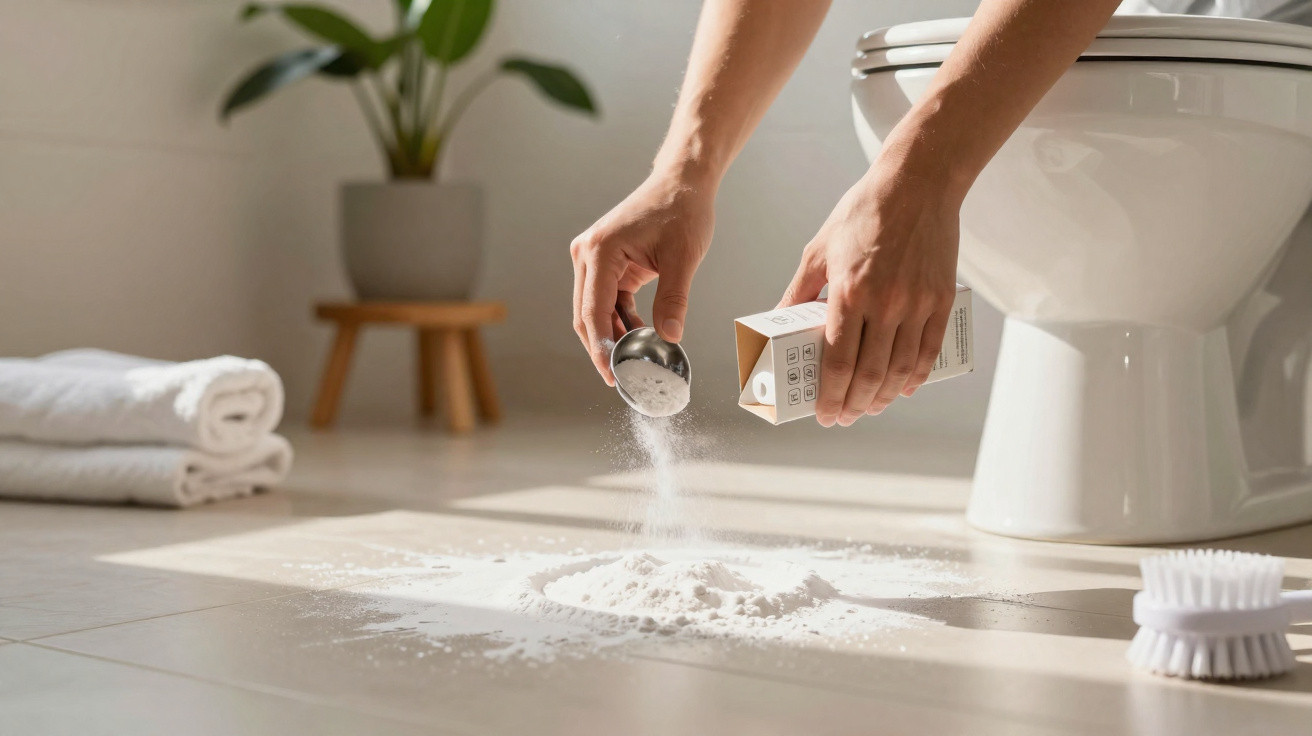
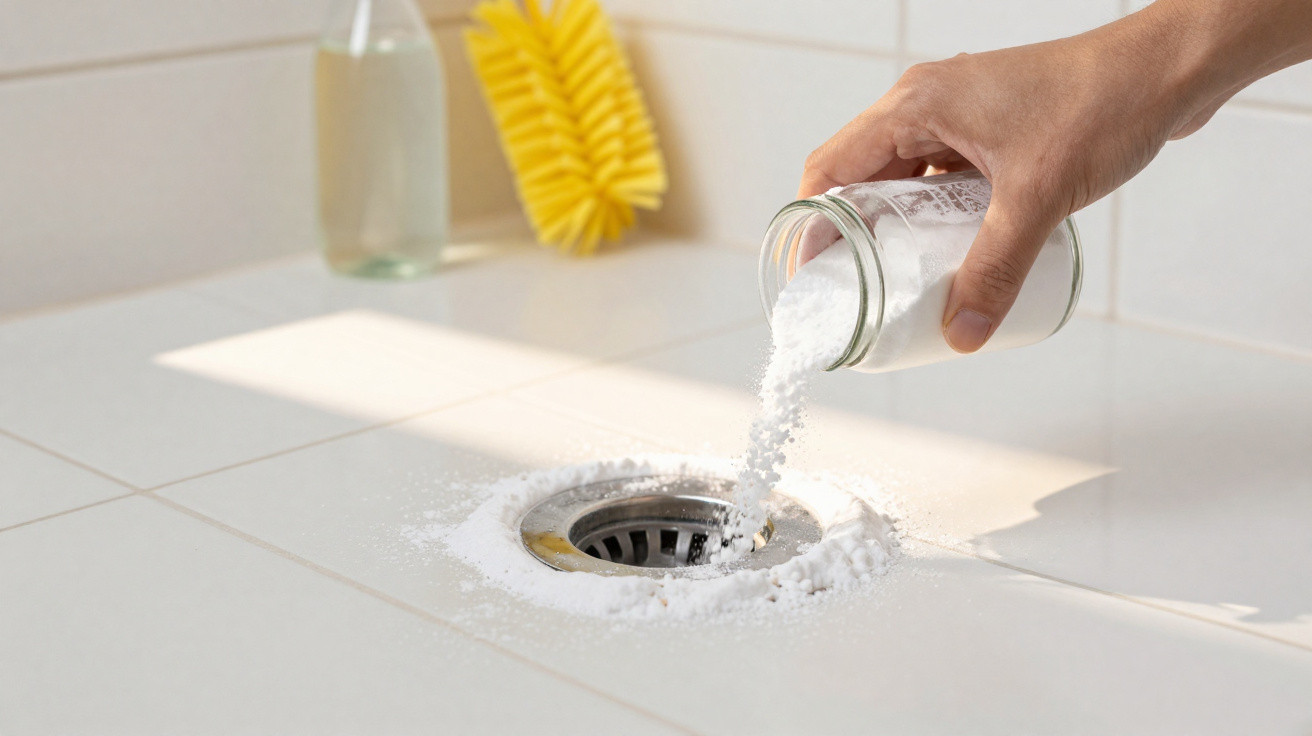
Sprinkling baking soda around the toilet can help soak up surface moisture, cut down odours, and make it easier to lift grime that builds up at the base. It’s a straightforward trick, but it needs to be used on a dry floor and removed properly so you don’t end up with powder residue spread around the bathroom.
What is baking soda around the toilet for?
The join where the toilet meets the floor often collects dust, splashes, and damp. A light dusting of the powder can help keep that area drier and can neutralise some of the unpleasant smell in the room, especially when the bathroom stays closed for many hours.
Baking soda also has a mildly abrasive feel. After it has been left to sit, it can help shift light surface marks when you wipe with a damp cloth, without needing heavy scrubbing on floors that can handle normal household cleaning.
How do you apply the powder without spreading mess around the bathroom?
Apply it only when the floor is clean and completely dry, using just enough to create a subtle layer around the base. You can follow this order:
- Remove hair, dust, and any loose debris from the floor;
- Dry the area near the toilet;
- Scatter a thin layer of the product, without creating piles;
- Leave it to work for a few hours;
- Sweep or lift away the excess with a brush, cloth, or absorbent paper;
- Finish by wiping the area with a damp cloth.
Why does the ingredient help to control bad smells?
A bad smell in the bathroom can linger close to the floor because of damp, splashes, and organic residue. Baking soda helps neutralise some of the compounds that cause odour, without adding strong fragrances to the room.
That is not the same as simply masking a smell with air fresheners. The powder acts on odours sitting on the surface, but it does not fix issues such as a failed seal, standing water, deteriorated grout, or problems with the toilet’s installation.
What precautions help you avoid mistakes while cleaning?
It should not be mixed casually with bleach, disinfectants, or other chemicals. DIY combinations can trigger unwanted reactions, so clean in a well-ventilated space, wear gloves, and follow the instructions on product labels.
- Don’t apply the powder to a wet floor;
- Keep the product out of reach of children and pets;
- Do not mix different cleaning products;
- Avoid breathing in the powder while applying it;
- Test first on an inconspicuous section of the flooring;
- Look into any dampness that returns quickly.
The trick complements your hygiene routine
Using a small amount around the base can support moisture and odour control between cleans. However, it does not replace washing the floor, cleaning the outside of the toilet, or correctly using a product designed for hygiene or disinfection.
You tend to get the best results when baking soda is used as part of a routine that includes drying the floor, removing residue, and checking for possible leaks. If the area around the toilet remains damp or the smell persists, the seal and plumbing should be inspected.


Comments
No comments yet. Be the first to comment!
Leave a Comment