
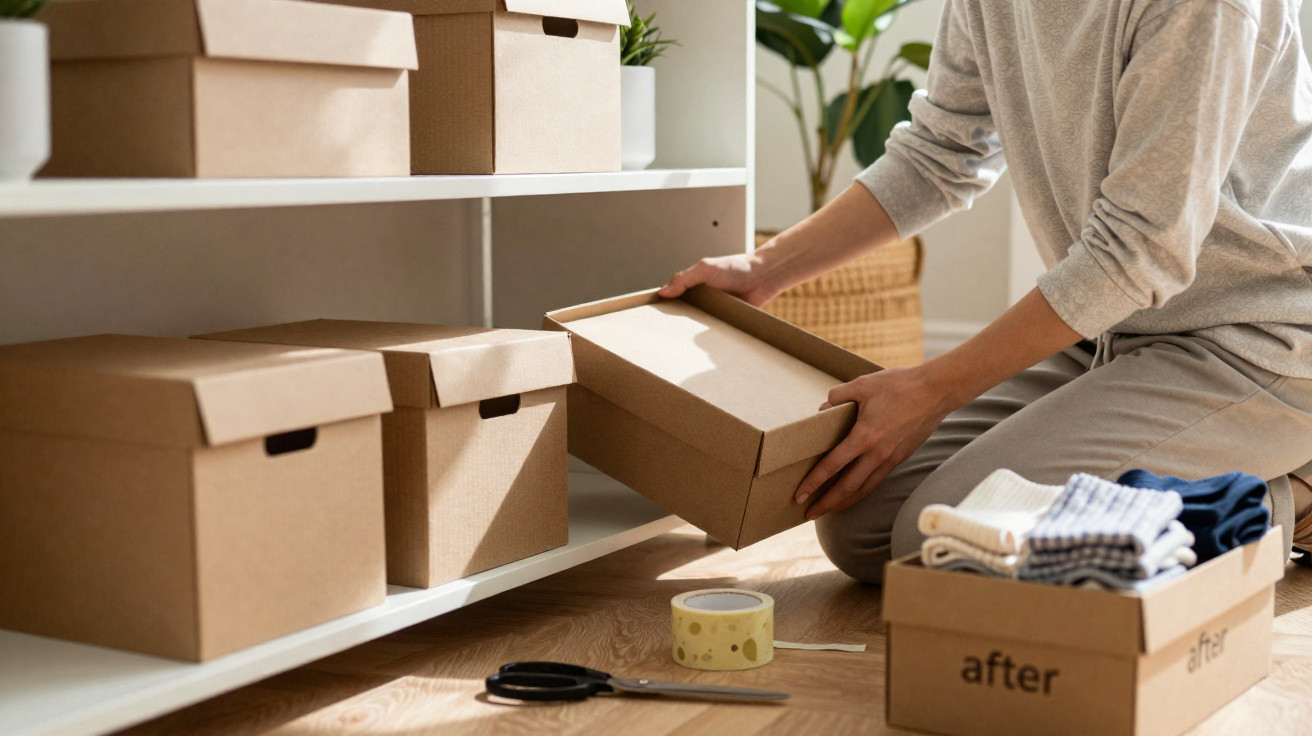
In many households, the shoe box is binned the moment the new shoes are put away. Yet this humble bit of packaging can become a genuinely helpful part of your routine, keeping rooms tidier, reusing everyday materials and cutting down on unnecessary waste.
Why is the shoe box so useful for organising the home?
A shoe box is a convenient shape: it’s lightweight, easy to stack and fits neatly on shelves, in cubbies and inside drawers. It’s ideal for gathering up items that would otherwise end up loose-especially in bedrooms, home offices and utility areas-making the space feel far more practical.
When you sort things by category and allocate each group to its own box, it becomes much easier to find items you don’t use every day without everything getting muddled. Paperwork, cables, winter accessories, chunky costume jewellery, craft supplies and keepsakes can all be stored in labelled boxes, which helps speed up day-to-day life.
How should you prepare a shoe box before reusing it at home?
Before reusing any shoe box, check its condition carefully. Cardboard that’s damp, mouldy, strongly odorous or torn can ruin documents, printed photos and electronics-so in those situations, it’s better to recycle it.
If the box is still sturdy, a few straightforward steps will extend its lifespan and offer better protection for what you store inside-particularly for long-term storage such as photos and personal documents:
- Wipe the inside with a dry cloth (or a slightly damp one) and allow it to dry fully.
- Strengthen the sides and base with adhesive tape if the cardboard feels thin.
- Cover the outside with paper, fabric or sticky-backed plastic to improve durability.
- Add clearly visible labels stating what’s inside.
- Store it in a dry, well-ventilated place, away from damp.
How can you use a shoe box day to day in different rooms?
A shoe box can take on a range of roles in almost any room. In bedrooms, it’s a simple way to separate underwear, socks, scarves and belts inside drawers, creating a honeycomb-like system that stops items getting mixed together.
In a home office, it works well for cables, chargers, adapters, pens and notepads, and you can add internal dividers made from cardboard. In the kitchen or pantry, it can hold tea towels, reusable bags and accessories for small appliances; in the living room, it discreetly keeps small toys, games, old remote controls and seasonal decorations organised.
When should you avoid using a shoe box for household organisation?
Despite its versatility, a shoe box isn’t suitable for very damp areas-such as balconies exposed to rain or utility rooms without ventilation-because the cardboard breaks down quickly. In those spaces, plastic or waterproof containers will protect belongings more effectively.
It’s also a poor choice for storing food, open cleaning products or anything with a strong smell, as cardboard absorbs odours and can be damaged by liquids and grease. For official documents, sensitive digital media or more expensive electronics, purpose-made boxes, suitable folders or safes are safer options, while shoe boxes are best kept for everyday odds and ends and items used only occasionally.

Comments
No comments yet. Be the first to comment!
Leave a Comment