
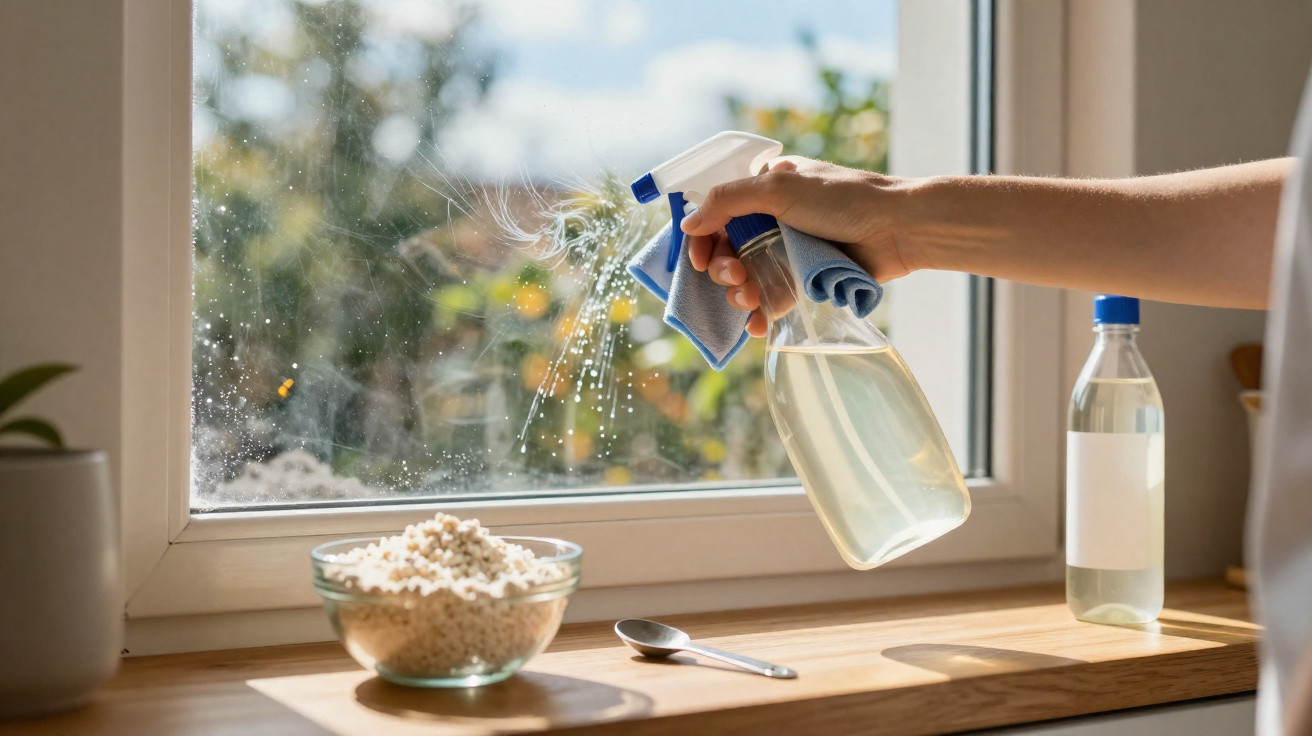
A surprisingly overlooked kitchen staple can change that.
Plenty of people reach for a bottle of vinegar as soon as they start cleaning windows, then wonder why the glass still looks blotchy when the light hits it. A straightforward trick using a powder from the cupboard can leave panes crystal clear - without the sharp smell and without those familiar streaks.
Why vinegar often disappoints when cleaning windows
For years, vinegar diluted in water has been treated as a wonder solution for dirty glass. It tackles limescale, cuts through grease and costs very little. In real life, though, the classic mix often leaves streaks and dull halos - particularly on large panes when the sun is shining directly onto the glass.
That comes down to how water, acetic acid and evaporation interact. If the mixture evaporates too quickly, a thin layer of residue is left behind. It can be hard to spot at first, but in sunlight it becomes far more obvious. This is especially frustrating:
- on wide glass surfaces such as patio doors or panoramic windows,
- on brightly lit bathroom mirrors,
- on windows exposed to direct sunlight.
On top of that, the lingering vinegar smell can hang in the air. In small flats or rooms with poor ventilation, it tends to stick around and hardly feels “fresh”.
“If you rely on vinegar alone, you may get clean windows - but not automatically streak-free ones.”
That is exactly where a helper comes in that most people associate only with cooking: fine maize starch (cornflour), known from brands such as Maizena.
Maize starch (Fecola): a baking ingredient turns into a window-cleaning hero
Maize starch (often labelled as Fecola) is usually used to thicken sauces or creams. Dissolved in water, however, it brings a different property that’s particularly useful on glass: it changes the surface tension of the liquid. That may sound technical, but the effect is very practical.
The cleaning liquid spreads more evenly across the pane. Instead of running in droplets and drying patchily, it forms a thin, uniform film. At the same time, when you squeegee or wipe it off, the starch helps pick up tiny particles that would otherwise be left behind as a haze.
People who try the method often describe the result as “clearer” than with standard glass cleaners. If you combine the starch with a little alcohol and water, you end up with a highly effective glass cleaner with almost no smell.
“Alcohol disinfects and evaporates quickly; the starch gathers residues - so the glass stays clear rather than cloudy.”
Recipe: how to mix your own streak-free glass cleaner
The ingredients for this DIY spray are simple and commonly found at home:
- 250 ml water (ideally lukewarm; distilled is fine too),
- 250 ml household alcohol or alcohol at around 70%,
- 1 level tablespoon fine maize starch (Fecola).
Proceed as follows:
- Get a clean spray bottle.
- Pour the water into the bottle.
- Add the maize starch using a small funnel or spoon.
- Shake well until no lumps are visible.
- Add the alcohol.
- Shake the bottle vigorously again.
You’ll end up with a slightly milky, neutral-smelling cleaner suitable for windows, mirrors and glass shower screens. If you like, you can add one or two drops of essential oil (for example, lemon) - but don’t overdo it, or you may create streaks again.
How to use the maize-starch spray properly
Using it is much like a conventional glass cleaner, with a few small details that make a difference:
Preparing the glass surface
If your windows are heavily soiled, it’s worth doing a quick first pass with water and a little washing-up liquid. This removes dust, pollen and coarse dirt, leaving the specialist cleaner to focus on fine residues afterwards.
Shake, spray, wipe
Because the starch settles over time, a firm shake before every use is essential. After that, a small amount on the pane is enough - less genuinely is more here.
For wiping, a clean microfibre cloth or a lint-free cotton cloth works best. Wipe in strokes from top to bottom rather than rubbing in random directions. That helps prevent smearing already-clean sections.
“Use little product, a clean cloth, and work in strokes - that’s how the starch delivers its full effect.”
If you want to, you can finish by buffing with a dry cloth. Often, though, the glass already shines without this extra step.
Choosing the right time
It’s better to plan window cleaning for the morning or late afternoon. In strong midday sun, any cleaner dries too fast - and that’s when the very streaks you’re trying to avoid tend to appear.
What if the surface is very greasy?
On kitchen windows or glass near the hob, the alcohol-free part of the spray may not always be enough. Fine grease splatters can build up and cling to the glass.
For these trouble spots, you can tweak the mix slightly:
- use a bit less water,
- add a small splash of vinegar to the bottle,
- keep the amount of Fecola the same.
This way, the starch remains the main performer, while vinegar simply supports degreasing. If you dislike the smell, use a little more alcohol and skip the acid - that also removes grease fairly reliably.
How long does the homemade cleaner last?
The mixture won’t keep indefinitely. If it sits too long, it can thicken slightly, or a layer can form at the bottom of the bottle that becomes difficult to shake back in. For that reason, it’s better to mix smaller amounts and use them within one to two weeks.
| Ingredient | Role |
|---|---|
| Water | Loosens dirt and acts as the carrier liquid |
| Alcohol | Disinfects, speeds up drying, reduces streaking |
| Maize starch (Fecola) | Improves how the liquid spreads and binds residues |
| Optional: vinegar | Helps tackle stubborn grease and limescale, but can add odour |
Risks, limitations and sensible add-ons
With coated specialist glass or tinted films, it’s worth checking the manufacturer’s guidance first. Alcohol and vinegar are not always recommended on these surfaces. If you’re unsure, test the spray on an inconspicuous corner before using it widely.
Sensitive natural-stone window sills, painted wooden frames or silicone seals should not be exposed repeatedly to alcohol-based or acidic mixtures. Spraying only the glass and wiping immediately helps protect these materials.
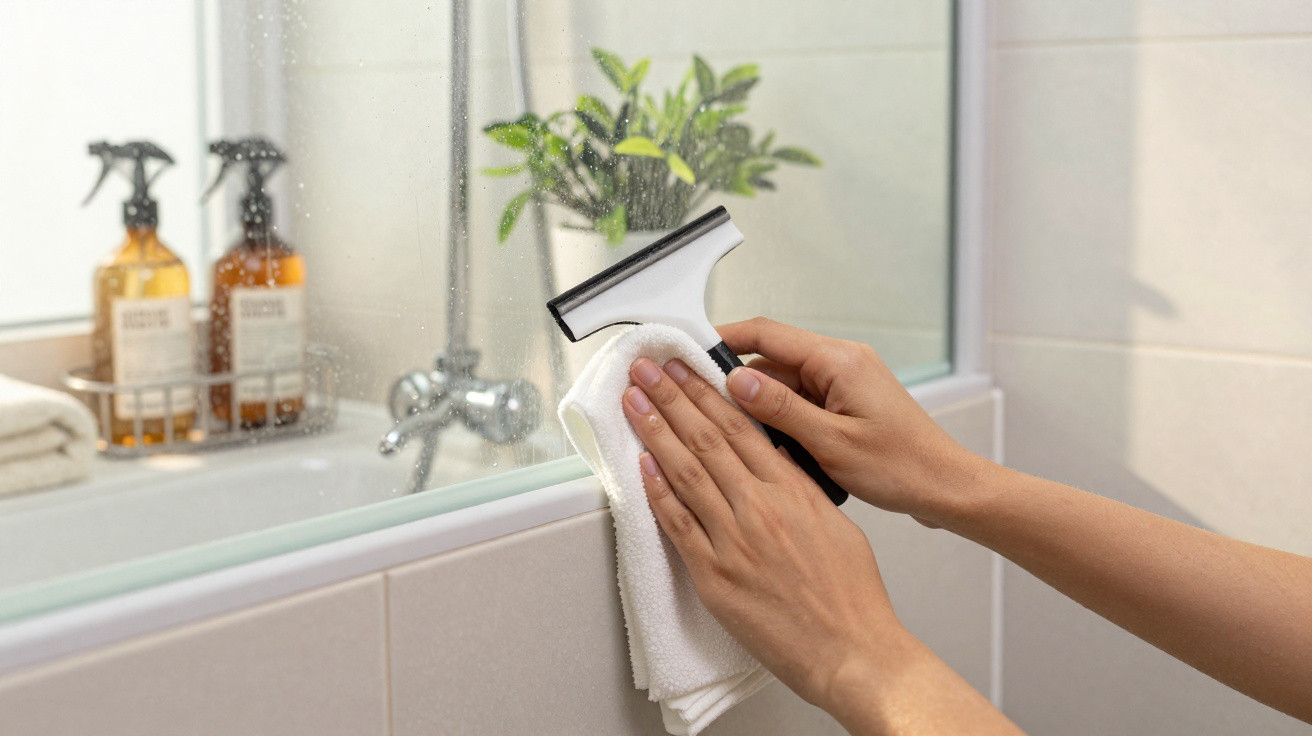
The trick is also useful in the bathroom: glass shower screens are prone to limescale marks and soap residue. Here, the spray works well because it dries quickly, and the starch binds the fine film before it can settle. In areas with very hard water, using distilled water in the mixture from the start can help.
Anyone wanting to avoid conventional cleaners with added fragrances and dyes gets a simple, low-cost and relatively eco-friendly alternative with alcohol, water and Fecola - without harsh additives. And the biggest advantage shows up with the next ray of sunshine: instead of spotting fresh streaks, you’re simply looking through glass that’s clear.

Comments
No comments yet. Be the first to comment!
Leave a Comment