
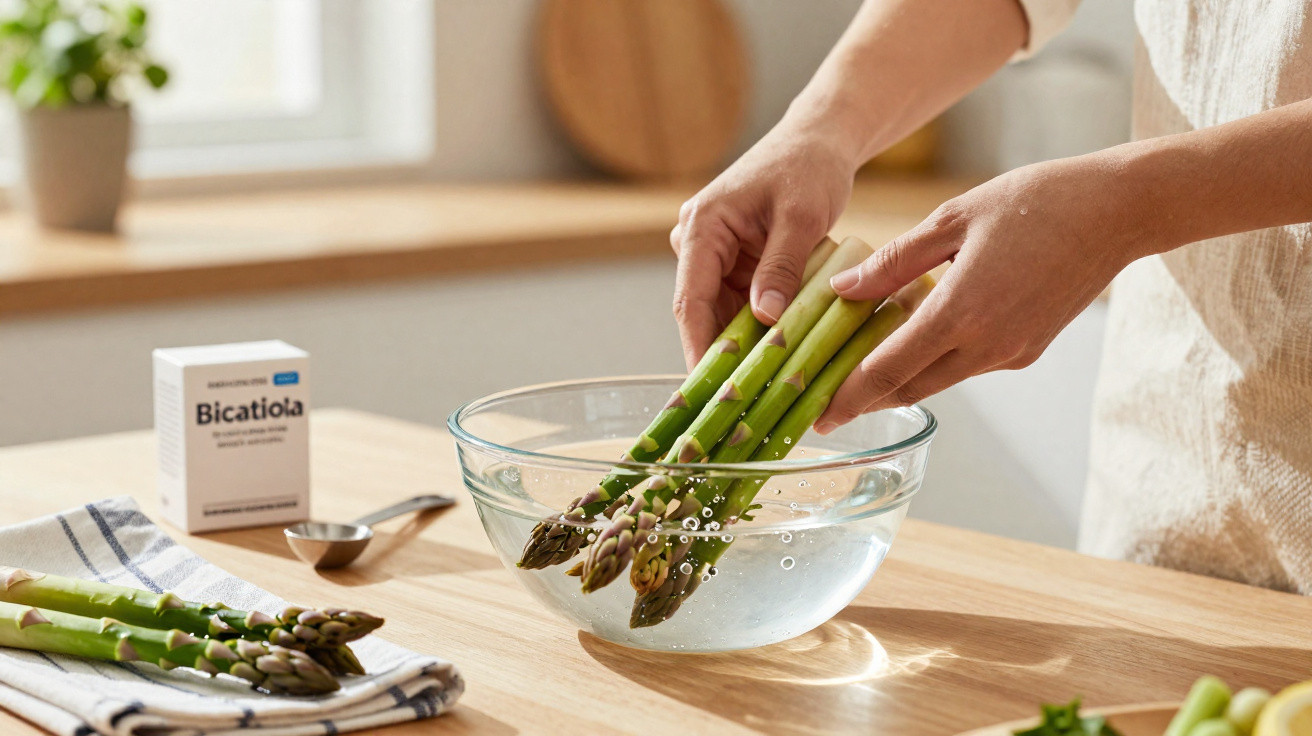
Many people come home from the shops, automatically turn on the tap, hold the spears under a cold stream for a moment, and call it done. It’s convenient, but specialists caution that this quick rinse often isn’t enough to deal with stubborn pesticide residues and fine sand. If you want to cut contamination more noticeably, you’ll need a slightly more systematic approach.
Why asparagus needs more than a quick rinse
Asparagus grows directly in, or just above, the ground-often in sandy soil. That’s part of what gives it its flavour, but it also makes it tricky to clean. Soil, sand, spray residues and even tiny insects can cling to the spears.
What makes it especially awkward is the tightly closed tip, which acts like a little umbrella. Fine scales create small gaps where particles collect-often too small to spot. A brief blast of water usually doesn’t reach these corners.
"Plain water will rinse away dirt, but many plant protection products are designed so that rain doesn’t simply wash them off."
Food chemistry studies show that rinsing under running water does reduce residues, but only partially. If you want to lower your personal exposure, a targeted washing method can achieve a great deal more.
The expert-recommended basic method, step by step
The good news is you don’t need any special kit. A bowl, cold water and a little time are enough to get asparagus significantly cleaner.
1. Remove the woody ends
The first step is purely mechanical-and highly effective:
- Snap off or cut away 2.5 to 5 centimetres from the bottom of each spear.
- This section is usually the most fibrous and dry, and it has had the most contact with soil.
- With thick white spears, also peel the lower section thinly using a vegetable peeler.
This sends some potential residues straight into the food waste or general rubbish before any water is involved.
2. Soak in cold water
Next comes the main clean:
- Fill a large bowl or a clean sink with cold water.
- Submerge the asparagus completely; the spears should be able to float freely.
- Leave them in the water for 5 to 10 minutes.
- Move the spears gently now and then, and lightly "rinse out" the tips with your hand.
This soak loosens sand, softens dried-on soil and flushes out tiny insect remnants from tight spaces. The physical action-moving and lightly rubbing-is the key part here.
3. Rinse carefully under running water
After soaking, finish with a more precise rinse:
- Rinse each spear individually under cold, running water.
- Run your fingers gently over the tips and stroke along the sides of the spear.
- For very thick spears, a soft vegetable brush can help-don’t scrub hard, so you don’t damage the surface.
This removes loosened particles that may still be clinging on and clears the last traces of sand from the tips.
4. Drying - an often overlooked step
After washing, place the spears on a clean tea towel or kitchen paper. Then either:
- pat them dry gently with a second towel, or
- leave them to air-dry for a few minutes.
Too much water on the surface can get in the way when frying or roasting, and it can dilute the flavour. Slightly dried spears brown more readily and stay more aromatic.
The "maximum safety" option: an asparagus soak with bicarbonate of soda
If you want to be extra cautious-such as for toddlers, pregnant people, or anyone in poor health-you can add one more step: a soak in a weak bicarbonate of soda solution (sodium hydrogen carbonate, commonly sold as "baking soda" or "bicarbonate of soda").
How the bicarbonate of soda soak works
For this version you’ll need:
- 1 litre of cold water
- about 10 grams of bicarbonate of soda (roughly a heaped teaspoon)
Method:
- Remove the woody ends as described above; peel thick spears if needed.
- Dissolve the bicarbonate of soda fully in the water.
- Leave the asparagus spears in the solution for 12 to 15 minutes.
- Move them gently from time to time so the liquid reaches all areas.
- Then rinse very thoroughly under running water.
- Finally, dry as usual.
"Studies on fruit and vegetables show that a roughly one per cent bicarbonate of soda solution can significantly reduce many pesticides on the surface without affecting the texture."
The thorough final rinse matters. You don’t want alkaline residue left on the vegetable, as it can alter the taste.
What bicarbonate of soda can do - and what it can’t
This method mainly works on the surface. Substances sitting on the outside of the asparagus can often be removed to a good extent. Compounds that have penetrated into the plant are hardly affected.
That’s why experts emphasise the goal is reducing exposure, not producing a sterile laboratory sample. If you buy thoughtfully and wash carefully, you can already lower your personal risk in a noticeable way.
| Measure | Effect | Practical tip |
|---|---|---|
| Cut off the woody ends | Removes more heavily exposed sections | Trim generously: 3–5 cm |
| Soak in plain water | Loosens sand, soil, insect remnants | At least 5 minutes; move well |
| Bicarbonate of soda solution (1%) | Reduces many surface pesticides | Only if needed; rinse for a long time afterwards |
| Thorough drying | Improves flavour and browning | Lay on a towel; pat gently |
Keep away from washing-up liquid, soap and neat acid
Some household myths refuse to die: washing-up liquid, hand soap, concentrated vinegar essence, or even chlorine cleaners are sometimes claimed to "disinfect" vegetables. Specialists strongly advise against this.
- Washing-up liquid and soap aren’t intended to be eaten; residues can end up in your body.
- Strong acids can attack the surface and ruin both flavour and texture.
- Chlorine-based products have no place on food in the kitchen.
Using these products is more likely to create new problems than to improve anything. For everyday use, mild bicarbonate of soda water and thorough rinsing are enough.
How your shopping choices affect exposure
Even the best washing method has limits if the starting point is poor. Where you have a choice, you can do a bit at the buying stage:
- Local produce usually has shorter transport routes and often more transparent growing practices.
- Organic asparagus is subject to stricter rules on plant protection products.
- Very shiny, "perfect" spears aren’t automatically better-minor visual flaws say little about residues.
Many people mix and match: more frequent conventional produce from nearby, organic now and then, and careful cleaning at home every time.
Practical kitchen examples
In real life, the recommended method fits in without much extra effort. While the asparagus is soaking, you can make the sauce or pre-heat the oven. If you cook regularly, it quickly becomes routine:
- After a market trip, trim the ends and put the asparagus into a water soak first, then unpack and prepare the other ingredients.
- For pan-fried or grilled dishes, dry the spears especially well-so they brown rather than steam.
- For asparagus salad, treat the tips with extra care during washing, as they’ll later go straight onto the plate.
Once you start paying attention, you’ll often notice the difference when eating: less grit between your teeth, cleaner flavour, and a more pleasant texture.
Risks, benefits and a realistic perspective
Even thoroughly washed asparagus is still an agricultural product, not a lab sample. Residues can be reduced substantially, but not always to zero. At the same time, there’s little reason to slip into blanket alarmism.
Asparagus provides fibre, beneficial plant compounds and valuable minerals. In season and well prepared, it’s among the highest-quality spring vegetables. Using the cleaning method described here means you can enjoy it with far less worry.
For households with very sensitive individuals, adding the bicarbonate of soda step can be worthwhile. Everyone else will already see a clear improvement with the water soak, careful rinsing and drying compared with a quick "under the tap" rinse-without any major technical effort.



Comments
No comments yet. Be the first to comment!
Leave a Comment