
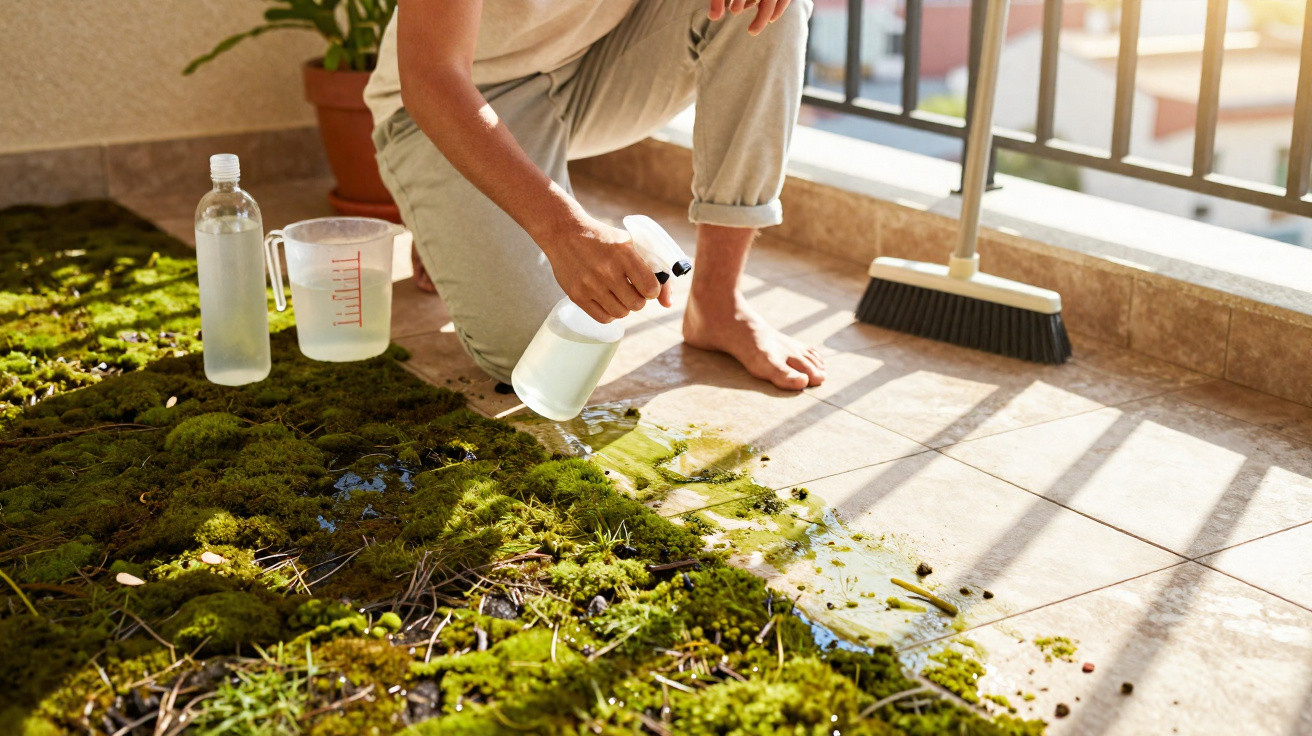
Many homeowners, fed up with the slippery green film, reach for a pressure washer or pricey specialist cleaners from the DIY shop. A British garden writer has shown a different approach: she gets her patio clean again in around an hour using just one ultra-cheap kitchen staple - with no pressure washer and no harsh chemicals.
Why moss clings so stubbornly to patios
After a wet winter, slabs, steps and pathways are often coated in a greenish layer. Moss and algae thrive in damp, shaded spots. If plant pots sit in the same place for months or rainwater does not drain well, dark, wet patches linger - ideal growing conditions.
It is not only about appearances. The slimy coating can make the surface slippery, especially for children and older people. That is why many put off a proper clean, expecting hours of work with a brush, hose and heavy kit.
"It’s much easier: an inexpensive kitchen product, a bit of water and a broom - that’s all many patios need."
The star of the trick: plain white household vinegar
The product the British writer relies on is something many people already have in the cupboard: clear, distilled white vinegar (household vinegar). In UK supermarkets it can work out at about 30p a bottle - and for a typical patio you only need roughly half.
Vinegar contains acetic acid. At higher concentrations, it attacks the cell structure of moss, algae and small weeds. On many concrete slabs and standard concrete block pavers, a diluted mix is often enough to loosen the green layer.
How the 30p trick fits into an hour
The writer keeps her routine deliberately simple so it still works on a busy weekend. In practice, it looks like this:
- a quick sweep to remove loose dirt and leaves
- mix vinegar and water
- apply the solution and leave it to work for about an hour
- go over it with a stiff broom, then rinse or sweep away
In terms of hands-on time, it is often only 20 to 30 minutes. The rest is the waiting time while the solution does the work.
Step-by-step: cleaning a patio with vinegar
1. Clear the area and remove dry leaves
Before you use vinegar, it pays to check the surface properly. Move garden furniture, pots and toys out of the way. Then use a stiff outdoor broom:
- brush away loose soil, sand and leaves
- roughly sweep out the joints so the liquid can get in
- lift very thick moss clumps first with a scraper - it reduces the scrubbing later
2. Getting the vinegar-to-water mix right
For the main clean, mix vinegar and water at roughly a 1:1 ratio. The water should not be hot; lukewarm is enough. Hot water can, in some situations, loosen jointing material.
"A half-and-half mix of clear vinegar and water has proven itself - strong enough for moss, gentle enough for many slabs."
You can mix it in a bucket or in a watering can without a rose. If you have a garden pump sprayer, that works too. The key point is to wet the surface thoroughly.
3. Apply, leave it to work, do not scrub straight away
Next, pour or spray the mixture generously over the patio slabs. Heavily affected areas and the joints can have a bit extra.
Then wait: around one hour has worked well in the example described. During this time the acetic acid loosens the slimy film and weakens the moss.
4. Follow up with a stiff broom
After the wait, you can often see a change already: the surface looks duller and dark patches appear swollen. Now bring back the stiff broom:
- sweep or scrub the area firmly
- pull moss remnants and loosened algae into piles
- collect the debris and dispose of it with general waste - not in the garden waste bin if a lot of vinegar was used
If you like, rinse the patio with clean water afterwards, using a garden hose or watering can. On many surfaces, any remaining residue will wash away in the next shower of rain.
Where vinegar works - and where it can cause damage
Vinegar is comparatively mild next to strong cleaners, but it is still acidic. Not every type of stone copes equally well.
Suitable surfaces for the vinegar method
- ordinary concrete slabs
- concrete block paving without a special coating
- tough, hard-wearing brick (clinker-style) surfaces
On these surfaces, moderate use and infrequent application can be a practical option if you want to avoid aggressive chemical cleaners.
Take care with natural stone and older jointing
These are particularly sensitive:
- sandstone
- limestone and other calcium-rich natural stones
- very old, crumbly joints made from cement or lime
Here, the acid can roughen the surface, cause discolouration, or weaken the joints. If you are unsure, test the mixture on a small, hidden patch first. If, once fully dry, there are no marks, careful use is usually less risky.
"If in doubt, test on a tucked-away slab before treating the whole patio."
Risks for plants and when alternatives make more sense
Vinegar does not only scorch moss; it can also kill young weeds in joints. That may sound helpful, but it becomes tricky when there are nearby borders, lawns or container plants.
If the vinegar mix runs directly into beds, it can disrupt soil biology and harm sensitive roots. When working close to planting, apply the liquid carefully and keep an eye on where it drains.
In some situations, other approaches are better suited, for example:
- biological specialist cleaners that work gradually
- a pressure washer on a moderate setting for robust concrete surfaces
- joint scrapers and brushes for areas with lots of plants
How to slow down new moss growth
A one-off clean rarely lasts forever. With a few straightforward habits, you can at least push back the next heavy build-up.
- do not leave leaves and clippings lying around for weeks
- shift plant pots slightly from time to time so the area beneath can dry
- check for puddling - clear blocked drainage
- give the area a dry sweep now and then instead of relying on one spring deep clean
If your patio is heavily shaded, even trimming back a shrub or thinning a tree canopy can help get more light and air down to the surface. When the area dries faster, moss loses much of its advantage.
Risks, limits and when to call in professionals
As tempting as the budget trick is, it can be worth making a quick call to a stonemason or landscaping firm if you have heavily weathered or valuable natural stone. They often know gentler products tailored to the material.
If the paving is very old and uneven with lots of voids, take care when scrubbing hard so you do not loosen stones. In such cases, a combination of gentle cleaning, re-pointing and small repairs can be more sensible.
Another factor is effort. The vinegar trick saves money, but it still involves physical work. For people with limited mobility, paying a patio-cleaning service may be the better option even if it costs more.
Why it is worth checking the kitchen cupboard
This method shows how an everyday, low-cost product can tackle a typical springtime problem. Vinegar will not replace every specialist solution, but on everyday concrete it can be a simple way to lift the winter build-up from a patio.
If you follow the guidance on materials, plants and contact time, you can try the 30p trick safely. Testing a small section first is often enough - and after an hour, the difference speaks for itself.


Comments
No comments yet. Be the first to comment!
Leave a Comment