
When people think about hygiene in the kitchen, they usually picture raw meat juices on a chopping board, mouldy vegetables or manky washing-up sponges. The humble kitchen bin tends to be an afterthought in many homes. Yet it’s exactly there that germs find ideal conditions to multiply rapidly - especially when one particular interior-design trend comes into play.
Why the kitchen bin is an ideal breeding ground for bacteria
Every day, food scraps, used tissues, smeared packaging and damp cloths end up in the kitchen waste. With diligent recycling and sorting, the usual general-waste bin is often smaller than it used to be - but it still sits right in the middle of the room and collects the “nastiest” leftovers of daily life.
Hygiene professionals class the bin as a typical “wet zone”. Several risk factors come together in the same place:
- organic waste such as leftovers and peelings
- moisture from liquids, condensation or wet cloths
- the relatively warm kitchen environment
- frequent contact with the lid, handles and rim
Add even a little water and the number of micro-organisms on these surfaces can shoot up. The moment the lid flips open or the bin is handled, germs are transferred to hands, drawer pulls, tea towels - and eventually to food.
“The kitchen bin is one of the most underestimated germ spreaders in the kitchen - and it usually sits right next to the worktop.”
There’s also a familiar problem: the liner splits or sticks to the bottom, liquid leaks out, and a damp film forms on the inside walls. If the bin is only rarely cleaned properly, a biofilm of bacteria and fungi can develop and remain stubbornly in place.
Trend piece or hygiene hazard? When the bin’s material becomes the problem
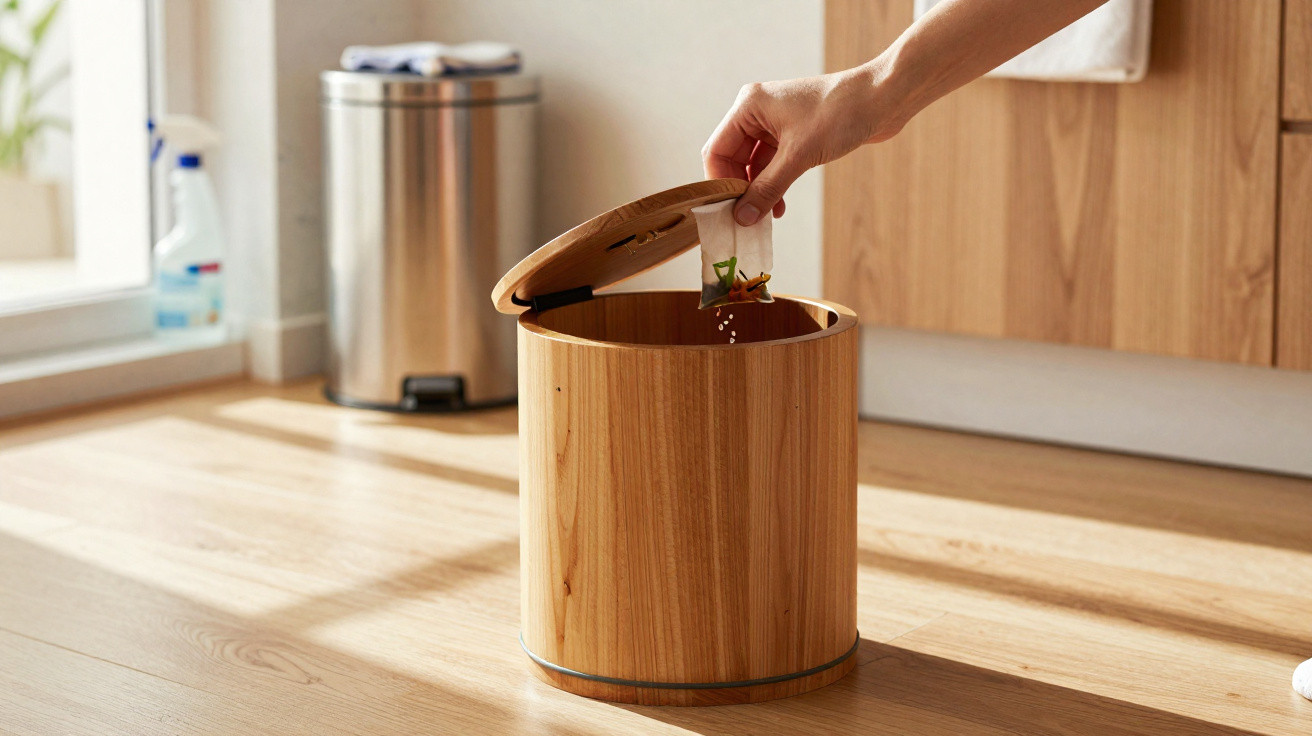
Home magazines and furniture retailers have been pushing a “natural look”: wood fronts, bamboo shelving, warm colours - and, to match, a wooden bin. It can look cosy and premium. From a hygiene point of view, though, the trend is a real own goal.
Specialists strongly advise against waste bins made from wood. The reason is the material itself: wood is porous. It absorbs liquids, holds on to smells, and can’t be scrubbed “clinically” clean in the way metal or plastic can.
In everyday use, that leads to:
- “bin juices” seeping into tiny pores and drying there
- the material swelling during cleaning, creating minute cracks and edges
- bacteria, mould spores and yeasts settling in these micro-gaps
- harsh cleaners damaging the wood, so they’re often used too sparingly
“Wood looks natural and warm - and that’s exactly why it absorbs moisture and offers germs countless hiding places a cloth will never reach.”
Over time, the wood can warp, chip at the edges, and the lid may no longer close properly - allowing odours and germs to escape more easily. If you then only give the bin a quick wipe, you’ll usually clean what you can see, while stable bacterial colonies remain deep within the material.
Which kitchen bin makes sense from a hygiene point of view
Healthier choices for the kitchen are materials that are smooth, non-absorbent and able to withstand heat and cleaning products. Two options are mentioned most often:
| Material | Advantages | Typical weak points |
|---|---|---|
| Plastic | lightweight, affordable, easy to clean with washing-up liquid, won’t rust | can absorb odours over time, scratches more easily |
| Stainless steel / Inox | very smooth surface, sturdy, less prone to odours, often a more modern look | fingerprints show, higher price |
It’s not just the material that matters, but also the design. A hygienic bin is one that:
- has as few grooves, seams and hard-to-reach corners as possible
- includes a removable inner bucket that can be washed separately
- has a lid that closes tightly but is easy to clean
- isn’t oversized, so rubbish doesn’t sit around festering for days
Practical choices include straightforward swing-lid bins or pedal bins without complicated internal mechanisms. What’s often overlooked when buying: every decorative chrome strip, every handle and every unnecessary angle becomes an extra surface where grime and germs can lodge.
The one hygiene mistake almost everyone makes
In many households, the biggest weak point isn’t the bin model - it’s how it’s used. Plenty of people only take the bag out when it’s completely full or already overflowing. Visually it may seem “efficient”, but hygienically it’s a disaster.
“Anyone who only throws the bin liner away once it bursts creates perfect conditions for rot, bad smells and germ growth.”
Within a few days, a warm, damp mix forms between leftovers, meat juices, coffee filters and dirty tissues - like an indoor compost heap, only uncontrolled and sitting in general waste. Particularly troublesome are:
- fish scraps and raw meat
- dairy products that start to ferment
- fruit peel and wet vegetable leftovers
- used tissues during a cold
Waiting too long doesn’t only mean odours; it also increases the likelihood that pathogens end up on the bin’s surfaces - and from there onto hands, handles and worktops.
How often you really should clean your kitchen bin
Professional guidance is clear: the liner should be removed at least every 48 hours, even if it isn’t full yet. In warm weather or when there are lots of food leftovers, a daily change won’t hurt. If someone has a vomiting/diarrhoea bug or there are small children in the household, it’s better to change it sooner rather than later.
A simple maintenance schedule for the bin itself works well:
- Weekly: quickly wipe the inside with hot water and washing-up liquid, especially the base and rim.
- Monthly: clean thoroughly with a brush and washing-up liquid, then follow with a disinfectant.
- Always: if bin liquid leaks, deal with it immediately - don’t leave it “until tomorrow”.
After any wet clean, the bin should dry out completely before a new liner is fitted. Otherwise, leftover moisture quickly creates ideal nesting places for germs and mould again.
Practical extra tips to reduce germs and smells in kitchen waste
A few everyday habits can significantly reduce the risk without turning the kitchen into a lab:
- Pour off liquids such as sauces or yoghurt остат leftovers down the sink before putting the packaging in the bin.
- Wrap strongly smelling food scraps in paper before they go into the bag.
- In very hot weather, keep food and general waste in a cooler hallway or cellar.
- Wash hands after touching the bin, especially before cooking.
- Wipe the lid regularly with a disinfectant wipe - it’s touched constantly.
For people with sensitive stomachs or a weakened immune system, it’s worth paying attention to apparent small details: for example, having a separate, easy-to-reach bin for tissues and napkins can make sense if a cold is doing the rounds in the household.
Why the effort pays off in the end
Food poisoning and stomach bugs don’t only come from undercooked meat or spoiled products. Cross-contamination via hands and surfaces often plays a part. The bin acts as a “transfer point”: first you touch the lid handle, then the fridge, then the bread - and germs have already moved on.
Choosing materials that are easy to clean, not keeping rubbish around “for ages”, and giving the bin a proper wash regularly reduces the risk noticeably. A seemingly stylish wooden bin or an overflowing bag might look more practical or chic at first glance - but from a hygiene perspective, the plain, easy-to-clean option is far more worthwhile.
Comments
No comments yet. Be the first to comment!
Leave a Comment