
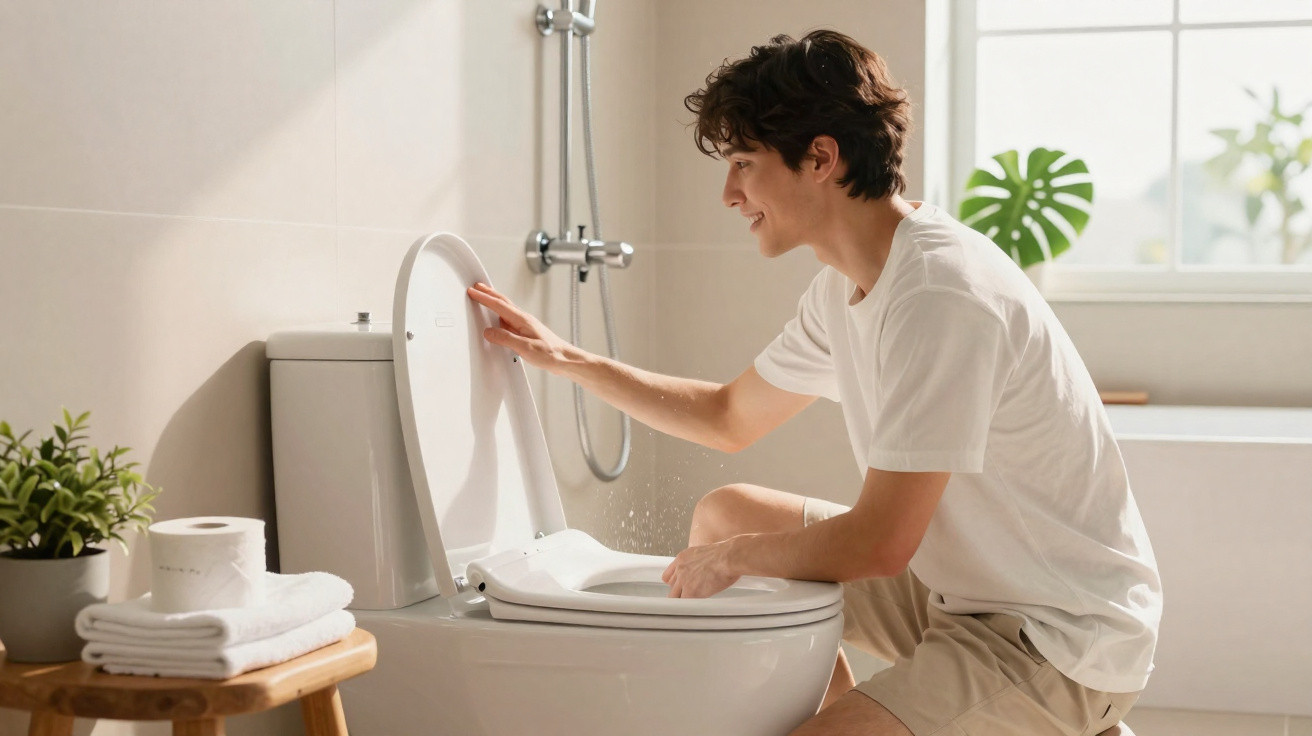
In many countries it is already standard, yet here it still feels like a niche: cleaning with water rather than paper. Modern bidets and shower toilets are challenging almost everything that has been considered “normal” in bathrooms for decades across the German-speaking world - and the case for them is clear.
Water instead of wiping: how clean is toilet paper really?
At first glance, toilet paper seems hygienic. It is dry, white, looks clean - and it is what most of us have used for generations. A closer look, however, tells a different story.
“Toilet paper does not remove soiling completely; it often just spreads it across the skin.”
When you wipe dry, microscopic residues can remain behind. Those traces create ideal conditions for bacteria. Anyone who regularly notices itching, stinging or minor inflammation after using the toilet is often experiencing the downstream effects of inadequate cleaning.
Water works in a different way. Instead of rubbing remnants around, it rinses them away. It cleans without abrasion. In such a sensitive area, that difference matters far more than many people assume.
Protection for sensitive skin and in cases of health issues
A lot of people accept pain or discomfort after going to the loo as “just how it is”. Often, the simplest explanation is the paper itself.
This is particularly relevant for people with:
- haemorrhoids
- anal fissures (small tears)
- sensitive or thin skin
- soreness after operations or childbirth
For these groups, dry toilet paper can be genuinely miserable. Friction aggravates inflamed or damaged tissue, and every wipe can sting.
“Gentle cleaning with water removes friction from the equation - and with it one of the biggest irritants for the skin.”
People who switch to a bidet or a shower toilet frequently report that long-standing issues ease significantly or disappear altogether. Rather than wiping repeatedly with paper, a focused, lukewarm spray is often enough. No scratching, no harsh rubbing, no reopened skin.
Another point: many modern systems are designed for minimal contact. Your hands do not need to come into contact with soiled areas in the first place. That reduces the chance of spreading germs to door handles, phones, and other surfaces - a meaningful benefit at a time when infections can circulate quickly.
What modern bidets and shower toilets can do today
The era when a bidet meant an extra ceramic basin next to the toilet is largely over. Most manufacturers now offer attachments or complete shower toilet seats that mount directly onto an existing WC.
Common features in current models include:
- continuously adjustable water pressure
- adjustable water temperature
- different spray modes (e.g. gentle, pulsating)
- warm-air drying, making paper practically unnecessary
- self-cleaning nozzles
- energy-saving operating modes
Many people start with simple, non-electric attachments that only need a water supply. If you want more comfort, you can opt for a shower WC with a power connection, heated seat and remote control. Entry-level prices are now surprisingly low, while premium models naturally climb far higher.
Installation: do you really need a plumber?
Usually, no. Many attachments can be fitted yourself with basic DIY confidence. In most cases you will need:
- a standard WC
- a nearby water supply (often at the cistern)
- for electric models: a socket in the bathroom
If you have ever watched a tap or shower hose being connected, you can typically manage a bidet attachment too. More extensive work is generally only required for higher-end, fully integrated installations.
Toilet paper and the environmental footprint: the hidden cost
As one roll after another goes into the shopping basket, it is easy to forget what sits behind it.
“Millions of trees are felled for toilet paper every year, alongside chemicals, water use and long transport routes.”
Toilet paper manufacturing puts pressure on forests, rivers and air quality through:
- felling trees for pulp
- high water use during production
- bleaching and other chemicals entering waterways
- plastic packaging and long-distance transport
One detail surprises many people when they compare the two: across its life cycle, the water used to produce a single toilet roll is often higher than the additional water a bidet uses over years of daily operation. Switching therefore reduces paper consumption and, indirectly, can save water and energy too.
Japan as a pioneer: how shower toilets became the norm
In Japan, using a water jet after the toilet has long been the default. So-called washlets have transformed bathroom habits there.
A typical Japanese shower toilet offers:
- precisely aimed water jets
- individually adjustable programmes for different users
- comfort extras such as heated seats and odour extraction
What started in Japan has since spread across parts of Asia, North America and Europe. In some new-build projects, shower toilets are already part of the basic specification. In existing homes, many people choose retrofit solutions.
Does it pay for itself financially?
It is the obvious question: is it worth the money? Basic, non-electric attachments are available for relatively modest sums. Mid-range shower toilets sit in the hundreds, with premium devices above that.
Set against this are the ongoing monthly costs of toilet paper. Families often get through several multipacks a month. Depending on habits, a bidet or shower toilet can pay for itself within months to a few years. Those who clean mainly with water and use only a few sheets for dabbing - or skip paper entirely thanks to warm-air drying - can cut running costs significantly.
Habit versus comfort: why switching is easier than you think
The biggest barrier is usually psychological. “I’ve always done it this way” is probably the strongest argument in favour of toilet paper - even if it is not particularly convincing on the facts.
“Many users say that after a few days they do not want to go back to paper.”
The first attempt can take a bit of getting used to. After a few days, though, a new normal tends to set in: the fresh, clean feeling after water-based cleaning simply feels better than dry wiping. Once you have noticed the difference, toilet paper can quickly start to feel like a fallback - for example, when you are out and there is no bidet available.
Health, everyday life and a few practical pointers
For certain groups, cleaning with water can be especially helpful:
- older people with reduced mobility
- people with chronic bowel conditions
- pregnant women and women after childbirth
- children who are still learning to clean themselves
With a bidet or shower toilet, the physical effort involved in cleaning is reduced. That supports independence in later life and eases the load on carers.
Moderation matters: the water jet should not be set too strong, so the skin does not become dry or irritated. A short, targeted rinse with lukewarm water is usually sufficient. If you want to, you can use mild, unperfumed paper to pat dry, or rely on the built-in warm air function.
What else might change at home
People who move to water-based cleaning often become more attentive to hygiene and sustainability elsewhere too: longer-lasting towels instead of disposables, less aggressive cleaning products, and a more thoughtful approach to plastic packaging. Many say their attitude to everyday items shifts overall - away from throwaway products and towards longer-term solutions.
In the end, it comes down to a simple question: what feels better, long term, for your body, your wallet and the environment - a product you buy and bin every day, or a technology you install once and rely on for years? For more and more people, the answer is clear: water beats paper.
Comments
No comments yet. Be the first to comment!
Leave a Comment