
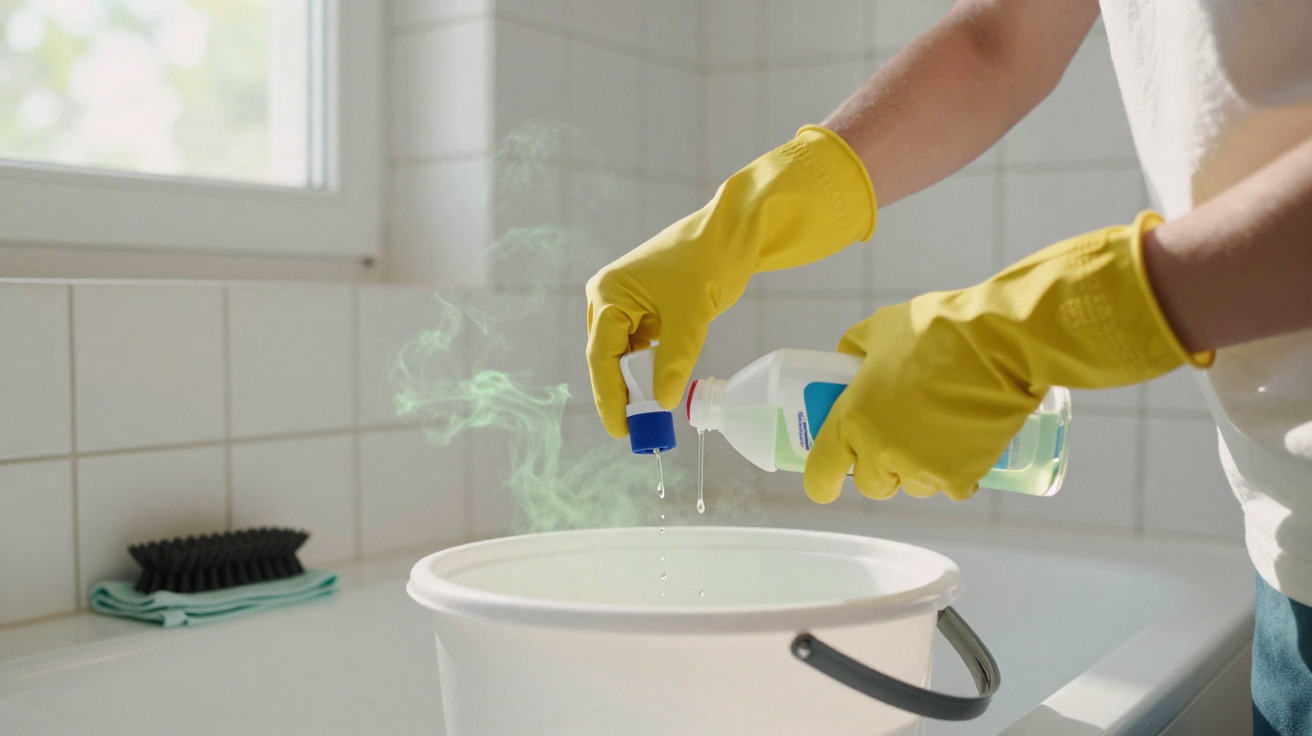
An incident in Albi in southern France shows how quickly routine cleaning can turn into a medical emergency. A 35-year-old mixed two everyday household cleaners at home to tackle mould and grime. Seconds later, the air was filled with an invisible, toxic gas - he developed severe breathing difficulties, and neighbours called the emergency services.
What happened in Albi
The call-out took place on Thursday evening, 19 March 2026, in a residential area of Albi in the Tarn department. Initial reports indicate the man was trying to deep-clean his bathroom. To do this, he poured a combination of bleach and a vinegar cleaner into a spray bottle, intending to treat mouldy window areas and the grout.
Soon after the first sprays, the 35-year-old realised something was wrong. His eyes began to sting intensely, his throat felt scratchy, and he struggled to breathe. Within moments the situation worsened: he developed serious respiratory distress and could barely get out of the room.
Following the emergency call, a total of 13 firefighters attended with three vehicles. They treated him at the scene and then took him to hospital. How long he will need to remain there is not yet known, but doctors did not want to take any chances.
"Responders describe a ‘corrosive gas’ that irritates the eyes and airways and, depending on the concentration, can cause significantly more severe harm."
How cleaning products suddenly become chlorine gas
The emergency response was triggered by a chemical reaction that can occur in many homes: combining bleach (for example, chlorine-based products) with a vinegar cleaner produces a toxic gas. What starts as familiar products can release chlorine in gaseous form - historically known as a chemical weapon and still highly dangerous today.
A small, poorly ventilated space such as a bathroom is especially risky. In such conditions, the gas can build up within seconds. The consequence is that the person inhales more of the substance with every breath.
- Chlorine irritates immediately: burning eyes, a runny nose, and coughing.
- Higher dose: shortness of breath, tightness in the chest, dizziness.
- Longer exposure: damage to the bronchial tubes, risk of pulmonary oedema.
That is exactly the chain of events in Albi: a few sprays in a closed bathroom were enough to make the situation so critical that multiple emergency vehicles were sent.
Why so many people don’t realise how dangerous the mixture is
Many people use bleach to shift stubborn stains and reach for vinegar cleaner to combat limescale and mould. The fact that combining them can be hazardous at home is rarely made prominent on the bottle. In everyday life, warnings are easily overlooked - especially when someone is trying to clean something “quickly”.
Often the dangerous combination happens unintentionally: one product is applied and, shortly afterwards, a second is used without fully rinsing away the first. In Albi, the mix was particularly concentrated because it was combined inside a spray bottle - the reaction happened right there, and the gas then spread through the room.
"A few seconds of inattention are enough to turn a bathroom into a room filled with toxic air."
Typical symptoms of chlorine gas
Firefighters and emergency doctors repeatedly report similar complaints when people breathe in chlorine gas. These include:
- a sharp smell reminiscent of a swimming pool, but far more intense
- sudden coughing, sometimes a painful, irritating cough
- burning in the eyes, nose and throat
- breathlessness and a feeling of pressure on the chest
- dizziness and, in extreme cases, loss of consciousness
If these symptoms occur after cleaning, those affected should immediately get into fresh air, open windows wide, and avoid the room. If breathing does not improve quickly, the advice is clear: call the emergency number.
How experts are responding to the incident
The Albi call-out fits a pattern familiar to firefighters and poison information services in many countries. Time and again, incidents happen because people mix different cleaning products. Many are hoping for “more cleaning power”, but the chemical outcome is unpredictable.
After this latest case, responders are again warning people never to combine different cleaning products in the same container. Chlorine-based bleaches are especially problematic when they come into contact with acidic cleaners, descalers, or toilet cleaners.
| Product combination | Possible result |
|---|---|
| Bleach + vinegar cleaner | Release of chlorine gas |
| Bleach + toilet cleaner (acidic) | irritant gases, danger to the airways |
| Descaler + bleach residue | toxic fumes, especially in enclosed spaces |
How to stay safe while cleaning
Anyone cleaning a bathroom, kitchen or patio can reduce risk with a few simple rules. The most important is to use only one product at a time and follow the instructions. If a second product is needed, all residue from the first should be thoroughly removed with plenty of water.
The following basics also help:
- Ventilate well while cleaning by opening a window or extractor fan.
- Never mix products randomly, not even “just a little” in a bucket.
- Actually read the warnings on labels, especially on unfamiliar products.
- Store cleaners closed and out of children’s reach.
- Wear rubber gloves and, with strongly irritating products, simple safety goggles as well.
If irritation suddenly occurs despite precautions, stop cleaning immediately, close the bottles, open windows and leave the room. If breathlessness does not subside quickly, calling a poison information service - or the emergency number - can be crucial.
Why chlorine is so treacherous
Chlorine gas is invisible, and most people only notice the smell once the concentration is already uncomfortably high. The substance reacts with moisture in the mucous membranes of the eyes, nose and lungs, forming caustic compounds. With heavy or prolonged inhalation, lung damage can occur that may not fully become apparent until hours later.
People with asthma, COPD or other pre-existing respiratory conditions are particularly sensitive. For them, an incident like this can become life-threatening much faster. Children and older people also face a higher risk.
Practical everyday examples
Hazardous reactions are not limited to bathroom cleaning. Other situations can also become critical:
- removing mould in a bedroom with bleach, then using vinegar to tackle limescale on the window frame
- cleaning a toilet with a strong acidic WC cleaner, then later using a bleach-based cleaner in the same bowl
- cleaning a tiled shower: first applying descaler, then a chlorine-based mould remover
By recognising these typical scenarios, people can approach the next cleaning session differently: either stick to one suitable product, or separate tasks over time and rinse thoroughly with water in between.
The Albi case feels like a cautionary everyday example: an ordinary Thursday, a man who simply wanted a clean bathroom - and it ended with a major fire service response that could easily have been avoided. Accidents like these do not happen because people intend to be reckless, but because many household chemical reactions remain invisible until it is too late.
Comments
No comments yet. Be the first to comment!
Leave a Comment