
A modest powder from our grandparents’ era is quietly making a return.
Anyone who cooks a lot knows what happens: after a few months, even premium tea towels start to look tired. A dull grey cast, yellowish oil marks, dark stains from coffee and tea - and expensive heavy-duty detergents end up doing little more than surface-level touch-ups. In many homes, the fix has been sitting in a cupboard all along but rarely gets used: a classic laundry aid that works with oxygen and refreshes textiles surprisingly thoroughly.
The forgotten wonder product for white kitchen towels
It’s sodium percarbonate, usually sold simply as “percarbonate” or “oxygen bleach”. It doesn’t look like much: a white, slightly granular powder that you dissolve in hot water.
“From the unremarkable powder, hot water creates a bath full of active oxygen that visibly brightens greyed cotton.”
The basic principle is straightforward: percarbonate is a solid form of hydrogen peroxide. When it meets sufficiently warm water, it releases active oxygen. That oxygen breaks down colour pigments, grease residues and protein deposits - exactly the substances that gradually turn kitchen towels grey.
Unlike chlorine bleach, this product is far gentler on cotton fibres. Rather than damaging the fibre structure, it mainly lifts dirt, discolouration and odours. That makes it ideal for tea towels, pot holders, cleaning cloths and white aprons.
Why it can outperform many modern detergents
A lot of today’s detergents rely on optical brighteners. In other words, fabrics look whiter because a bluish film changes how light reflects - but the grime itself is often still lodged in the fibres.
Percarbonate tackles the problem differently:
- breaking down pigments from tomato sauce, coffee, tea and red wine
- lifting grease from oil, butter and roasting juices
- neutralising odours through oxygen action
- no added fragrance mix and no optical brighteners
Because the reaction produces only water, oxygen and a little soda, it’s often considered relatively environmentally friendly for household use. Any residues on laundry or in wastewater are typically less troublesome than those from many specialist cleaners or chlorine-based products.
The chemistry behind its whitening power
Temperature is the make-or-break factor with percarbonate. Many people use the powder incorrectly by adding it to a cold wash - and then wonder why nothing happens.
“The oxygen action only really starts at around 40°C; it reaches full strength at about 60°C.”
In cold water, very little happens and the powder remains largely inactive. With hot water, the reaction begins: oxygen bubbles form (invisible, but highly active) and penetrate cotton fibres. There they oxidise organic residues that normal detergent can struggle to shift.
For kitchen textiles, this combination of heat and oxygen is doubly useful: stains fade and the germ load drops noticeably at the same time. Tea towels come into daily contact with food, raw meat, damp wooden boards and worktops - so hygienic cleaning is about more than appearances.
The “miracle soak” for grey tea towels: step by step
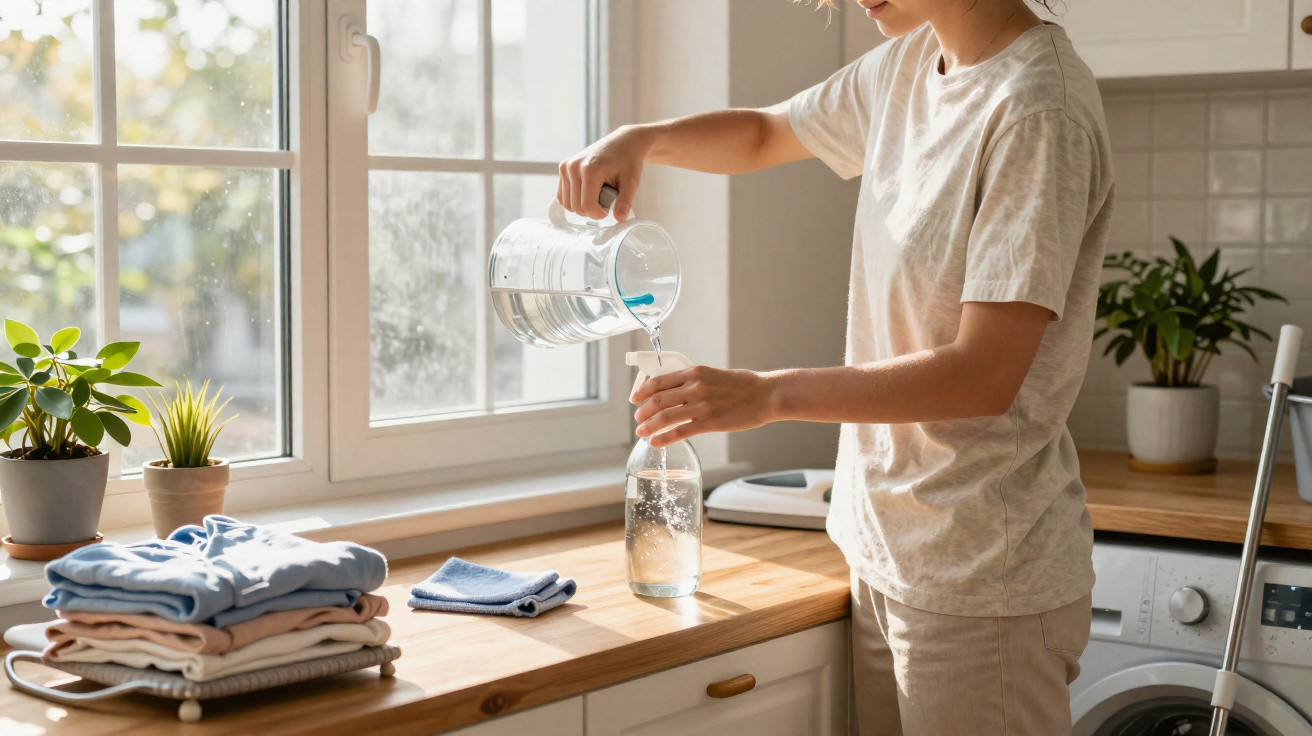
If you want to rescue heavily discoloured kitchen towels, the best results come from a separate soaking bath. This is an easy routine to follow day to day.
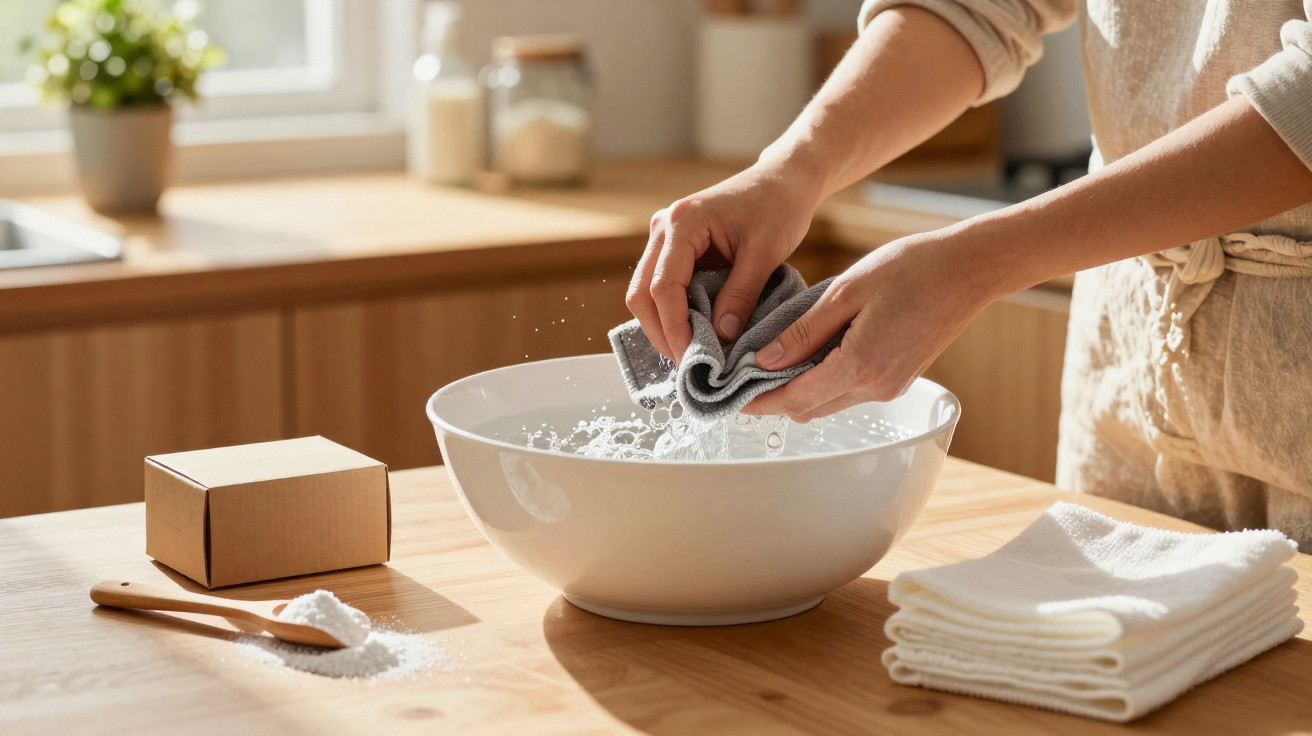
What you need and how much to use
- a heat-resistant bowl or bucket
- very hot water (at least 40°C; for cotton, around 60°C works well)
- 1–2 tablespoons of percarbonate per litre of water
- a wooden spoon (or similar) for stirring
Add the powder directly to the hot water and stir thoroughly until the granules have largely dissolved. Only then put the textiles in. That way you make the most of the oxygen phase from the very start.
Soaking time: patience pays off
Make sure the towels are fully submerged. As a rough rule of thumb:
| Level of soiling | Recommended soaking time |
|---|---|
| normal discolouration, light marks | around 2 hours |
| more greyed towels, old coffee stains | 4–6 hours |
| stubborn set-in stains, greasy shadows, tomato rings | overnight |
After soaking, squeeze the towels out briefly and put them straight into the washing machine. A normal wash with your usual detergent is enough to rinse out the loosened residues. If you like, dry the towels in the sun afterwards - UV light can further support the brightening effect.
Where the limits are: take care with delicate fabrics
For all its benefits, percarbonate is not suitable for every textile. It’s alkaline and oxidising - precisely what breaks down grease and stains can also attack animal fibres.
“Wool and silk should never go into an oxygen-bleach bath; the fibres would become brittle and dull.”
It’s well suited to:
- white or colourfast cotton tea towels
- cotton tablecloths and napkins
- cloths, flannels, and fabric napkins made from linen or robust blends
It’s less suitable for:
- wool, silk, cashmere
- delicate performance fabrics
- very intensely dyed, poorly fixed textiles (colour bleeding is possible)
If you’re unsure, test on an inconspicuous area first. If colour lifts, stop the treatment. For coloured towels, use a lower dose and a shorter soak.
Safe handling at home
Even though percarbonate is a common household product, it still deserves a bit of caution. In concentrated form, the powder can irritate skin and eyes.
- wear rubber gloves when measuring and stirring
- avoid touching your eyes; wash hands after use
- store the powder dry and out of reach of children
- do not mix in closed containers with acids (for example vinegar), as gas can form
If you already clean with bicarbonate of soda, vinegar or citric acid, use those separately from percarbonate: apply one, let it work, rinse thoroughly, then start again fresh. That keeps the reaction predictable and safe.
Useful for more than just tea towels
Many households start by using percarbonate for greyed kitchen towels - and then quickly broaden where they use it. The oxygen action also helps with:
- dulled white socks and underwear
- stains on bed linen (sweat marks, make-up, tea)
- flannels and towels that have developed trapped odours
- aprons with stubborn grease marks
If you often wash at low temperatures, it can be worth planning an occasional warm wash with percarbonate. It helps break down odours and build-up that can otherwise accumulate with continual eco/low-temperature washing.
Why this old household staple is worth reaching for
Its biggest strength is the combination of powerful cleaning performance, comparatively straightforward ingredients, and use that doesn’t rely on complicated special programmes. Many users say it has allowed them to remove chlorine-based cleaners from their laundry area altogether.
Percarbonate doesn’t replace your normal detergent; it works more like a turbo boost. Used at the right dose and in sufficiently hot water, it can bring even years-old kitchen towels back to a condition where you’re happy to leave them on display in the kitchen - rather than hiding them away in the cupboard.

Comments
No comments yet. Be the first to comment!
Leave a Comment