
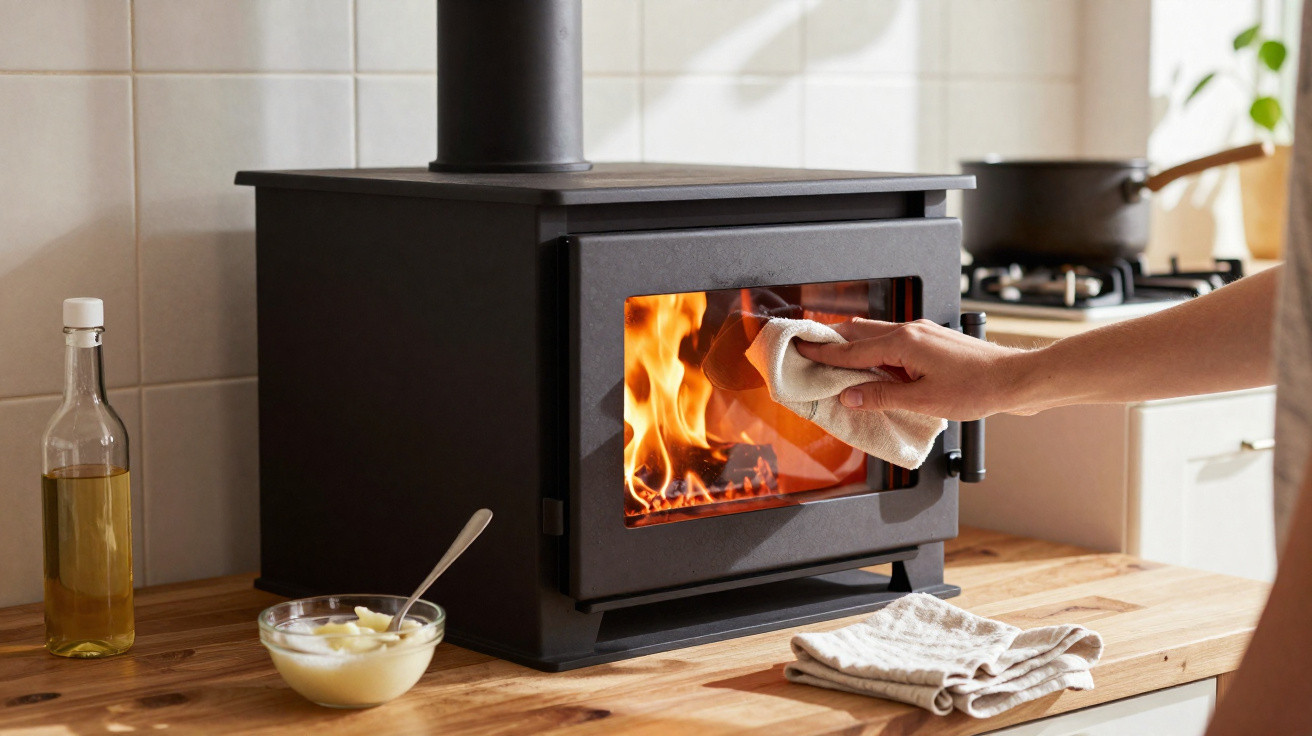
If you light the stove in winter, you will know the familiar frustration: after just a few evenings, the view of the flames looks as though it has been smeared over. Many people automatically reach for ash from the firebox. It does work, but it is messy and often leaves streaks behind. There is a much simpler way - using two household staples that most people already have in the cupboard.
Why the glass on a wood-burning stove turns black so quickly
Before you reach for the cloth, it is worth understanding what is causing the build-up. If you know why the glass soots up, you can reduce it significantly.
- Poor-quality or damp wood
Logs with too much residual moisture produce a lot of smoke. That smoke contains plenty of particles that settle on the glass like a film. Ideally, burn wood with no more than 20% moisture, properly seasoned and stored somewhere dry. - Dirty combustion
If the fire burns too cool or does not get enough oxygen, more soot is produced. It tends to collect on the hottest, smoothest surface - the glass. - Incorrect draught settings
If the air supply is closed down too far, the wood smoulders rather than burning cleanly. The result is more smoke and more deposits. A well-set air control gives hotter flames and far less coating on the pane. - Running on a constant “low burn”
Many people turn the stove down so it “lasts longer”. Unfortunately, that gentle setting encourages a sluggish, dirty burn - and the glass is usually the first place you notice it.
"Clear glass is not luck - it is the result of dry wood, enough air and the right cleaning routine."
The surprisingly simple trick: clean stove glass without ash
Using ash to clean stove glass is a long-standing habit. It works like a mild abrasive and loosens soot well, but it can also spread grime around the room. A far more pleasant option is a pairing that is already a kitchen staple in many homes: clear white vinegar (cleaning vinegar or standard white vinegar) and bicarbonate of soda (baking soda).
Why vinegar and bicarbonate of soda work so well
- Vinegar breaks down grease and burnt-on residue
Its acidic pH helps cut through the film of soot, tar and fine oils that can settle on the glass during use. - Bicarbonate of soda cleans with a gentle abrasive action
The powder is fine enough not to scratch glass, yet abrasive enough to lift stubborn, baked-on deposits. - Together they fizz and help lift the dirt
When combined, they create bubbles. That light effervescence helps undermine the layer of grime, so you do not have to scrub aggressively.
Step by step: how to make stove glass clear again
Step 1: Mix up the cleaner
Before you start, make sure the stove is completely cold - no embers and no warmth in the glass. Then prepare the mixture.
- Put roughly two parts clear white vinegar into a small bowl.
- Add one part bicarbonate of soda.
- Wait briefly until it starts to foam lightly.
The foam simply shows the reaction; the cleaning power is still fully effective even after a few minutes.
Step 2: Apply and leave briefly
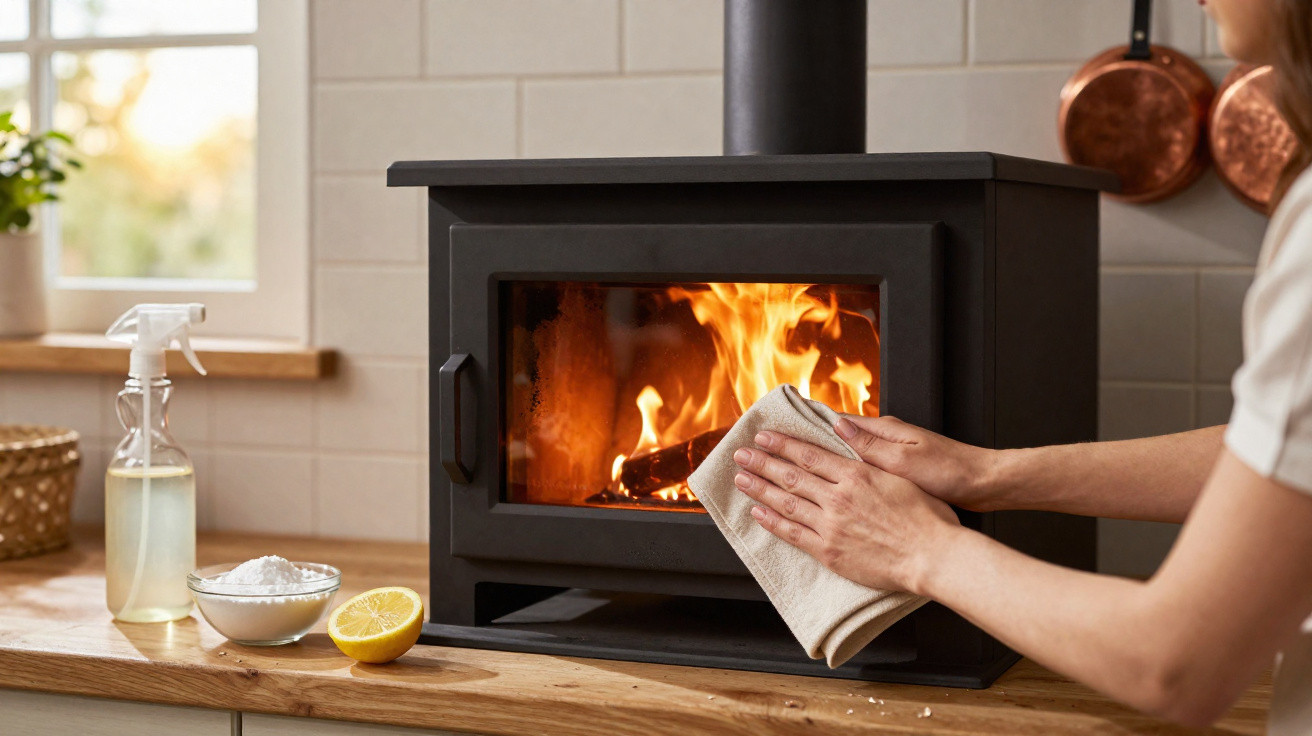
- Dip a soft cloth or the non-scratch side of a sponge into the mixture.
- Wipe the sooted glass using circular motions.
- For heavier staining, rub the paste on more generously and leave it for one to two minutes.
If you prefer, fill a small spray bottle with vinegar and mist the glass first, then apply the bicarbonate of soda in targeted areas with the cloth.
Step 3: Wipe clean and buff
- Use a clean, slightly damp cloth to remove all residue from the mixture.
- Polish with a dry, lint-free cloth until the glass shines without streaks.
"With vinegar and bicarbonate of soda, even thick build-up can usually be removed in one go - without that harsh chemical smell."
Natural alternatives if you do not have bicarbonate of soda
If the bicarbonate of soda jar is empty, you do not have to put up with blackened glass. Other items from the cleaning cupboard can also help.
- Black soap
Put a small dab on a damp cloth and add a little lukewarm water - the creamy mixture cuts through grease and soot reliably while being kind to the glass. - Household alcohol or methylated spirits
Particularly useful for greasy, smeary residue. Use sparingly and ensure the room is well ventilated. - Hot water and newspaper
A classic for lighter dirt: slightly dampen newspaper, dip it into hot water and wipe the glass. For fresh deposits, this is often all you need.
How to stop the glass darkening so often
If you do not want to be cleaning constantly, a few adjustments to how you burn your stove make a big difference.
- Use only dry, dense hardwood
Beech or oak burn hot and evenly. Freshly cut garden wood should be left to season for longer before it goes anywhere near the stove. - Give the fire enough air
Especially at the start, set the air controls a little more open. Stronger flames burn off residue more effectively. - Avoid continuous smouldering
Do not run the stove for hours at its lowest output. Instead, burn more strongly in intervals and then reduce the air once the fire is established. - Wipe regularly rather than scrubbing occasionally
If you give the glass a quick clean every few days, thick baked-on crusts never get the chance to form - and the effort stays minimal.
Why many households deliberately avoid chemical cleaners
Shops are full of specialist stove and fireplace sprays. They remove soot quickly, but they often contain strong solvents, added fragrances and irritating ingredients. In living spaces where children or pets are around, many people would rather not use these products.
With vinegar and bicarbonate of soda, you not only avoid the chemical cocktail, but also reduce costs and packaging waste. Both basics can be used countless times around the home - from the bathroom to the kitchen - and are unlikely to sit unused in a cupboard.
"Choosing simple household products is kinder to your wallet, glass surfaces and indoor air at the same time."
Practical tips to make cleaning even easier
A few small tweaks can make cleaning the stove door far less of a chore.
- Wear gloves
Soot stains easily. Thin rubber gloves keep hands and nails cleaner. - Put down old towels
Spreading a towel in front of the stove catches drips and loose soot. - Avoid the seals
Try not to work harsh acidic or abrasive products into rubber door seals, so they stay supple. - For stubborn dirt: soak instead of scraping
For thicker layers, apply the mixture several times and let it work, rather than prising at the glass with sharp objects.
How often you should clean the glass
The best routine depends heavily on wood quality, stove design and how often it is used. Some households manage with a thorough clean once a week; others find it is enough to wipe the light haze every few days with a damp cloth and a little vinegar.
At the latest, when you can only see the flames as a faint blur, it is time for a quick clean. The sooner you tackle it, the less intensive scrubbing you will need - and the less product you will use.
Looking beyond cleaning: safety and maintenance
Clear glass has another advantage: you can immediately see how the fire is burning. Unstable yellow flames or heavy smoke inside the firebox can point to draught issues or unsuitable wood. That way, you may spot that something is not quite right long before damage occurs.
Alongside regular glass cleaning, it also pays to have an annual professional check. A chimney sweep and stove fitter can inspect flues, seals and safety components. Clean glass makes it easier for them to assess the flame pattern too - and you get to enjoy an unobstructed view of the fire.



Comments
No comments yet. Be the first to comment!
Leave a Comment