
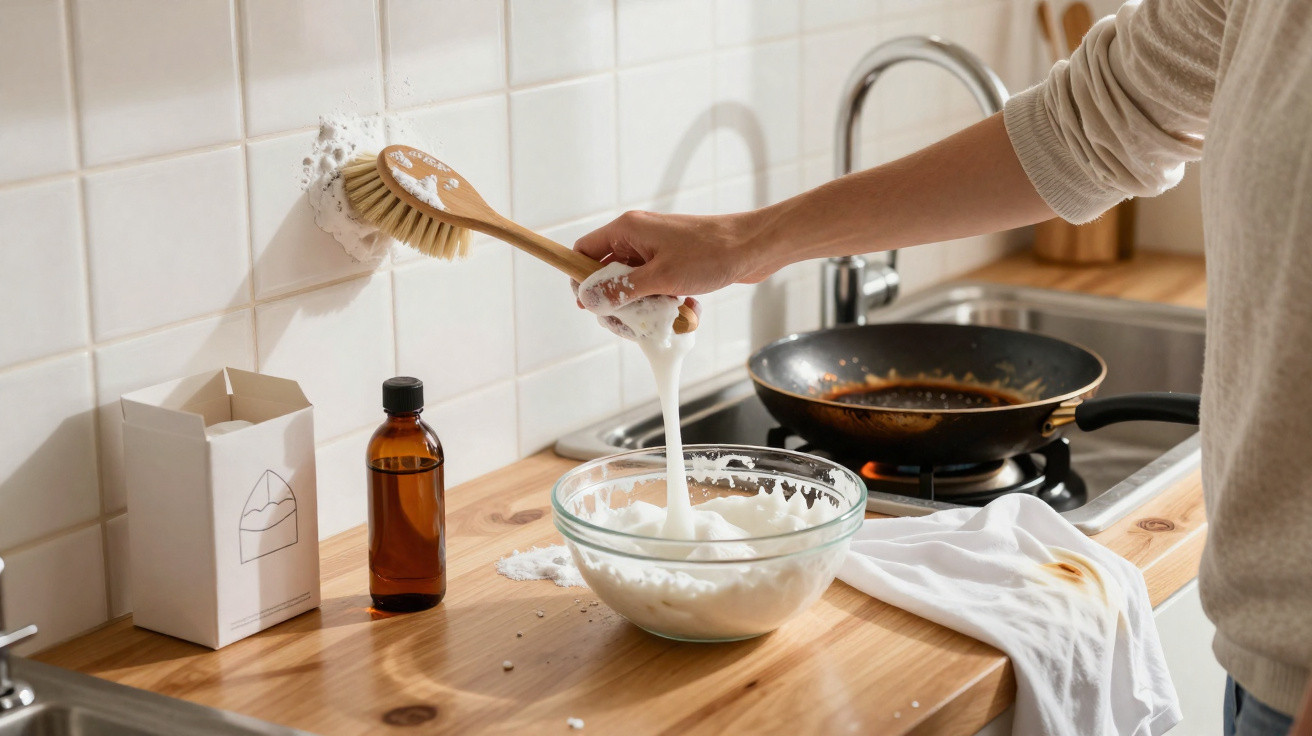
Many people reach for harsh cleaning products out of habit, even though a far gentler, cheaper and often more effective option is already sitting in the cupboard. The combination of bicarbonate of soda and hydrogen peroxide has earned a quiet reputation in countless homes as a near-professional solution for stubborn stains, greyed grout and baked-on pans - as long as you follow a few important rules.
Why bicarbonate of soda and hydrogen peroxide work so well together
Bicarbonate of soda is best known as a raising agent, but around the home this white all-rounder has a second job. It offers a mild abrasive action that helps lift grime without scratching most surfaces, and it also neutralises odours.
Hydrogen peroxide is familiar to many from the bathroom cabinet. At low concentrations it works as a mild disinfectant and bleaching agent. In everyday cleaning, that’s exactly what it brings to the table: it brightens and helps kill a large proportion of germs.
When the gentle scrubbing action of bicarbonate of soda meets the bleaching power of hydrogen peroxide, you get a mix that loosens dirt, traps odours and also has a disinfecting effect.
That pairing is what makes the blend so useful: bicarbonate of soda helps shift deposits and stains mechanically, while hydrogen peroxide tackles discolouration chemically. In many areas of the home, you can clean more thoroughly without relying on extremely aggressive products.
How to mix it - a basic household recipe
For most uses, a quick paste or simple solution is all you need. This basic recipe is a good starting point:
- 2 parts bicarbonate of soda
- 1 part hydrogen peroxide (3% solution from the chemist or pharmacy)
- optional: a splash of water if the mixture is too thick
Combine both ingredients in a glass bowl or a ceramic dish until you have a spreadable paste. Avoid metal containers, as hydrogen peroxide can react with certain metals.
Removing stains from clothing: fruit, dirt and greying
For fruit stains in particular - for example from berries or grapes - this method often delivers noticeably better results than many ready-made stain removers.
Step-by-step for fresh fruit stains
- Rinse the fabric from the back with cold water so some of the colour can flush out.
- Apply a few drops of hydrogen peroxide directly onto the stain.
- Sprinkle bicarbonate of soda over the area until it is well covered.
- Leave for around 30 minutes on coloured fabrics.
- Leave for up to 60 minutes on white laundry.
- If the stain is still visible, work it in gently with a soft brush.
- Wash in the machine as usual.
Important: with delicate fabrics such as wool or silk, test first on a hidden area to make sure the colours remain stable. Hydrogen peroxide can lighten dyes slightly, depending on how the item is coloured.
Refreshing greyed white laundry
The combination can also help lift a grey cast from white T-shirts, towels or bed linen. One approach is:
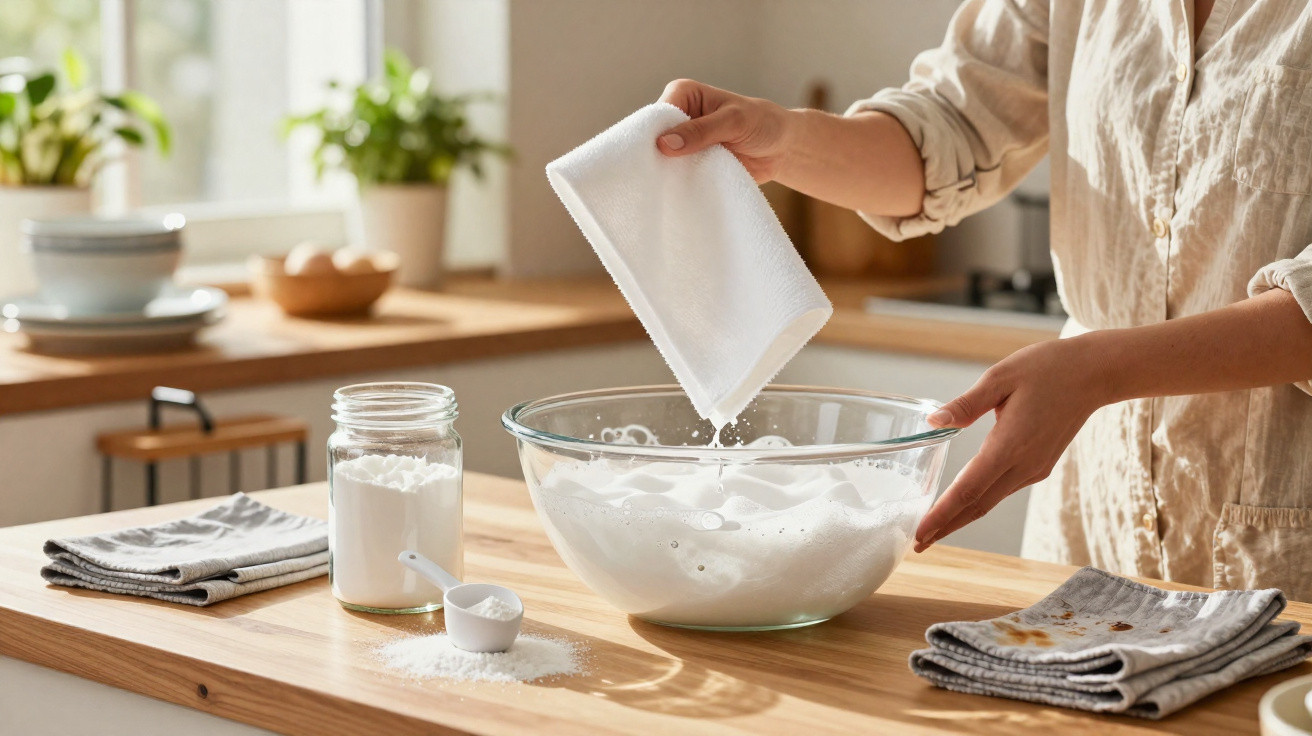
- Fill a bowl with warm water.
- Stir in 2–3 tablespoons of bicarbonate of soda.
- Add about half a glass of hydrogen peroxide.
- Soak textiles for 1–2 hours, then wash normally.
This can loosen many discolourations caused by sweat, deodorant or limescale far more effectively.
Tiles, grout and basins: bathroom cleaning without sharp fumes
Bathrooms gradually collect limescale, soap residue and grime in grout lines and porous surfaces. Strong chlorine-based cleaners can irritate the airways and smell overpowering. Here, the bicarbonate of soda–hydrogen peroxide mix stands out as a comparatively mild alternative.
Brightening tiles and grout again
For wall and floor tiles in the bathroom, this method works well:
- Apply the paste of bicarbonate of soda and hydrogen peroxide to grout lines and heavily soiled areas.
- Spread it with a soft cloth or an old toothbrush.
- Leave it for 10–20 minutes, depending on how dirty the area is.
- Rinse thoroughly with clean water.
- Wipe dry with a cloth to help prevent fresh limescale marks.
Discoloured grout, in particular, often looks visibly brighter again without the underlying surface being attacked.
For silicone seals or coloured grout, it’s worth doing a careful test first to ensure the material can handle the mild bleaching effect.
Hygienic cleaning for the basin, shower and toilet
On ceramic, enamel or acrylic surfaces, the mixture spreads easily with a soft sponge:
- Apply a thin layer of paste to dirty areas.
- Leave it to work for a few minutes.
- Rub again with a sponge in circular motions.
- Rinse away with plenty of water.
This can noticeably reduce toothpaste residue, soap film and some urine marks, without leaving the typical chlorine smell hanging in the air.
Rescuing baked-on pans, trays and hob tops
In the kitchen, standard washing-up liquid quickly hits its limits when grease has baked on or dark rings have formed in cookware. The bicarbonate of soda–hydrogen peroxide mix can give them a second chance.
Baking trays and casserole dishes
For heavily soiled trays, the following method has proved effective:
- Dampen crusted areas with water.
- Sprinkle a layer of bicarbonate of soda over them.
- Drizzle hydrogen peroxide on top until everything is lightly moistened.
- Leave for 20–30 minutes.
- Scrub with a soft sponge or a non-scratch brush.
- Rinse well with warm water.
The blend helps loosen burnt-on grease; bicarbonate of soda acts like a fine scouring powder to lift away the softened residue.
Frying pans, pots and the hob
With non-stick pans, always use the soft side of the sponge. A thin layer of the paste is usually enough; let it sit for a few minutes and many stubborn marks will come away far more easily.
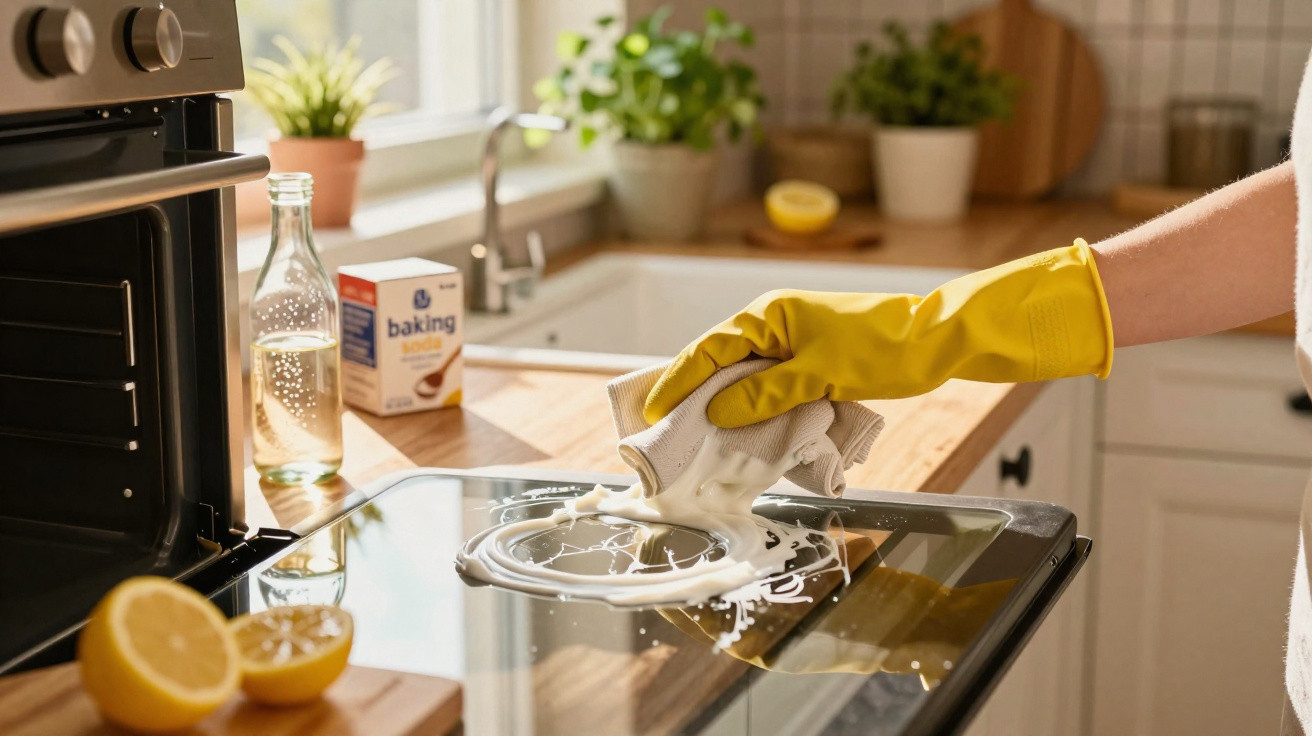
On glass-ceramic or induction hobs, rub only very gently to avoid scratches. Testing first on an inconspicuous spot is a sensible precaution.
Where the mixture reaches its limits - and the risks to watch for
As versatile as the mix can be, it isn’t a cure-all. Some materials are sensitive, and others are better handled with specialist cleaners.
| Suitable for | Use with caution | Better to avoid |
|---|---|---|
| Ceramic, porcelain | Coloured textiles | Marble, natural stone |
| White laundry | Delicate synthetic fibres | Aluminium surfaces |
| Tiles, grout | Silicone seals | Unsealed wood |
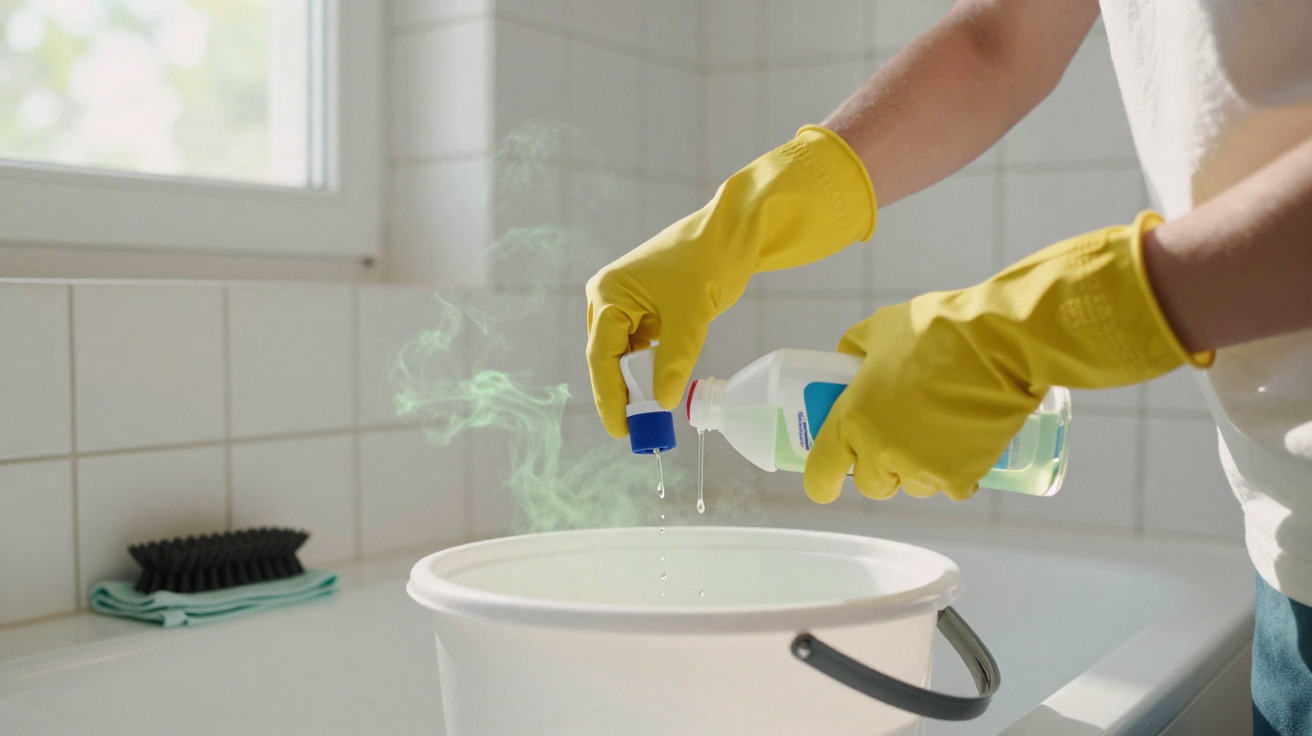
Never use hydrogen peroxide at high concentrations without proper knowledge. The usual 3% household solution is completely sufficient. Stronger concentrations can irritate skin and eyes.
If you’re using the mixture on a new surface for the first time, it’s best to test a small amount in a hidden area. That makes it easier to rule out bleaching, colour change or damage to the surface texture.
Why many households are switching to simple home staples
The move back towards classic basics such as bicarbonate of soda, vinegar and hydrogen peroxide has several drivers. For one thing, it can cut costs because a small set of staples can replace many specialist cleaners. At the same time, it reduces the number of different chemicals stored at home.
Many people also like that bicarbonate of soda neutralises odours and rinses away easily. Hydrogen peroxide breaks down over time into water and oxygen, so there can be less residue than with some heavily fragranced cleaning products.
Practical add-ons and sensible combinations
In some situations, it makes more sense to complement the mixture rather than swap everything over to it. Take limescale: for stubborn limescale marks on taps or shower screens, diluted citric acid is usually more effective, while bicarbonate of soda performs best against grease and organic grime.
A practical everyday approach:
- For grease, baked-on residue and odours: bicarbonate of soda with hydrogen peroxide.
- For limescale and water spots: citric acid or a clear vinegar-based cleaner.
- For glass and mirrors: water mixed with a little alcohol, or a glass cleaner.
Keeping these roles separate often produces better results in many homes than relying on a single all-purpose product.
Bicarbonate of soda and hydrogen peroxide remain a two-part system that can deliver a big impact with very little effort - whether it’s berry stains on a favourite shirt, dark grout in the bathroom, or baked-on casserole dishes after a Sunday roast. If you test carefully, wear gloves and keep the mixture away from delicate surfaces, you’ll have a strong option for thorough yet comparatively gentle cleaning in day-to-day life.
Comments
No comments yet. Be the first to comment!
Leave a Comment