
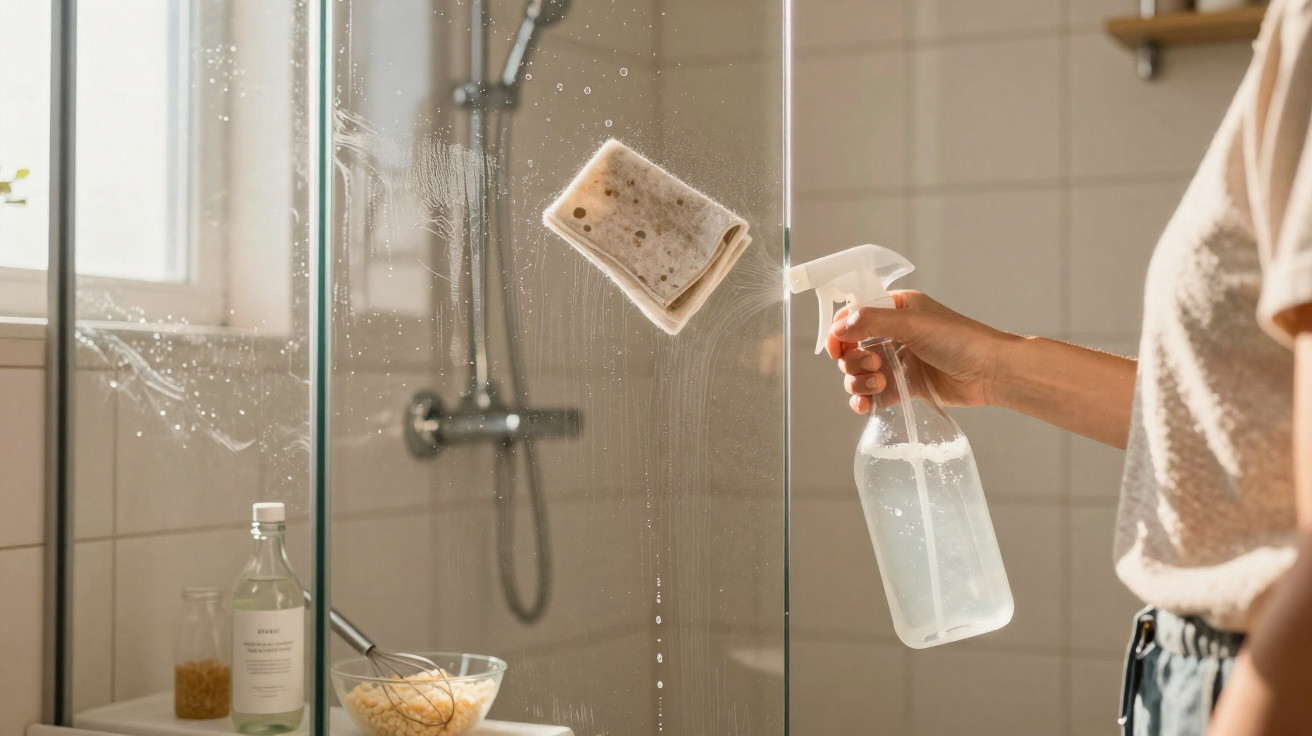
Some people end up scrubbing themselves to exhaustion over stubborn limescale marks: they reach for harsh products, rub harder, get frustrated - and still end up with smears. Yet the residue left by hard water can be loosened with a simple mix from the kitchen cupboard, without pricey specialist cleaners and without damaging the glass surface.
Why your shower screen suddenly looks cloudy
That fine white film on glass has a straightforward cause: the water. Tap water always contains minerals such as limescale (calcium) and magnesium. When warm droplets hit the glass, some of these minerals remain behind. As the surface air-dries, the minerals crystallise - creating spots, tide marks and an overall haze.
With every shower, fresh layers build up. Leave it for weeks and you may notice that even vigorous cleaning no longer restores proper clarity. That is because the deposits harden, partly bond to the surface and act like a rough layer that soap residue and dirt can then cling to even more easily.
Many people then instinctively switch to the abrasive side of a sponge or powder scourers. The result is micro-scratches in the glass, where even more limescale can lodge. Visually, it can quickly look as though the glass has been permanently “damaged” or yellowed.
"The combination of stubborn limescale and tiny scratches turns an otherwise smooth glass surface into a dull, hard-to-clean problem area."
Gentle acids instead of aggressive scouring pads
A better approach relies on chemistry rather than force: mild acids that dissolve limescale specifically without harming the surface. Two common options are acetic acid (vinegar) and citric acid. Both react with limescale crystals, break them down into water-soluble components and gradually lift the build-up.
What matters is not only the product, but also contact time. If a cleaner runs straight off, it has little chance to work. That is why a thicker texture helps - something that clings to a vertical glass panel. This is exactly where the gel-mix trick comes in.
Homemade anti-limescale gel: three cupboard ingredients
The basic recipe needs only three everyday ingredients that many households already have:
- White household vinegar (clear, around 8 % acidity)
- Citric acid powder
- Cornflour (e.g. maize starch)
Vinegar and citric acid provide the acidic “cleaning power” that chemically attacks mineral deposits. The starch is what transforms the liquid into a gel, allowing it to stick to the screen and work far longer than a standard spray cleaner.
Mix the gel in just a few minutes
A small batch is enough for several uses:
- Stir 1 tablespoon of cornflour into 300 millilitres of cold water.
- Heat gently while stirring until the liquid thickens and becomes gel-like and slightly translucent.
- Take the pan off the heat and let it cool briefly.
- Stir in 1 tablespoon of citric acid powder and about 100 millilitres of clear household vinegar.
- Leave to cool, then transfer to a screw-top jar or an empty, clean bottle.
In cost terms, you are roughly looking at a few pence per use, compared with several pounds for a branded product from the chemist or supermarket. Kept sealed in the fridge, the gel will last for a few weeks; before using, give it a quick stir or shake.
Step by step: how to apply the gel correctly
Before you start the treatment, it is worth doing a quick pre-clean: remove loose soap scum and dust so the acid mix can reach the limescale directly.
Preparing the glass
- Rinse the shower screen with lukewarm water to remove heavy grime and shampoo residue.
- If areas are particularly dirty, wipe briefly with a soft cloth.
- Let the water run off; the surface can remain slightly damp.
Apply, leave to work, then finish gently
If you have sensitive skin, wear gloves, as acids can irritate.
- Using a sponge or soft cloth, spread a generous, even layer of gel over the whitish areas - do not scrub; simply coat the surface.
- Leave for 15 to 30 minutes depending on the level of limescale; for extremely stubborn build-up, up to 1 hour.
- Wipe lightly with the non-scratch side of a sponge or a microfibre cloth.
- Rinse thoroughly with plenty of clean water until no residue remains.
- Finally, buff dry with a clean, lint-free cloth.
"If you skip the scouring and let the gel work undisturbed, you’ll be rewarded with clearer glass and fewer scratches."
How different materials can react
Not every shower enclosure is made from standard glass. Depending on the material, you may need a slightly different approach to keep it looking good long-term.
| Material | Recommended use | What to watch out for |
|---|---|---|
| Clear glass without coating | Use the gel as described; adjust contact time to the limescale level | No abrasive pads, no powder cleaners |
| Glass with an anti-limescale coating | First test the gel highly diluted on an inconspicuous area | Follow the manufacturer’s guidance; if unsure, reduce contact time |
| Plastic / acrylic | Use a very highly diluted mix and a short contact time | Never use rough sponges, as acrylic scratches more easily |
| Natural stone tiles (marble, granite) | Avoid using the gel there | Acids can permanently etch natural stone |
How to slow new limescale from day one
A thorough initial clean makes a big difference, but routine is what really counts over time. If you spend one minute a day, you can avoid hours of scrubbing later.
- After every shower, pull water off the glass with a rubber squeegee.
- Once or twice a week, wipe down with a damp microfibre cloth.
- Schedule a gel treatment once a month, before the layer becomes too thick.
- Clean taps and silicone seals separately using a milder mix.
This stops limescale from building into thick layers in the first place. Especially in areas with very hard water, that small effort makes a huge difference - visually and in terms of cleaning hassle.
What vinegar, citric acid and starch are doing
Vinegar is one of the oldest household remedies. It tackles limescale, soap residue and some organic grime. Citric acid strengthens the effect: it forms soluble compounds with limescale, disrupting the crystal structure. Both acids sit in a range that is manageable when properly diluted.
The starch plays a more technical role. When heated in water it swells and forms a thin gel. This gel carries the acids, keeps them where they need to work and prevents the mixture from sliding down the glass in seconds. Without that trick, you would be constantly re-spraying or improvising with cloths.
When should you use other methods instead?
Some shower screens are so scarred and scratched that even the most careful gel treatment will not make them look “like new” again. In those cases you can remove fresh limescale, but the visual damage to the glass will still show. Long-term, the only solutions are replacement or accepting and managing the existing condition.
If you have very sensitive airways, avoid vinegar fumes in small, poorly ventilated bathrooms. In that case, you can reduce the vinegar proportion and increase the citric acid proportion slightly. Good ventilation during and after cleaning remains essential.
In day-to-day life, the pattern is clear: choosing gentle, well-thought-out methods - and avoiding aggressive scouring - keeps a shower screen glossy for much longer. Three simple ingredients are enough to tackle visible limescale directly, without the glass suffering a little more each time.

Comments
No comments yet. Be the first to comment!
Leave a Comment