
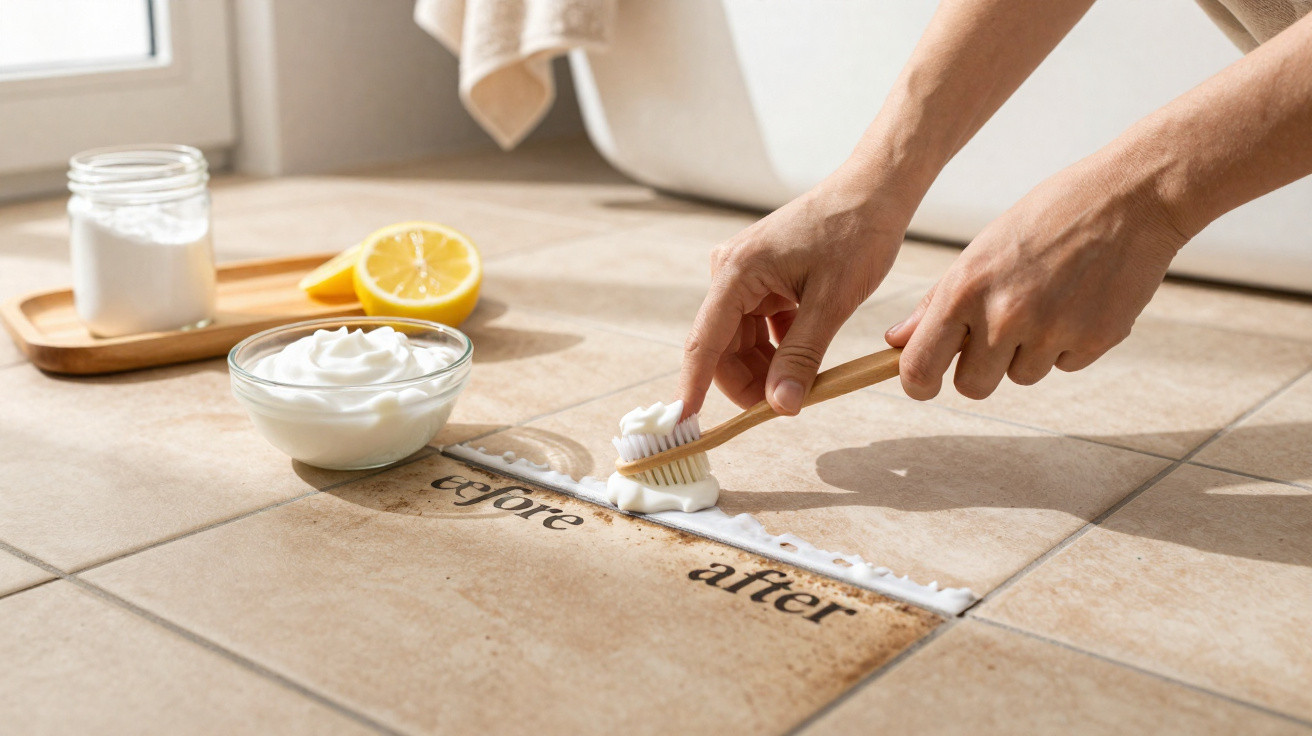
Reaching straight for harsh chemical cleaners usually means spending a lot of money, putting up with strong fumes for days, and doing the environment no favours. In many cases, though, a straightforward blend of two everyday kitchen staples is enough to make grout lines look noticeably brighter and more hygienic again.
Why floor grout gets grubby so quickly
Floor grout is among the most heavily worn areas in the home. In bathrooms and kitchens, several issues tend to overlap.
- Moisture: After showering or cooking, the floor often stays damp for a long time.
- Dust and dirt: If mopping isn’t thorough, particles work their way into the grout.
- Cleaner residue: Leftover cleaning products can build up and stain.
- Food debris and grease: Especially in kitchens, tiny particles end up in the joints.
Over time, grout lines darken and can look grey through to almost black. In poorly ventilated bathrooms, you may also notice green or dark specks-often a sign that mould is starting to form.
"Anyone who keeps ignoring grout lines eventually isn’t cleaning off dirt any more, but a layer of limescale, grease and possibly mould."
The two-ingredient paste: cleaning grout with two simple household remedies
The main trick relies on two products many people already have in the cupboard: citric acid and bicarbonate of soda (baking soda). Used together, they form a powerful cleaning paste that’s particularly effective on discoloured grout.
Why this combination works so well
- Citric acid breaks down limescale deposits and lifts dull grey haze.
- Bicarbonate of soda is mildly alkaline, helps tackle greasy marks, and neutralises odours.
- As a paste, the mixture clings to the grout for longer, giving it time to work.
This helps reduce both typical limescale lines (in the bathroom) and greasy residue (in the kitchen).
Step-by-step: how to mix and use the grout paste
You’ll need:
- citric acid powder
- bicarbonate of soda
- water
- a small bowl
- a spoon for mixing
- an old toothbrush or a small grout brush
Do it like this:
- Prepare the ratio: Put one part citric acid and two parts bicarbonate of soda into a bowl (ratio 1:2).
- Add water: Drip in water a little at a time and stir until you get a thick, gel-like paste. It shouldn’t be runny, otherwise it will seep out of the grout.
- Test a hidden area: Try it first in an inconspicuous corner to make sure the surface and grout can tolerate the mixture.
- Apply: Work the paste directly into the grout using the toothbrush.
- Leave to act: Let it sit for 10 to 15 minutes so limescale and grime can loosen.
- Brush again: Scrub the grout once more, lifting away the loosened dirt.
- Rinse: Wipe thoroughly with lukewarm water-ideally using a well-wrung cloth.
"After just a quarter of an hour, the floor often looks visibly fresher-without harsh cleaning fumes and without specialist chemicals."
Important caution for natural stone floors
One point really matters: acids and natural stone do not mix well. If your flooring is marble, travertine, or another sensitive stone, take extra care.
- Always test first in a concealed spot.
- If you see any changes (roughness, dull patches, pale marks), stop immediately.
- When in doubt, use only dedicated stone cleaners for natural stone.
On standard ceramic tiles or porcelain stoneware, the paste generally works without problems-provided the grout itself isn’t already badly damaged.
Other classic ways to get grout clean
The citric-acid-and-bicarbonate paste isn’t your only option. If you want something simpler or your grout is only lightly soiled, it can be worth starting with gentler mixes.
Gentle basic clean with soapy water
For minor grime, warm water mixed with a little soft soap or washing-up liquid is often enough. This approach is particularly suitable for:
- fresh marks
- homes with non-hard water
- regular, preventative cleaning
A stiff-bristled brush is usually all you need. The grout may not turn bright white, but it will look noticeably better cared for.
Vinegar solution for limescale and dull haze
Another alternative is ordinary household vinegar. Mixed with water at a 1:1 ratio, it helps dissolve limescale lines and light mineral deposits.
- Mix vinegar with water.
- Apply to the grout with a brush.
- Leave for a few minutes, then scrub and wipe clean with fresh water.
The same rule applies here: don’t use it on delicate natural stone, and always test an inconspicuous area first.
When stronger chemicals may still make sense
If grout is heavily affected by mould, crumbling, or has been neglected for decades, household remedies can reach their limits. In those situations, specialist grout cleaners or even mould removers may be needed. They tend to work faster, but they can also:
- release irritating fumes,
- aggravate skin,
- and, if misused, damage the grout.
If you choose these products, wear gloves, ventilate well, and follow the manufacturer’s instructions precisely. For many everyday situations, though, the household mix is entirely sufficient.
How to prevent grout getting dirty again
To avoid having to scrub grout intensively every few weeks, a bit of prevention helps. A few routines can make a clear difference:
- After showering, remove standing water from tiles with a squeegee where possible.
- Ventilate the bathroom well so moisture clears more quickly.
- When mopping, don’t use too much cleaner to avoid residue.
- Regularly go over grout lines with mild cleaning water before stubborn layers build up.
If your water is very hard, you’ll see deposits sooner. In that case, gentle, mildly acidic household remedies can be worth using regularly-always with the floor material in mind.
What terms like citric acid and bicarbonate of soda actually mean
Many people only know citric acid as a powder for descaling a kettle. Chemically, it’s an organic acid that dissolves limescale without being as aggressive as many traditional descalers. Even so, it can still attack delicate surfaces, so caution is important.
Bicarbonate of soda, by contrast, is usually found in the baking aisle or alongside cleaning products. It’s mildly alkaline, absorbs odours, and helps loosen greasy dirt. When combined with water and an acid, it creates a gentle reaction that supports cleaning-so long as you don’t mix the paste too thin.
A lot of households underestimate these simple staples and reach straight for specialist cleaners. But once you’ve tried the citric-acid-and-bicarbonate mix, it quickly becomes clear: for everyday dirt, you often need little more than a bowl, an old brush, and a couple of basics from the kitchen.

Comments
No comments yet. Be the first to comment!
Leave a Comment