
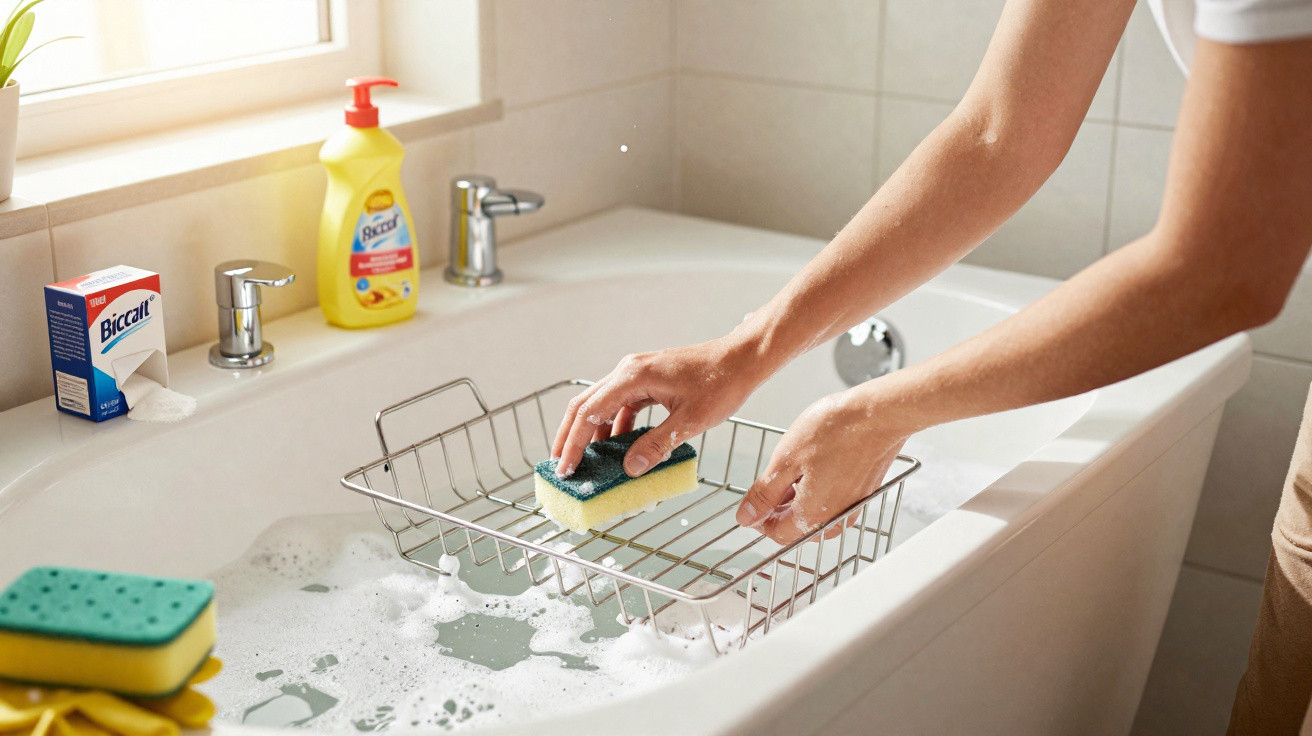
Many people diligently scrub the oven door glass and the trays, yet the rack itself is often ignored. And it’s on the rack that the thickest layers of grease and the most stubborn baked-on residue tend to build up - the kind that feels almost impossible to shift with a brush. A handy household trick shows how you can sort it with a few everyday items, using a slightly unexpected location, and with far less effort than you’d think.
Why oven racks get so stubbornly dirty
In day-to-day cleaning, oven racks rarely make it onto the to-do list. They’re awkwardly sized, full of bars and corners, and they don’t sit properly in either a sink or a standard bucket. Anyone who has tried knows the usual outcome: water goes everywhere except where it’s needed, and the rack ends up half in the basin and half out.
On top of that, baked marinades, melted cheese and spilled fat get effectively fused into the metal surface at high temperatures. At that point, many people instinctively reach for harsh oven cleaners. They can remove a fair amount, but they may also:
- irritate eyes and airways,
- damage the metal’s protective layer,
- leave unpleasant smells in the oven.
The result is predictable: the job gets put off again and again until the rack looks properly unappetising - and cooking starts to feel less appealing.
The surprising location: why the bathtub becomes the cleaning station
The real issue is space. A standard oven rack is too large for a sink or washing-up bowl, but it fits comfortably in a bathtub. There, you can lay it flat and fully submerge it. That full coverage is exactly what’s needed for baked-on layers to loosen evenly.
To protect the bath’s enamel finish, a simple safeguard helps:
- lay a thick old towel on the bottom of the bath,
- place the rack(s) on top so the metal isn’t rubbing directly on the bath,
- this prevents scratches and stops the loud clattering.
"The bathtub offers the space an oven rack never gets in the sink - and that’s what makes this method so effective."
The three ingredients most people already have at home
At the core is a straightforward cleaning bath - no specialist products required. You only need:
- very hot water,
- bicarbonate of soda (baking soda / food-grade soda),
- a standard washing-up liquid with strong grease-cutting power.
Each component plays a specific role:
- Hot water softens hardened deposits and helps the grime release. The hotter the better - ideally use water straight from the kettle.
- Bicarbonate of soda is mildly alkaline and gently abrasive. It lifts grease residue and brownish staining without scratching the surface.
- Washing-up liquid breaks fat into tiny droplets so it can detach from the metal and disperse into the water.
A practical approximate ratio is:
| Component | Amount per bathtub* |
|---|---|
| Bicarbonate of soda | approx. 150 g |
| Washing-up liquid | approx. 50 ml |
| Hot water | enough to fully cover the racks |
*Figures are based on a typical household bathtub with 1–2 oven racks.
Step by step: how to clean them
1. Position the rack in the bathtub
Put the old towel into the empty bath, then place the oven rack(s) on top. They can overlap slightly, but water should still be able to circulate around them as much as possible.
2. Run in very hot water
Fill with very hot water until the metal grates are completely submerged. If you want, add extra boiling water from the kettle to raise the temperature further.
3. Mix in bicarbonate of soda and washing-up liquid
Sprinkle the bicarbonate of soda generously over the water surface and directly onto the racks. Then add the washing-up liquid to the water. Stir briefly with your hand or an old brush so it disperses. It doesn’t need to foam perfectly - a quick mix is enough.
"It’s the combination of heat, bicarbonate of soda and washing-up liquid that lifts the dirt - not brute force."
4. Leave it to soak - preferably undisturbed
Leave everything alone for at least 30 minutes. During this time, the grime starts to loosen and often forms a brown film in the water. For heavily baked-on racks, patience pays off: soaking for several hours or overnight usually produces the most noticeable improvement.
5. Light touch-up, rinse and dry
After soaking, a soft sponge or soft brush is often all you need to remove remaining edges and crusty bits. Heavy scrubbing is rarely necessary - much of the residue will slide off.
Then drain the bath, rinse the racks thoroughly with clean water and dry them with a tea towel. If you air-dry them, wipe off water marks with a cloth before they set.
Why this method is gentle on materials
Compared with many chemical specialist cleaners, the bicarbonate-and-washing-up-liquid mix barely affects the metal’s protective layer. Because there’s little to no harsh abrasion involved, the rack’s finish and coating are more likely to stay intact. That can extend the life of the accessories and reduce the risk of rust spots.
At the same time, the method avoids strongly scented fumes and aggressive ingredients. For households with children, pets or sensitive airways, that’s a clear advantage.
How often should you clean oven racks this way?
How frequently you need to do it depends largely on how you use the oven. If you regularly cook bakes, pizza or fatty foods, a thorough clean about every four to six weeks is sensible. As a rough guide:
- Frequent cooking of roasts and bakes: every 4 weeks
- Occasional use: every 2–3 months
- After a major spill-over: soak as soon as everything has cooled
If you wipe away obvious residue with a damp cloth straight after baking, you can stretch out the time between bathtub cleans considerably.
More tips for a clean oven without harsh chemicals
Clean baking trays at the same time
Baking trays can be cleaned using the same mixture in the bathtub or - if they fit well - in the sink. For stubborn baked-on spots, sprinkle on a little dry bicarbonate of soda first and lightly dampen it to boost the effect.
Prevention saves effort
A few habits help stop the rack becoming completely encrusted:
- For dishes that drip heavily, slide a tray underneath the rack.
- After cooking, while the oven is still warm, wipe splashes with a damp cloth.
- Avoid spraying highly caustic cleaners onto bare metal, as they can attack the surface.
What happens chemically with bicarbonate of soda and a grease cutter
Bicarbonate of soda is mildly alkaline. Grease and baked-on food residues respond by loosening from their hardened structure more easily. With heat, part of the fatty layer liquefies. The washing-up liquid then acts on that liquefied grease, breaking it into tiny droplets that disperse through the water.
That combination is what makes the difference: hot water alone is usually too weak, and washing-up liquid alone tends to work too slowly. Add bicarbonate of soda, and the bath water becomes a kind of mild cleaning soak that penetrates deep into the grime layer.
Risks, common mistakes and how to avoid them
Even though the method is straightforward, a few points are worth keeping in mind:
- Don’t use wire wool: it can scratch the rack’s protective layer and encourage rust.
- Don’t pour boiling liquid into thin plastic tubs: if you’re using a portable baby bath or similar, watch the temperature.
- Rinse the racks completely: leftover washing-up liquid can smell when reheated or end up on food.
- Clean the bathtub afterwards: grease residue is easy to remove with a little washing-up liquid and hot water, so the surface doesn’t remain slippery.
With these basics, oven racks stop feeling like a dreaded cleaning marathon. Instead, it becomes a manageable routine: soak, lightly wipe, rinse, done - and the kitchen immediately feels a bit fresher.


Comments
No comments yet. Be the first to comment!
Leave a Comment