
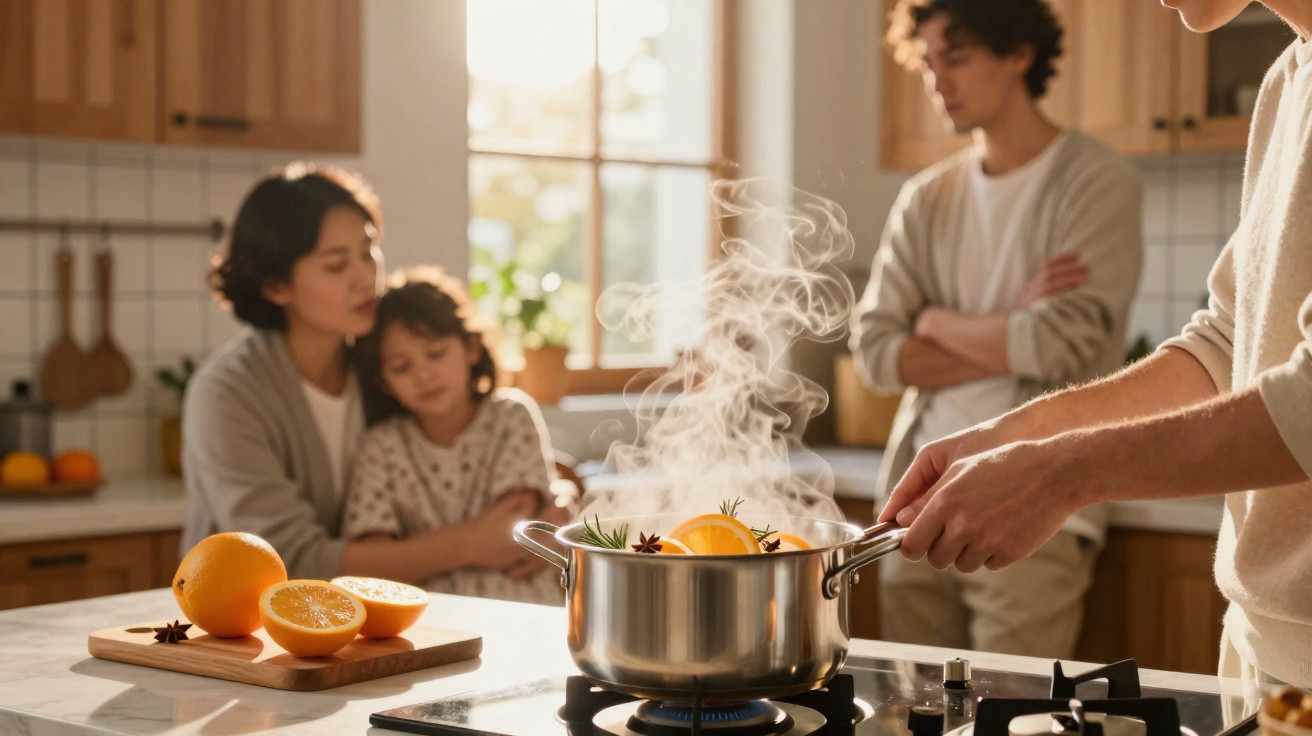
One camp insists that orange peel, cloves and rosemary from the garden can make a place smell fresh for pennies. The other dismisses it as a kitchen-steam craze, dangerous for cats and a convenient way to ignore proper ventilation. This domestic habit has leapt off the hob and into WhatsApp chats and local Facebook groups - and yes, it’s now a point of friction between neighbours and even within families.
On a soggy Tuesday in Bristol, a terraced-house kitchen murmurs: a low gas flame, a small pan, and water just beginning to tremble. Orange peel twists in the vapour, a bay leaf drifts lazily in circles, and the extractor fan gets switched on with minimal conviction. “It smells like holidays,” says the host, delighted, as visitors arrive from the drizzle and grin. It smells like Sunday at grandma’s. Next door, a cat sneezes. Further along the road, a group chat flashes: “Who’s boiling fruit again?” The pan keeps humming, and a tiny culture war warms up alongside it - sweet at first, then suddenly loud.
The simmer pot craze: cosy scent or domestic row?
A quick scroll on TikTok shows tidy hands dropping lemon rounds into a saucepan like a small ceremony. The pitch is straightforward: genuine fragrance, no paraffin, no synthetic spray, and a home that feels like it can breathe. People are drawn to a tip that seems thrifty, old-fashioned and a bit virtuous - peel, thyme, a pot on the hob, and your flat turns into a Mediterranean-feeling kitchen. The mood is wholesome; the replies can be savage.
Take Riya, 29, living in a Hackney flatshare. She recorded her “lemon–rosemary–vanilla” simmer, added #cleanafternoon, and wrote, “I will never buy candles again.” After a million views, some viewers hailed it as brilliant while others mocked it as silly. That evening, her boyfriend’s hay fever kicked off, and a neighbour downstairs messaged about “mystery humidity” near their window frames. One saucepan, endless takes - the internet, reduced to steam.
Does it actually do anything? It does, in a very human sense: scent is tied to memory, and warm vapour carries volatile compounds into the room. The result is pleasant, short-lived, and mostly confined to the kitchen unless you leave doors open. There’s no sorcery here - it’s simply evaporation. The downsides are equally plain physics: in a small home, lots of steam becomes condensation, and condensation can mean mould in cold corners. Add strong essential oils and you can create real risk for pets. Call it cosy chemistry; call it hopeful thinking. Either way, it isn’t a miracle that cleans the air.
How to do it safely (without starting a family feud)
Keep it modest. Fill a saucepan with roughly a litre of water. Use whatever is to hand: citrus peel, a cinnamon stick, a sprig of rosemary, an apple core sliced up, a few cloves. Bring it to a gentle simmer with the lid off for 20–40 minutes. Hold the heat low. If the air starts to feel close, crack a window. Sit the pan on a back ring so sleeves, hair and inquisitive paws are less likely to meet hot steam.
Refill the water before it drops too far. Don’t leave it unattended - not even to post a video. Skip pouring in neat essential oils; they’re powerful and can irritate noses, lungs and eyes. Cats (and some dogs) are sensitive to compounds found in tea tree, eucalyptus, citrus and clove. And yes, after a fry-up when the house smells a bit “lived in”, a simmer pot can take the edge off. Let’s be honest: nobody really does this every day. Save it for the right moments. Take a breath. Turn the hob off once you’re finished.
What tends to go wrong? People aiming for full “Christmas market” - piles of spices that cling to soft furnishings for days. Aluminium pans that hang on to smells. Switching off extraction and then blaming the pan when the real culprit is a sealed-up, airless room. If someone in the house gets headaches from fragrance, dial it back or avoid spices altogether. Fresh peel and herbs are generally kinder than heavy oils. And if a neighbour texts to say the smell has crept under the shared door, treat it as a conversation rather than a crusade.
“This makes my house smell clean without chemicals,” says one devotee. A chemist I spoke to was blunter: “this is pseudoscience and risky for pets.” Two truths can sit in the same kitchen.
- Go-to blends: lemon + rosemary; orange + clove (2–3 only); apple + cinnamon stick; bay leaf + thyme.
- Skip for pets: tea tree, eucalyptus, citrus oils, clove oil, peppermint oil.
- Basics: low heat, window cracked, timer on, no unattended hobs.
- If anyone wheezes or sneezes, stop and air out. Easy as that.
What this domestic trend reveals
Why would a small pan trigger such oversized reactions? Because smell is bound up with identity. It communicates “home”, “clean”, “safe” - and sometimes “someone else’s preference in my air”. The simmer pot sits as the cosy cousin to the open-window brigade, partly a response to expensive candles and the low-level anxiety about indoor pollution. It’s also a bit of theatre: a visible, comforting ritual that looks like care. For some people that’s calming; for others it’s damp, steamy irritation.
There’s a bigger itch underneath. People want to shape their environment, and they want that control to feel natural. When critics yell “pseudoscience!”, they’re often resisting health claims that drift beyond fragrance - detoxing, killing germs, fixing moods. When fans push back, they’re defending a small daily pleasure. Between those poles is the workable middle: a small pan, a short simmer, fresh air, and consideration for lungs and whiskers. Share your recipe, check in with your neighbour - a home’s story travels on the air.
| Key point | Detail | Why it matters to you |
|---|---|---|
| Simmer pot 101 | Water + peel + herbs on a low simmer for 20–40 minutes | Easy, cheap, and feels instantly cosy |
| Health and pets | Avoid essential oils; watch citrus, clove, eucalyptus around cats and dogs | Enjoy scent without risking furry family members |
| Moisture management | Crack a window, don’t over-simmer, and stop if walls sweat | Keep mould at bay while keeping your home smelling fresh |
FAQ:
- Does a simmer pot clean the air? It adds pleasant scent but doesn’t meaningfully remove pollutants. Ventilation and regular cleaning do the heavy lifting.
- Is it safe for pets? Use mild ingredients only. Skip essential oils and strong spices. If your pet sneezes or avoids the room, stop and air out.
- Can it replace candles? For many, yes for everyday freshness. It won’t give you candlelight ambience, and the scent is shorter-lived.
- Will it cause damp or mould? It can add moisture. Keep sessions short, crack a window, and don’t simmer in already damp rooms.
- Is it cheaper than a scented candle? Often, since you’re using scraps and a low flame. Energy costs vary, so short sessions are the sweet spot.
Comments
No comments yet. Be the first to comment!
Leave a Comment