
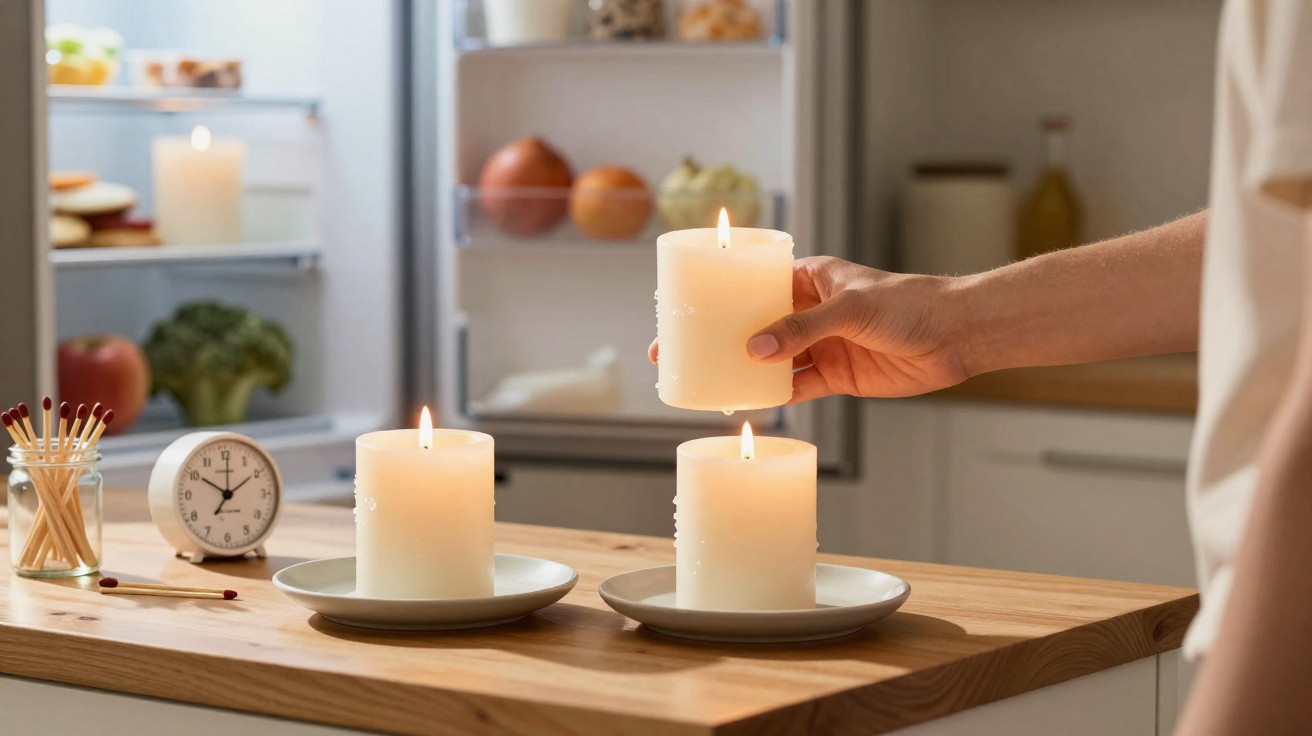
The candle was meant to burn all evening. At least, that’s what the label suggested when I lit it before anyone arrived, while its almond-and-vanilla fragrance was already drifting through the kitchen. Two hours later, the wax had collapsed into itself, the flame had gone out in a miserable little crater, and I was rummaging through the drawer for a replacement like a magician whose best trick had failed.
A friend saw me battling with it, laughed, and delivered the sentence that set everything off: “You know you’re supposed to freeze them, right?”
I assumed she was taking the mick. Turns out she wasn’t.
Does freezing a candle really make it last longer?
You’ve likely spotted the advice on Pinterest boards or tucked into TikTok comments: put your candles in the freezer for a few hours and they’ll burn more slowly. It sounds almost enchanted - a tiny life hack that buys you extra hours of gentle light and scent for absolutely nothing.
On the surface, the logic is straightforward. If the wax begins colder, it should take longer to melt, which ought to extend the burn time. In theory, that means less wasted wax, fewer half-used jars, and more evenings powered by the one fragrance you’re obsessed with.
But is your freezer really a candle’s best mate?
Imagine it. It’s Sunday afternoon, you’re tidying up, and you come across three half-burnt candles dotted around the house. One has tunnelled, one has wax clinging to the sides, and the last has a wick that keeps drowning. You line them up on the worktop, irritated at how much money has quite literally vanished into thin air.
Then you scroll. Video after video insists, “Freeze your candle for four hours and it’ll last twice as long.” No figures, no proper testing - just slick edits and confident captions. You decide you’ll try it with the next new candle you buy, half convinced and half sceptical.
That evening, you wedge it in the freezer between a bag of peas and some leftover chips, feeling strangely as though you’re gaming the system.
The reality sits somewhere between myth and truth. Wax is more complicated than it looks: it doesn’t simply melt - it responds to temperature, fragrance load, wick size and the container it’s in. Starting with colder wax can slow down the very beginning of the melt because the flame first has to bring everything back up to room temperature.
However, once the candle forms a steady melt pool, the burn rate is driven largely by the wick and the wax formulation, not where it spent the afternoon. A candle that wasn’t made for marathon sessions won’t suddenly become a 24-hour champion just because it had a few hours on ice.
Freezing may slightly reduce early wax consumption and can help certain waxes contract (which can make unmoulding easier), but it also brings drawbacks that aren’t immediately obvious.
How to freeze your candles without ruining them
If you’re keen to try the freezer trick, how you do it matters far more than the promise. Begin by sealing the candle in an airtight bag or wrapping it tightly in cling film, particularly if it’s scented. Freezers are packed with odours, and wax soaks them up like a sponge. The last thing you want is your pricey sandalwood candle carrying a faint hint of garlic and frozen lasagne.
Keep it in there for two to four hours - not overnight, and certainly not for days. The aim is simply to chill the wax, not punish the glass. When you take it out, leave it at room temperature for 20–30 minutes before lighting it, so the container can adjust and the surface is less likely to crack straight away.
Then light it and allow it to burn until there’s a full melt pool across the top.
This is where people often feel let down. They freeze the candle, burn it for twenty minutes, and expect a dramatic change in burn time. In reality, the flame barely has time to warm the surface before it’s snuffed out for dinner or a video call. Next time, the wick digs down the middle, leaving thick walls of unused wax.
Most of us know that sinking feeling: staring at an expensive candle and feeling oddly guilty because you think you’ve “ruined” it. The freezer trick won’t rescue a habit of rushed burns. What genuinely helps is making the first burn long enough for the wax to melt fully from edge to edge.
Let’s be honest: hardly anyone manages that every single day. Yet this one simple step often makes a bigger difference than freezing ever will.
The pull of a “magic hack” is hard to resist, though. Freezing a candle feels like secret knowledge, and that alone makes it appealing. Even so, some candlemakers advise caution. Rapid temperature shifts can put glass under stress, create tiny fractures, and potentially increase the chance of breakage when a flame heats it from the inside.
“Freezing a candle won’t double the burn time, but it can slightly slow the first melt,” explains a small-batch candlemaker I spoke to. “The real game-changers are wick quality, full first burns, and trimming between uses.”
- Cool the candle slowly in the freezer (2–4 hours, not days).
- Always use an airtight bag so the wax doesn’t absorb food odours.
- Let it return to room temperature before lighting the wick.
- Allow a full melt pool on the first burn to avoid tunnelling.
- Trim the wick to about 5 mm each time for a steadier flame.
Beyond the freezer: what actually makes candles last
Freezing a candle can be a worthwhile experiment and, occasionally, a small optimisation - but it’s not the main event. Burn time comes down to both design and behaviour: the blend chosen by the brand, the jar’s diameter, the type of wick, any additives, and how you treat the candle once it’s in your home.
It’s a bit like a relationship. If you keep blowing it out after ten minutes, leave the wick mushroomed, or let dust settle over the surface, no amount of freezer time will magically change the result. But a few straightforward rituals - trimming the wick, longer first burns, and keeping it away from draughts - can stretch the life of almost any candle, from supermarket basics to luxury jars.
The freezer, ultimately, is only one tool. The difference is made by what you do day to day.
| Key point | Detail | Value for the reader |
|---|---|---|
| Freezing is a minor boost, not a miracle | Cooling the wax slows the first minutes of melting, but doesn’t radically change total burn time | Helps set realistic expectations and avoid disappointment |
| Burning habits matter more than storage | Full first burn, trimmed wick, and avoiding draughts extend candle life far more than freezing | Clear, actionable steps to get more hours from every candle |
| Protect the candle when using the freezer | Airtight wrapping, short freezing time, and gentle return to room temperature reduce damage risks | Preserves scent quality and prevents cracks or breakage |
FAQ:
- Question 1Does freezing a candle really make it last longer?
- Question 2How long should I leave a candle in the freezer?
- Question 3Can freezing damage the glass container?
- Question 4Is this trick better for certain types of wax?
- Question 5What’s the single best habit to extend a candle’s life?





Comments
No comments yet. Be the first to comment!
Leave a Comment