
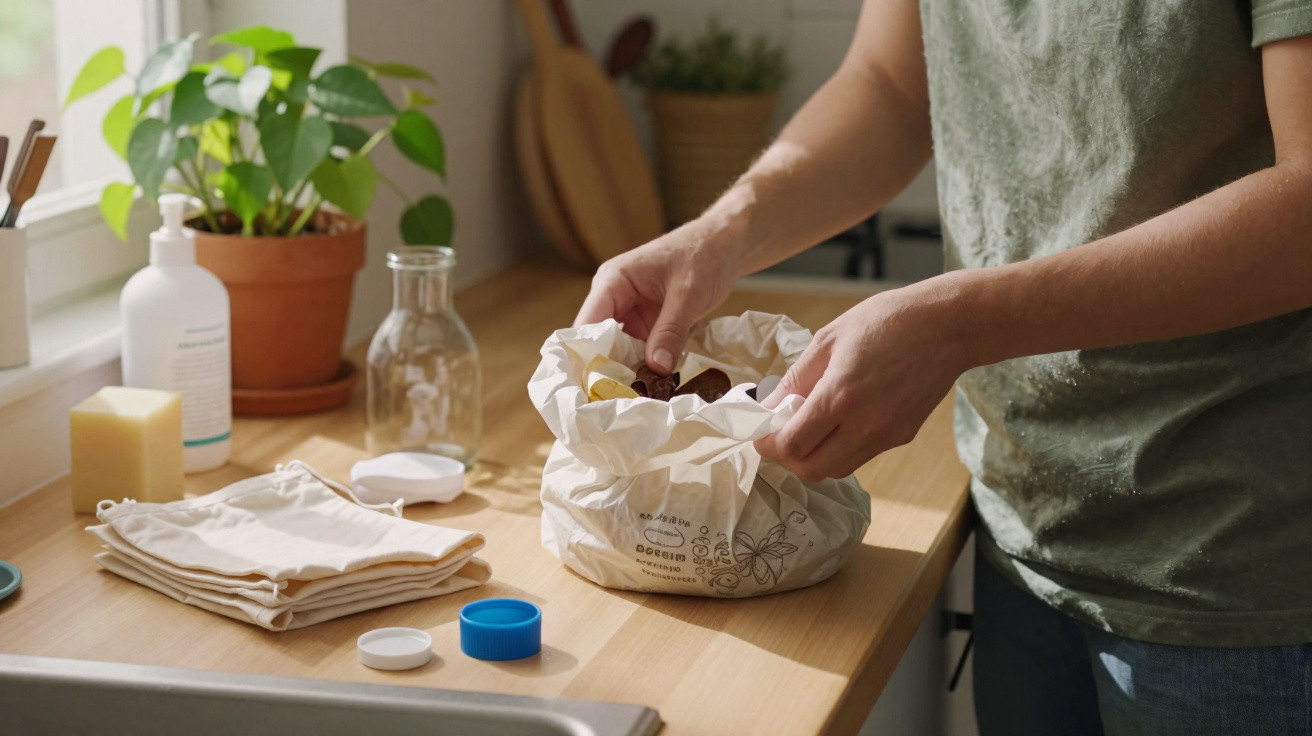
The bin lid refused to shut.
Not this time either. A little ridge of coffee pods, scrunched-up plastic film and “might be recyclable” packaging pushed back from the kitchen bin, like evidence of a week that had sprinted by. Outside, the refuse lorry growled along the street while a neighbour gently stamped their own bulging sack down, studiously ignoring the line of wrappers trailing along the pavement. We do our best to sort and separate, and we reach for the “greener” option when it crosses our minds. Even so, the bags keep getting full - quietly, persistently.
In the supermarket queue, a woman gives her reusable tote a shake… then packs it with fruit and veg wrapped in layer after layer of plastic. Nearby, a man picks up a single banana and slides it into one of those thin bags that split before you’ve even made it home. It isn’t spiteful; it’s routine. It’s convenience. It’s autopilot. And yet, between the kitchen bin and the shared recycling boxes, small shifts are starting to show up in ordinary life. Something is changing - gently.
Bit by bit, waste is becoming harder to ignore. And once you properly notice it, it’s difficult to go back to not seeing it.
The quiet shock of seeing your own waste
Most of us don’t grasp how much we throw away until we’re forced to look at it. The day you empty a full bin bag and spread the contents out can feel like you’re standing over a crime scene: coffee cups from frantic mornings, takeaway tubs from “just this once” nights, receipts, fruit stickers, odd bits of plastic cutlery. In the moment, none of it registered as “that much”.
On a daily basis, waste looks like harmless, minor decisions. Put together, those choices become something far noisier - and something that starts to smell if you leave it sitting. Once you begin spotting repeats - the same brand, the same crisp packet, the same delivery packaging - it gets tougher to pin everything on a hazy notion of “the system”. Some of it is simply… us.
In the UK, the typical person produces about 400–500 kg of household waste each year. That’s roughly the mass of a small car, leaving your home in fragments. Imagine that car parked in your hallway, built from cardboard, bottles and plastic film you once assumed “didn’t really count”.
During the lockdowns, councils reported spikes in packaging waste, largely driven by online orders and takeaway deliveries. People stayed in more, cooked more, and clicked “buy” more often. At the same time, neighbourhood groups popped up to swap jars, share leftover paint and lend tools. Two forces were moving at once: consumption rising, and community ingenuity rising alongside it.
That’s when the small trials started. Someone visited a refill shop for the first time after a friend posted about it on Instagram. Another household moved from bin liners to compostable bags - then discovered they didn’t need a liner at all if they kept the bin clean. These weren’t sweeping, cinematic choices. They were tiny nudges, triggered by one uncomfortable realisation: the bin seemed to fill faster than the week.
The mechanics of lifestyle waste are blunt. Much of what makes everyday life feel “easy” arrives wrapped, sealed, cushioned, portioned. Modern routines run on disposability: coffee to go, salad to go, parcels to the door, groceries pre-cut and packaged. The setup keeps things effortless for you and lucrative for someone else.
But habits have weight. Once a new version of “convenient” becomes part of a routine, your brain starts to follow that track. A water bottle by the front door becomes as automatic as picking up your keys. A fabric produce bag in your rucksack feels as normal as carrying your wallet. What begins as a deliberate choice gradually fades into background behaviour.
Cutting everyday waste isn’t about instantly living like a zero-waste influencer with perfectly labelled jars of pulses. Let’s be honest: hardly anyone actually does that day in, day out. It’s about softly rewiring the dozens of micro-choices you already make - from the moment you get up to the moment you tip the day into the bin.
Small swaps that quietly change the whole day
The simplest waste to reduce is what never enters your home in the first place. That starts well before the bin - at the front door, in your bag, on the bus. Consider an “everyday kit”: a robust water bottle, a reusable coffee cup, a fabric tote, a small fold-up shopping bag, and perhaps a compact cutlery set if you often buy lunch on the move. Nothing flashy - just items you’ll genuinely use.
Put that kit somewhere you’ll actually notice it. Hang it by the door, keep it on a hook, or leave it permanently in your rucksack. The clever part isn’t purchasing the items; it’s making sure you see them when you’re already five minutes late. Once the setup exists, the default changes. Suddenly, the disposable cup isn’t the easiest option. Your hand goes to the cup you already know.
Alex, a 29-year-old graphic designer from Bristol, used to pick up two bottled drinks a day without thinking: an iced coffee in the late morning and a soft drink mid-afternoon. Two a day doesn’t sound dramatic. Over a year, though, that’s more than 700 bottles. One January, she decided to “just try” carrying a bottle for a month. A friend gave her a reusable coffee cup with a lid that didn’t leak. That was all it took.
Twelve months later, Alex had moved from stuffing her desk bin with bottles to only occasionally rinsing one out after a night out. She never sat down to count exactly how many bottles she’d avoided. What she noticed most was simpler: the office cleaner stopped rolling their eyes at her overflowing bin. The change also helped her spending, quietly. Her local café offered a small discount for bringing a reusable cup, and over the year it added up to nearly a week’s worth of coffees for next to nothing.
Stories like Alex’s don’t look glamorous. They don’t finish with a viral TikTok showing an immaculate pantry. They look like a scratched metal bottle that’s bounced down the stairs more times than you can remember - and still does the job.
These little swaps last because they reduce friction rather than creating it. One bottle means fewer emergency trips to the corner shop. A tote bag means fewer battles with thin plastic at the till. The brain is lazy in a very human way, and you can use that to your advantage: if the reusable option is nearer, cleaner, or simply nicer, you’ll choose it without having to hold a moral debate each time.
There’s also something oddly steadying about owning a few solid “carry with you” items that wear in alongside you. A reusable cup with a coffee stain that never quite disappears. A canvas bag that softens over years. They stop being a statement and start being part of your personal landscape. And, quietly, the flow of waste through your day eases.
Rethinking the big waste hotspots at home
For most households, the kitchen is where day-to-day waste shows up first. The bin sits there like a silent witness to every snack, every rushed dinner and every “I’ll deal with that later” container. One straightforward technique can change your perspective: for one week, separate your waste by category and actually look at it. Put food scraps in one container, recyclables in another, soft plastics in a third. What remains in the main bin becomes your real “problem pile”.
You don’t need a spreadsheet for this. Labels and a bit of curiosity are enough. You might realise you’re binning half a loaf every week. Or that bagged salad wilts in the fridge more often than it makes it onto a plate. Once you spot the pattern, you can change one thing: buy a smaller loaf, freeze half, or choose something you reliably finish. A tiny adjustment can have a big effect.
In the bathroom, the same story plays out: shampoo, conditioner and shower gel bottles, cotton pads, razors, dental floss. A low-effort shift is to choose refillable or solid alternatives where they genuinely suit you. A decent shampoo bar can last as long as two or three bottles and uses no plastic at all. A safety razor can look daunting at first, but many people find it gives a better shave and leaves only a thin strip of recyclable metal as waste.
It’s easy to overdo it and buy every “eco” product you come across. This is where a bit of kindness to yourself helps. Begin with one item you’re about to use up anyway. Swap body wash for a bar soap. Or find a local refill shop and refill only your washing-up liquid to start with. The goal is to see what fits your routine, rather than reshaping your entire life around a product.
“Waste reduction isn’t a personality, it’s a series of tiny experiments,” says Maya, who runs a small zero-waste shop in Manchester. “People come in feeling guilty. They leave relieved when they realise they don’t have to change everything in one weekend.”
Some of the biggest wins at home can feel almost dull - and that’s precisely why they’re effective. Habits such as:
- Keeping an “eat me first” box in the fridge for leftovers and food that’s close to its use-by date.
- Freezing half-used herbs, chopped fruit, or the end of a loaf before it turns.
- Using old glass jars for storage instead of buying new containers.
- Switching to rechargeable batteries for remotes and toys.
- Putting a small recycling bin in the bathroom so bottles don’t end up in general waste.
None of these turn your home into a showroom. They allow it to feel lived-in. They make room for real life - late nights, unexpected takeaways and half-eaten yoghurts. On a calm Sunday, you might feel pleased by a tidy row of labelled jars. On a messy Thursday, putting a yoghurt pot in the right bin is enough. We’ve all had that moment of feeling overwhelmed by the clutter at home, when one tiny action brings things back into line.
A lifestyle that feels lighter, not stricter
When you start cutting waste from your routine, another effect slips in alongside it: things feel lighter. Fewer bags to haul to the kerb. Fewer mystery tubs falling out of cupboards. Less mental clutter from promising yourself you’ll “sort it later”. Tips for reducing waste aren’t only about the planet - they also quietly make everyday life feel more manageable.
The way you talk with others changes, too. Friends recommend the tough tote that never splits. Someone mentions a local library of things where you can borrow a drill instead of buying one. A colleague admits they’ve begun bringing lunch in old takeaway containers, and nobody laughs - a few people copy the idea. These aren’t dramatic campaigns. They’re small ripples moving through ordinary life.
You may also start noticing details you once skimmed over: the thickness of a plastic lid, the smart design of a returnable bottle, the gentle buzz of a repair café where people fix toasters on a Saturday morning. Perfection isn’t required. It’s simply an invitation to pay a little more attention to what leaves your hands each day - and where it might end up.
| Key point | Detail | Why it matters to you |
|---|---|---|
| Observe your own waste | Do a one-week mini-audit by waste type | Spot your personal “hotspots” and focus your effort where it counts |
| Prepare an everyday kit | Bottle, reusable cup, tote bag, cutlery | Cut “on the go” waste without constant mental effort |
| Change one habit at a time | Tackle one product or one room before moving on | Avoid discouragement and build routines that last |
FAQs:
- Is it really worth it if I only make small changes? Yes. Waste is the sum of thousands of tiny actions. Cutting out just one daily disposable item removes hundreds of pieces of rubbish a year, and habits often spread to people around you.
- What’s the easiest place to start reducing waste? Pick the most annoying waste hotspot in your life – maybe coffee cups or food going off. Change just that one thing first, until it feels natural, before touching anything else.
- Do I need to buy lots of eco products? No. Use what you already have first. Old jars, second-hand containers and well-made basics beat trendy “green” gadgets that end up unused in a drawer.
- How do I stay motivated when I slip back into old habits? Expect slip-ups. They don’t erase your progress. Treat each day as a new experiment, not a test you passed or failed forever.
- Can reducing waste really save me money? Often, yes. Buying less packaged food, avoiding single-use items and repairing or borrowing instead of replacing can quietly cut everyday costs over time.

Comments
No comments yet. Be the first to comment!
Leave a Comment