
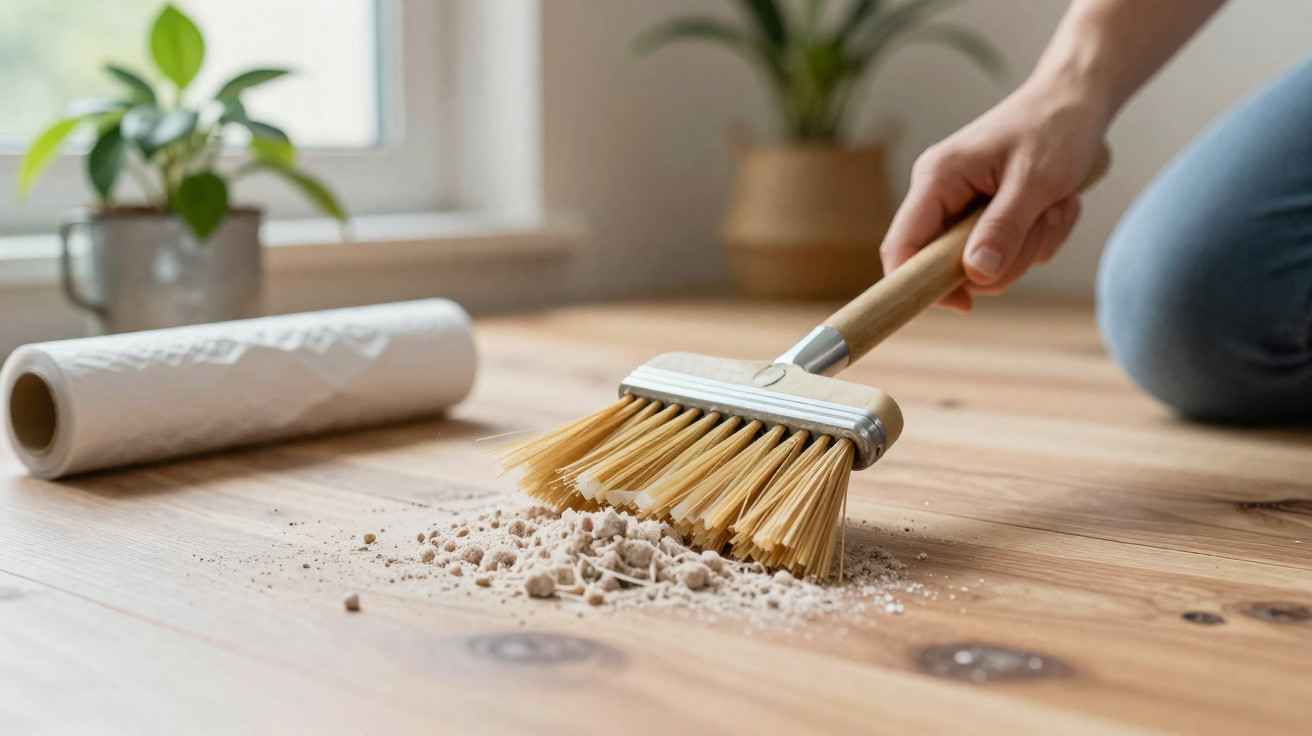
Videos on TikTok, Instagram and YouTube Shorts show people wrapping aluminium foil around a broom head and insisting it alters how dust, pet hair and tiny bits of debris move across the floor. It may look like another fleeting internet craze, yet it’s grounded in a bit of physics, some everyday practicality and several important caveats.
How a kitchen staple ended up in cleaning hacks
Most of the time, aluminium foil sits in the kitchen drawer beside cling film, used for covering leftovers or lining baking trays. In recent years, however, it has edged into the cleaning cupboard. Creators demonstrate the same roll being used to rub rust from metal, roll into balls for scrubbing barbecue grates, or sharpen scissors by snipping through folded layers.
None of that relies on anything mystical. It comes down to simple material properties: aluminium is electrically conductive, it crushes and keeps its shape, and its surface has a mild abrasive quality that can shift grime without acting like harsh sandpaper on most metals. When foil is wrapped around a broom, those characteristics are applied to floors rather than cookware.
"Aluminium foil does not replace proper cleaning products or equipment. It acts as a low-tech accessory that tweaks how dust and hair respond to the broom."
The current batch of clips circles one idea: if foil can affect how dirt interacts with metal, could it also influence how dust and fibres behave around plastic bristles and certain floor finishes?
Why people put aluminium foil on a broom
The static electricity angle
The explanation mentioned most often is static electricity. Many homes pair synthetic broom bristles with vinyl, laminate or ceramic floors. As those surfaces rub together, static charge can build. When that happens, lightweight mess can act erratically: hair lifts away from the sweep, dust spreads out instead of gathering, and tiny fibres seem to cling to the floor rather than travel.
Because aluminium conducts electricity, wrapping foil around the broom head can provide a route for charge to spread and dissipate rather than concentrating on a handful of bristles. By slightly reducing charge differences between the broom, the floor and the debris, particles may be more likely to cluster than to scatter.
"By giving static charge somewhere to go, aluminium foil can help fine dust and hair form tighter piles that are easier to sweep into a dustpan."
A physical barrier for hair and lint
In homes with pets that shed, a common complaint is that hair winds itself deep into the bristles. That slows cleaning and often means pulling tangled clumps out by hand. When foil is wrapped around the lower part of the broom, it creates a smoother layer than a mass of separate filaments. Hair that would usually thread between bristles hits the metallic surface instead and is more likely to slide over it.
Some people say this reduces the time spent “cleaning the broom” after sweeping. Rather than cutting or picking hair out from the bristle base, they remove the foil and bin it.
What foil does to bristles and floors
Potential protection for the broom
With foil between the bristles and the ground, some of the friction is taken by the metal rather than the broom itself. On rough balcony tiles or unfinished concrete, this can slow down wear on the broom head. Households that get through brooms quickly may find they last a little longer when bristle tips aren’t taking the full grind of each stroke.
However, if the foil becomes heavily crumpled and forms stiff ridges, it can turn into the main scraping surface. Outcomes depend on how neatly the foil is wrapped and smoothed, and how promptly it’s replaced once it tears.
Risks for sensitive flooring
Some floors simply don’t suit contact with metal, even when it’s thin and flexible. High-gloss wood, delicate vinyl and softer laminates can mark if a foil crease traps a grain of sand or a tiny stone. A setup that seems harmless on ceramic tile can leave dull lines across a polished corridor.
- Try it first in an out-of-the-way spot, particularly on wood or high-shine finishes.
- Press and smooth the foil firmly so no sharp folds protrude from the broom head.
- Stop if you notice new haze, micro-scratches or squeaking that wasn’t there before.
"Foil works best on hard, non-sensitive floors that already cope well with standard sweeping, such as ceramic, porcelain or robust laminate."
How people actually set up the foil broom
Most viral demonstrations keep it basic: tear, wrap, press, sweep. Even so, small choices can affect results-especially if the aim is to avoid scratches or prevent the broom feeling awkwardly weighted.
| Step | What to do |
|---|---|
| Cut the foil | Tear a rectangular piece a little wider than the broom head and long enough to wrap around the base one or two times. |
| Wrap the head | Position the foil beneath the bristles or around the base, then fold it up and over, covering the area that usually makes the most contact with the floor. |
| Smooth and tighten | Use your fingers to press along every edge so the foil grips the broom, with no loose corners or rigid creases. |
| Test on the floor | Sweep a small patch to make sure it glides easily and that the foil doesn’t snag, rip or catch on tiles. |
People who keep using the method tend to check the foil as the days go by. Once it wrinkles, splits or becomes clogged with dust, the effect fades. Some swap it out after every deep clean; others wait until the sheet no longer sits flat. Replacing it regularly keeps the broom easier to control and lowers the chance of grit trapped in a fold scratching the surface.
What people say they gain from the foil trick
More controllable dust piles
A frequently reported change is that dust behaves less like a drifting cloud and more like heavier particles. Fine debris can collect into smaller, denser piles that can be pushed in one go rather than chased with repeated passes. For those sweeping daily-especially in homes with pets or long hair-that extra control can trim a few minutes from the routine.
Less hair stuck in the bristles
For cat and dog households, this is often described as the key benefit. With the broom base coated, loose hair rides on the foil and moves forwards instead of burrowing into the bristle roots. Afterwards, the hair can be lifted off, or the foil can be removed entirely-taking lint, crumbs and fur with it.
Reduced static “bounce back”
Static can be particularly noticeable on cold days or when indoor humidity is low. In those conditions, dust may flick back onto the floor immediately after the broom passes. People who wrap a broom with foil often say they see less of this “bounce back” on vinyl and laminate, especially if they’re wearing synthetic socks or walking on the floor while sweeping.
Slightly slower wear on budget brooms
Lower-cost brooms can lose their shape quickly on outdoor patios or rough tiles. Foil takes some of that punishment. Rather than bristle tips fraying first, the metal shows the wear through holes, scuffs and tears. Swapping foil is cheaper than replacing a broom head.
Limits, drawbacks and how to use the hack wisely
This trick has obvious boundaries. It won’t help with sticky spills, dried mud, greasy marks or anything that needs moisture to loosen. Proper cleaning still calls for mops, microfibre cloths, detergents or a vacuum cleaner. Foil also can’t disinfect or tackle odours.
Waste is another downside. Using the method often can mean throwing away lots of small foil sheets. Although aluminium is recyclable, foil used for cleaning is frequently too dirty for standard recycling streams. Anyone aiming for a low-waste routine may prefer reusable microfibre tools or anti-static dust mops rather than continually replacing foil.
"A foil-wrapped broom works best as an occasional tool: handy for pet shedding season or big hair-shedding weeks, less sensible as a daily habit."
There’s also a safety aspect. If the foil comes loose during sweeping, it can become a slip risk-particularly for children or older adults. For that reason, some cleaning specialists suggest only using it when the wrap is very secure, or choosing anti-static broom models designed to achieve a similar effect without loose material.
What professionals recommend instead of viral hacks
Cleaning professionals typically take a more straightforward approach. To manage static and loose hair, they often point to rubber-bristled brooms, which pull hair into clumps without tangling. Microfibre dust mops capture fine particles through fibre-to-dust attraction rather than relying on static discharge. In homes affected by allergies, a vacuum with a hard-floor head can remove dust and pollen more effectively than a broom.
Even so, the foil trend reflects a broader impulse: people want small, inexpensive adjustments that make dull chores feel easier. That pressure encourages brands to develop new options, from pre-charged anti-static cloths to hybrid broom–mop tools. In that sense, the foil roll in the drawer becomes a visible stand-in for a bigger question: how far can budget improvisation go before purpose-built tools simply outperform it?
For anyone tempted to try it, the lowest-risk test is a cheap broom on a hard, non-sensitive floor in a small corner-alongside a realistic expectation: potentially less dust drama, but not a transformation in home hygiene. Anyone handling food often, living with asthma, or caring for vulnerable relatives may prefer to keep foil for cooking and rely on sanitising approaches, HEPA filtration and damp cleaning for the health side of floor care.

Comments
No comments yet. Be the first to comment!
Leave a Comment