
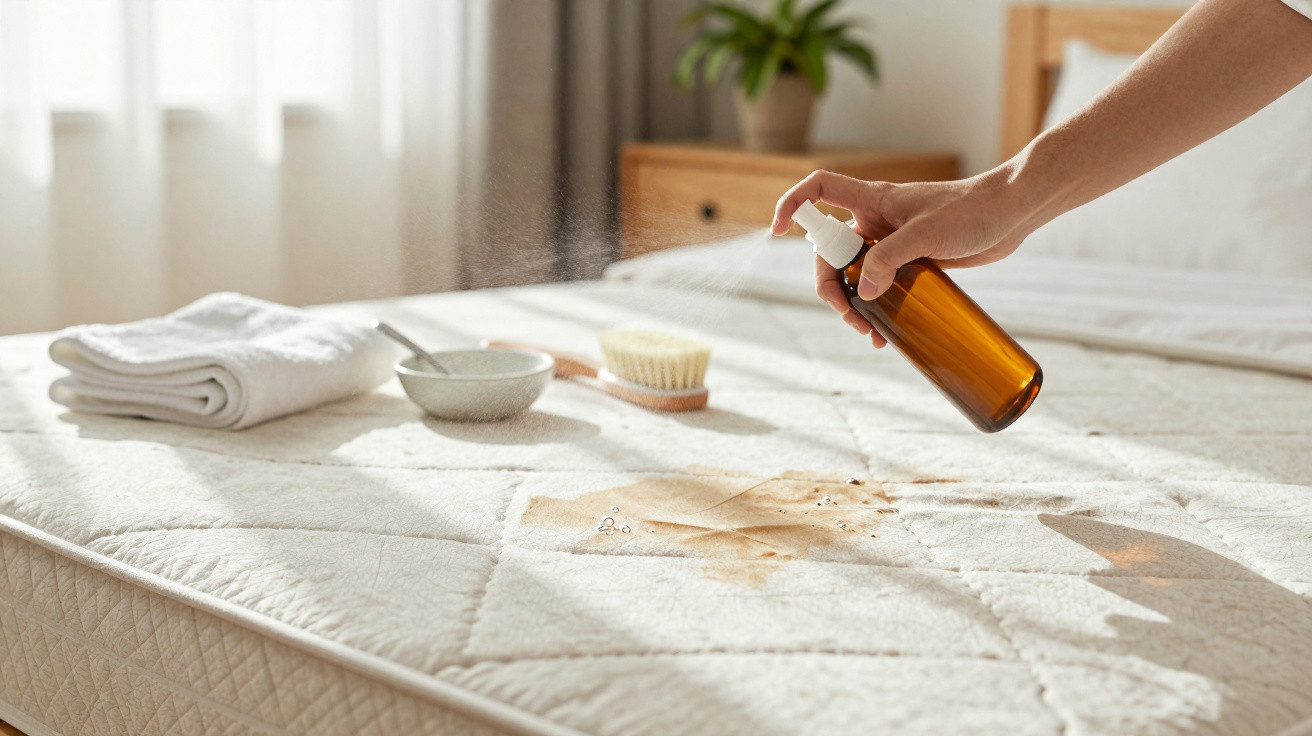
Not the tidy, TV-advert kind of splatter - the real-world, slightly mortifying, slightly persistent stain that refuses to shift. The kind you’d turn the sheet over to disguise when someone’s staying over. Most of us know the moment a bedroom stops feeling soothing and starts looking like evidence. The good news is you can undo it.
One morning the light hit the bed at just the wrong angle and exposed it - a pale ring on the mattress that definitely hadn’t been there the day before. I told myself to leave it, made a coffee, then drifted back with a damp cloth and started dabbing anyway. Nothing. I searched online, I groaned, I even weighed up buying a new topper. The mark just sat there, quiet and smug. Then a friend messaged me a three-ingredient method she promised was “weirdly satisfying”. I mixed it, sprayed it, waited - and when I checked again, the ring had faded as if it had never belonged. Only a tiny patch hung on. That part got my attention.
Why mattress stains feel personal
No one chats about mattress stains over brunch, yet beds are where everyday life really happens. Spilled tea, a nosebleed, sticky hands after a film night - all of it leaves little reminders behind. A mattress is supposed to feel calm, not like a record of chaos. Stains aren’t only visible marks; they interfere with how we switch off. That low-level “this isn’t clean” feeling tugs at you as you settle under the duvet. Even with a tidy room, one blot makes everything feel off - and it always seems to look back at you.
If you ask around, people admit it in hushed, matter-of-fact ways. One reader told me her child’s bed kept a faint shadow after a bout of flu, despite everything she tried. Another mentioned a cat territory dispute that cost her an entire weekend (and most of her patience). A 2023 UK home survey estimated nearly six in ten mattresses show visible staining by year five, much of it from drinks and sweat salts. That’s not a scandal - it’s a pattern. It only sounds high until you think about mornings and nights, birthdays, lazy weekends, and how life never politely avoids fabric.
Some of the stress is simply chemistry. Protein stains and tannin stains attach to fibres in different ways. With a mattress you’re not dealing with loose cloth, but a foamy structure that happily absorbs spills. Plain water often makes things worse, spreading the mark and carrying pigment deeper as it dries. Heat can set proteins, turning a mild stain into a stubborn one. And because you can’t properly soak a mattress, you’re always cleaning within limits - minimal moisture, a light touch, and quick drying. That’s why certain combinations work: it isn’t magic, it’s chemistry that tips the odds in your favour.
The ‘magical’ trick, step by step
This is the simple method that feels oddly satisfying to do. In a spray bottle, combine 250 ml of 3% hydrogen peroxide, 3 tablespoons of bicarbonate of soda, and 1–2 drops of washing-up liquid. Gently swirl to mix (don’t shake vigorously). Lightly mist the stain so it’s damp rather than drenched. Leave it for 10–15 minutes and you should start to see the stain lift. Blot with a clean white cloth, lifting straight up instead of rubbing. Then sprinkle dry bicarbonate of soda over the area, leave it for an hour to draw out moisture and odours, and vacuum. Hydrogen peroxide, bicarbonate of soda, and a tiny splash of washing-up liquid: that’s the trio.
A few sensible guardrails make it smoother. Patch-test first on the edge of the mattress, particularly if the fabric is dyed or patterned. Keep the space well ventilated and be especially sparing with liquid on memory foam. If the stain is fresh, blot before anything else - press, hold, rotate the cloth - so you’re starting with less mess to remove. Older marks may need a second go the next day; leaving bicarbonate of soda on overnight often helps. And, honestly, no one does that every day. If it’s protein-based (blood, milk), stay cool and take your time. If it’s tannin-based (tea, coffee), the peroxide mixture is where this method really shines.
There’s a rhythm to it, and it can save your Saturday. The solution breaks down the colour while the bicarbonate of soda draws out what’s sunk in. After vacuuming, it shouldn’t smell sharp or leave the fabric feeling stiff.
“You don’t need to drown a mattress to clean it,” says Jo, a Leeds cleaner who swears by the trio. “Moist, wait, blot. The bicarb is your quiet hero.”
Treat it like a gentle kit you can throw together at 10pm without causing a fuss.
- 250 ml 3% hydrogen peroxide
- 3 tbsp bicarbonate of soda
- 1–2 drops washing-up liquid
- Mist, wait 10–15 mins, blot, dust with bicarbonate of soda, vacuum
The logic behind the lift - and what it changes
The reason it works is satisfyingly nerdy. Hydrogen peroxide releases oxygen that breaks apart chromophores - the molecules that make a stain look like a stain. Bicarbonate of soda shifts the pH slightly, loosening residue and helping with odours. The tiny amount of washing-up liquid reduces surface tension, so the solution spreads more evenly without flooding the foam. Because it’s gentle, you’re not scrubbing pigment further in. Sleep feels different when your bed smells like absolutely nothing.
There’s an invisible advantage too: less moisture means less risk of a musty smell later. You’re working from the surface down, giving the stain a way out. A light hand helps prevent rings and patchy edges. If you’ve ever used hot water and felt like you sealed the stain in, this can feel like a mental reset. Fresh sheets help, but a clean mattress can change the whole tone of a room. You might flip the pillow simply because everything looks crisp. You might even read a few more pages.
Not all stains behave the same. Urine and pet accidents tend to do best if you follow up with an enzyme cleaner once the colour has lifted, because enzymes tackle what causes lingering smells. Make-up can need an oil-based pre-dab before you use the trio. Red wine is unpredictable; try dabbing with soda water first, then move on to the mixture. Avoid chlorine bleach on mattresses - it can yellow the fabric and weaken fibres. Aim to dry in daylight with windows open, duvet pulled back like a sail. The bed looks ordinary again, which is exactly the goal.
There isn’t a definitive finish line for keeping a home tidy; it’s more like a rhythm you return to. This trick fits into that rhythm without turning into a big job. You’ll probably try it once for a tea stain, then end up keeping a bottle under the sink. The worry of “what if I make it worse?” fades as soon as you see the first lift. Pass it on to the friend who always apologises for their spare room - or keep it for yourself. The mattress stops demanding attention, and the bedroom feels a little quieter. That quiet spreads.
| Key point | Detail | Why it matters to you |
|---|---|---|
| Three-ingredient spray | 250 ml 3% peroxide + 3 tbsp bicarb + 1–2 drops washing-up liquid | Quick to mix from common UK items, low effort, high payoff |
| Low-moisture method | Mist, wait, blot, dust with bicarb, vacuum after an hour | Helps prevent rings, avoids soaking foam, speeds drying |
| Match the approach to the stain | Protein stains: keep it cool; tannins respond well to the trio; add enzymes for odour | Better results with small tweaks, fewer repeat attempts |
FAQ:
- Can I use the peroxide mix on memory foam? Yes, lightly. Mist rather than soak, and allow extra time to air-dry with windows open.
- Will this remove old, set-in blood stains? Often, yes. Use cool applications and repeat the process; avoid heat, which can lock proteins in place.
- Is baking soda the same as bicarbonate of soda? In the UK, yes - they’re the same thing. Use the plain white powder, not baking powder.
- What if I don’t have hydrogen peroxide? Try soda water first, then a mild washing-up liquid solution. For stubborn stains, buy 3% peroxide from a chemist.
- How do I stop smells returning after a pet accident? Lift the mark with the trio, then apply an enzyme cleaner once dry. Enzymes break down the source of the odour.


Comments
No comments yet. Be the first to comment!
Leave a Comment