
Ten minutes after you’ve sprayed, the sweetness thins out and that familiar stale edge starts seeping back in-from the tiles, the towels, the drain. Air fresheners sell a shortcut to “fresh”, but the room keeps giving itself away. The reality is tucked into corners and under the lid, not floating in a supermarket mist. And it’s far simpler to put right than we like to admit.
I was at a friend’s walk-up flat on a sticky, humid afternoon-the sort of heat that clings to the back of your neck. Her bathroom somehow managed to smell of fake lavender and, at the same time, an old gym bag. A plug-in glowed like a tiny lighthouse above the socket. The window had been painted shut. The shower curtain stuck to the bath with damp determination, and a hand towel sagged in a weary loop that never properly dried.
We chatted about work while I prodded at the extractor fan. A puff of dust sighed out like it had been waiting to talk. The lavender did what it could. The odour carried on telling the truth.
The myth of “fresh” versus the work of air
Sprays and plug-ins burst into action, then disappear precisely when the real work begins: drying out, shifting, and clearing the air. Most odour lives in water-film lining a drain, humidity hanging in the room, damp fabric gripping onto yesterday. Fragrance just skates across the top like a screensaver.
Air fresheners don’t clean; they disguise. That isn’t a moral judgement; it’s simply physics and biology. Moisture gives bacteria somewhere to thrive. As soon as the scent drops away, the room goes back to what it was doing all along: quietly composting skin cells, soap scum, and steam. Freshness isn’t a flavour. It’s a condition.
We’ve all had that moment: a guest will be here in five minutes and you grab the aerosol like it’s a fire extinguisher. I once rented a place where a lemon candle was lit every evening. The actual culprit was a blocked overflow in the sink, plus a shower curtain that never fully dried. Once the overflow got scrubbed and the curtain started being left open overnight, the lemon stopped battling. It could go back to being just a candle.
Think of bathroom smells as a chain reaction: trapped humidity turns into mildew, absorbent textiles hold that dampness, drains build up biofilm, the toilet aerosolises tiny particles, and the bin stews in a warm, moist corner. Snap even one link and the whole chain slackens. Ventilation breaks the first. Quick, contact cleaning breaks the next. Rotating textiles kicks another. It ends up smelling like nothing-which is exactly the goal.
The no-excuse bathroom freshness routine
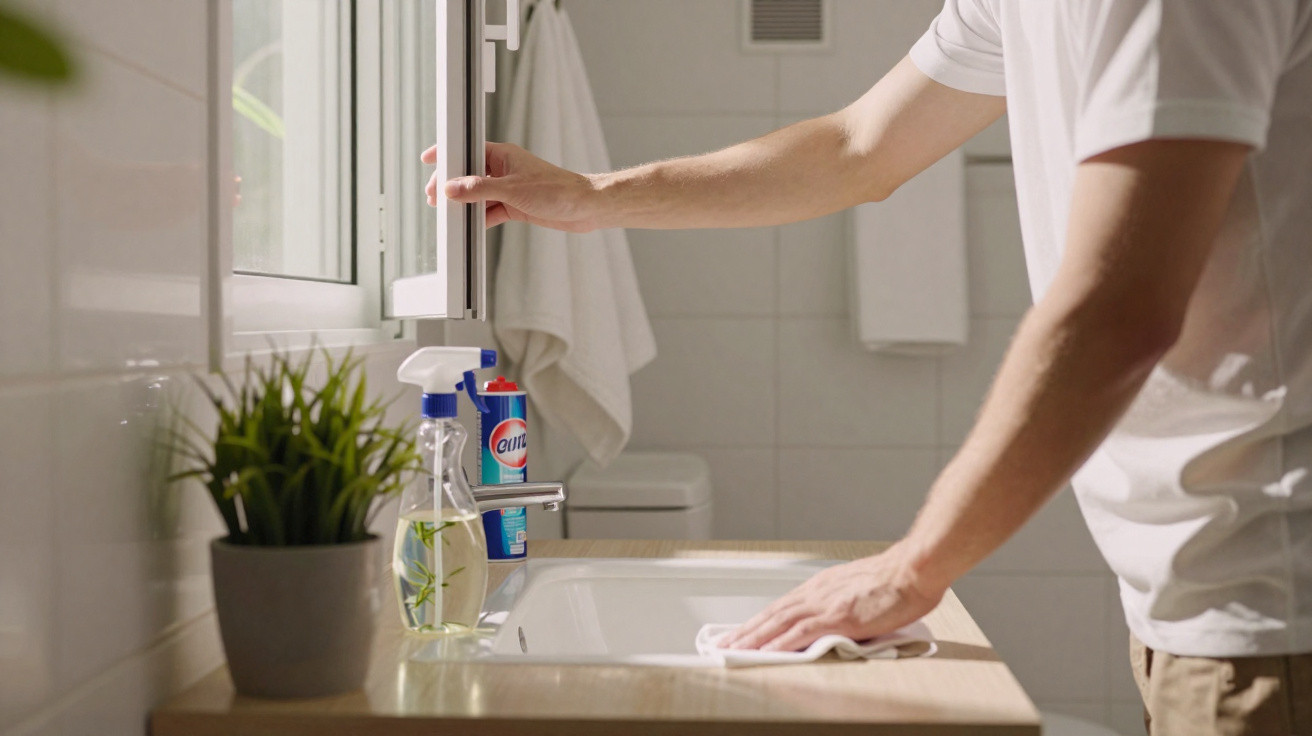
This is the sort of routine you can do half-asleep: headphones on, one sock still missing. Before you shower, switch the fan on and leave the door slightly ajar. After you’re done, spend 30 seconds running a squeegee down the glass and the tiles that take the spray; that single pass removes a surprising amount of moisture from the room.
Put the lid down, then flush. Give the toilet a two-swirl scrub with a dab of washing-up liquid from a squeeze bottle kept by the base, so the brush goes back into its holder clean rather than swampy. Pull the towels apart so they aren’t pressed together; prop the bath mat up to dry against the side of the bath. Leave the shower curtain open part-way, not sealed to the tub. Two minutes, max.
Once a day, mist the basin and tap with a mild vinegar-and-water mix, then wipe with a small microfibre cloth kept on a hook. Empty the bin before it becomes a famous landmark; a pinch of bicarbonate of soda in the bottom of the liner helps keep things neutral. Every other day, pour a kettle’s worth of hot tap water down the shower drain and swish the sink’s overflow slit with a tiny brush. That’s the backbone. You’ll notice the air change.
Most bathroom “mistakes” begin with optimistic timing and end with a spray. Don’t stash the toilet brush in a sealed container that never dries out. Don’t let a bath mat spend its entire life in the same damp patch. Don’t lock humidity in by shutting the door and switching the fan off the second the water stops; keep air moving for ten minutes after every shower.
Let the bin breathe; a tight lid traps odour, then releases it in a blast when you open it. Keep only a few daily items on the counter-visual clutter collects dust, and dust loves damp. Rotate towels using a simple rule: body towels get two uses, hand towels get three, then they go in the wash. Keep a spare microfibre and a small caddy exactly where your hand naturally reaches. Make friction work for you, not against you.
Smell is solved by removal, not addition. That means dryness, movement, and a bit of hands-on wiping. If you hate the word “routine,” rename it; call it your two-minute reset. Set things up so the tools are hard to ignore: squeegee on a suction hook, microfibres on a ring, washing-up liquid in a squeeze bottle near the toilet, bicarbonate of soda under the sink, a slim scrub brush stuck to a magnet.
“Clean is a habit loop, not a deep dive,” an old building superintendent told me, leaning on his cart. “Give the room fewer places to rot, and it won’t.”
- Fan on before water, off ten minutes after
- 30-second squeegee pass on wet surfaces
- Close lid, flush, two-swirl brush with a soap touch
- Separate towels; flip mat to dry
- Daily sink spritz and wipe; tiny drain swish
Life after the spray: what changes, really
Your bathroom shifts into that calm, neutral nothingness that feels like fresh air on a cloudy day. You may still keep a candle or a small bottle of essential oil-not as armour, but as a bit of atmosphere. The plug-in can be retired without ceremony.
And then the knock-on effects show up. Towels last longer because they’re not left to marinate. The mirror stays clearer because wiping it down becomes automatic. The bin never turns into a saga. You stop feeling that tiny spike of panic when someone asks to use your bathroom.
Honestly, nobody keeps this up perfectly every day. You’ll miss an evening, you’ll go away, you’ll have a week when the fan’s hum feels like too much effort. That’s fine. The system holds because each part is small and forgiving. Miss a day and you’re five minutes from normal, not facing a weekend of heavy scrubbing. That’s the strength of boring, done well.
| Key point | Detail | Why it matters for you |
|---|---|---|
| Dry beats fragrance | Moisture feeds odour; remove water and film, and the smell fades | Real freshness without chemicals or cover-ups |
| Two-minute reset | Squeegee, lid-down flush, quick brush, towel spacing, sink wipe | A practical habit that fits everyday life |
| Tools where you reach | Squeegee on hook, microfibre on ring, soap by toilet, tiny drain brush | Less friction means the routine actually sticks |
FAQ:
- Do I still need an air freshener at all? Not for odour. Use one if you simply like a scent, but don’t treat it as the fix. Once the room is dry and the drains are clean, a candle or gentle diffuser becomes a preference, not a crutch.
- What if my bathroom has no window? Run the extractor fan before you shower and for about ten minutes afterwards. If it’s underpowered, clean the vent cover and the housing. In stubborn spaces, a small, quiet dehumidifier on a timer can help.
- How often should I wash towels and the bath mat? Wash body towels after two uses and hand towels after three. Wash bath mats weekly, or sooner if they stay damp. After each shower, hang mats to dry rather than leaving them flat on the floor.
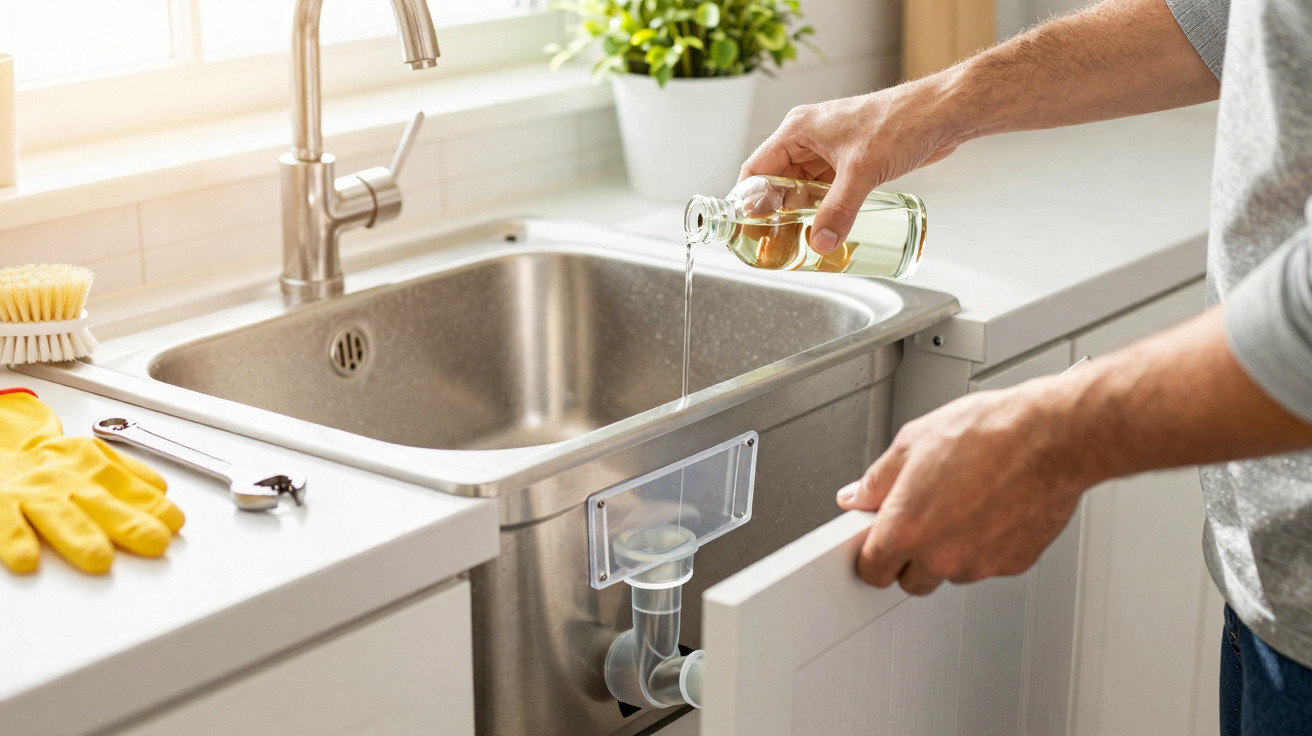
- My sink still smells. What then? Take out the pop-up plug and scrub it. Swish the overflow slit with a narrow brush and soapy water. Pour hot tap water down the drain, then add a cup of vinegar; leave it briefly, then flush with more hot water.
- Are air fresheners bad for me? Some release VOCs that can irritate people with asthma or fragrance sensitivity. Ventilating, drying, and cleaning cut the need for scent altogether. If you want odour control, try plain charcoal bags or bicarbonate of soda.
Why “fresh” starts before the spray aisle
A bathroom is a small stage where tiny props do most of the work: the hook that holds the squeegee, the habit of leaving the door cracked, the way a towel hangs with air between the folds. These unglamorous details never get applause, yet they quietly improve everything.
When you stop covering smells and start clearing the causes, it’s not only the odour that changes. It’s the feeling of control. You learn to notice dampness almost like a sixth sense and deal with it without thinking. You touch surfaces more often, so they stay cleaner-and clean surfaces make the whole room feel easier to keep clean.
It’s not about being perfect; it’s about making odour homeless. Fragrance can still belong, but as a guest, not a guard. If all of this feels like too much, choose one move. Put the squeegee on the wall and watch what it does to the room. Then add the lid-down flush. Tell someone what you notice. Sometimes the simplest stories are the ones that travel.
Comments
No comments yet. Be the first to comment!
Leave a Comment