
A keepsake from your grandma-meant to shine like winter sun on freshly fallen snow. And now: dull grey, blotchy, slightly tacky. You know the feeling: you open a jewellery box and, instead of sparkle, you’re met with something tired and shadowy. For a second you think, “Right, that’s it-time has rubbed it away.” Then you put the piece back, with that little sinking feeling in your stomach. All because nobody fancies a cleaning marathon. Yet sometimes it takes five minutes and a bit of kitchen wizardry. The only real question is: which tricks genuinely work-and which ones quietly wreck your silver jewellery?
Why silver jewellery loses its sparkle so quickly
If you wear silver jewellery often, you’ll recognise the mild disappointment: one day it looks bright, and the next it’s darkened, patchy, almost dirty. It can feel as though everyday life has left its fingerprints-hand cream, perfume, the washing-up water when you do the dishes. In reality, silver reacts with sulphur compounds in the air, with perspiration, and with cosmetics. What looks like grime is actually a chemical layer. And it spreads quietly, even while a ring is simply sitting on the bedside table. Sparkle becomes patina-and it happens faster than we can tick off our to-do list.
At that point, a lot of people mentally throw in the towel. Maybe they’ll take it to a jeweller once a year-if that. Let’s be honest: hardly anyone does it regularly. So necklaces end up in drawers, earrings in the bathroom cabinet, bangles in a little dish by the basin. They’re all waiting for “when there’s time”. That time never arrives. What you’re left with is a growing pile of neglected memories, left unworn simply because they no longer shine. And yet every darkened layer also carries a small upside: it’s proof of how much life that piece has shared with you.
Silver tarnishes because it’s active. It isn’t a sterile metal that stays pristine regardless of what we do. It responds-to air, to touch, to the places we’ve been. That’s annoying when it comes to cleaning, but there’s something faintly romantic in it too. Tarnish or not, with the right approach you can lift that dark film quickly-without hours of rubbing, without harsh chemical “solutions”, and without the nagging guilt of having “just wiped over it”. When you understand what’s happening, you can turn a sad-looking ring back into a quiet statement in five minutes.
The 5-minute method from the kitchen
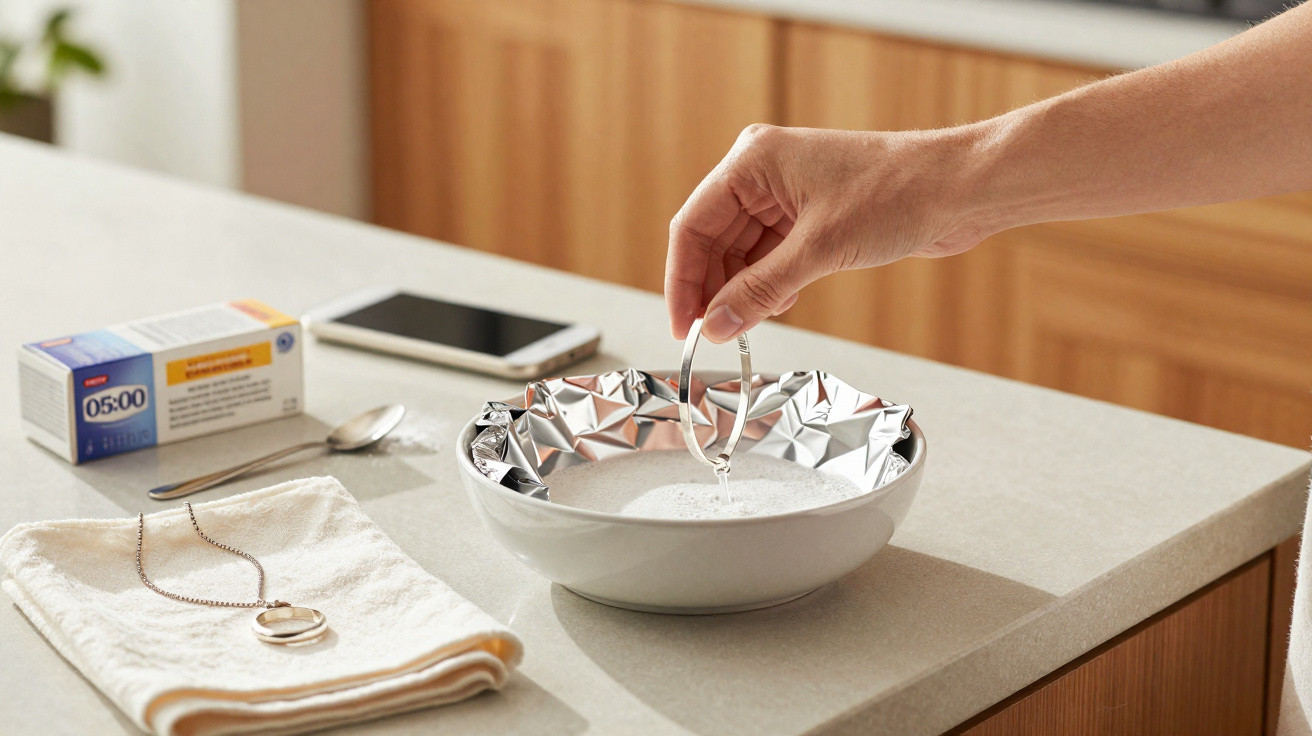
The easiest way to bring dull silver jewellery back to life usually starts in the kitchen, not the bathroom. You’ll need: aluminium foil, a heatproof bowl or dish, hot water, and one to two spoonfuls of bicarbonate of soda-or, alternatively, salt. That’s it. Line the inside of the dish with aluminium foil, shiny side facing up. Place the silver jewellery inside, making sure stones made from porous materials (for example pearls or coral) are not sitting in the water. Pour over hot water and stir in the bicarbonate of soda or salt. Within seconds, the unseen part of the process begins.
You may notice a faint smell like rotten eggs-an indication that sulphur compounds are being released. Leave the jewellery in the bath for just a few minutes; three to five is usually enough. No scrubbing and no aggressive polishing. Then rinse briefly with clean water and dry gently with a soft cloth. Suddenly a ring can look “newly bought” again. It’s almost ridiculously satisfying-and it proves the biggest barrier was never the effort, but the assumption that it would be complicated and time-consuming.
One important note: this method is best for sturdy silver jewellery with no delicate stones or surface treatments. Pieces with matte finishes, oxidised details, or softer stones are better cleaned separately. For example, a fine ring with deliberately darkened recesses can lose its character quickly with the aluminium-and-bicarbonate method. A simple, classic silver ring, on the other hand, can become “camera-ready” again. A straightforward truth: not every TikTok hack suits every piece of jewellery. And yes-sometimes being responsible means choosing to skip a trend.
Common mistakes-and what your jewellery actually needs
The first instinct is often a heavy-handed one: toothpaste on, old brush out, scrub hard. It sounds practical because it’s already in the house. The problem is that toothpaste contains abrasive particles that can scratch surfaces over time. A ring might look brighter at first, but slowly it loses its fine finish. Just as risky are strong bathroom cleaners or general-purpose sprays used “because they clean everything”. They do-but not without leaving damage behind. It gets even more delicate with jewellery that includes stones, glued settings, or lacquered coatings. A five-minute fix should make life easier, not create bigger problems the third time you try it.
In many cases, gentler is better: mild washing-up liquid, lukewarm water, and a truly soft cloth-or a baby toothbrush. This is particularly effective for chains with lots of links, delicate earrings, or bracelets with fine engravings. The advantage is that you can reach tight spaces without punishing the surface. If you then use the aluminium-and-bicarbonate bath occasionally, rather than reaching for harsh chemicals every time, you’ll quickly find a routine that fits real life. And, before you know it, the jewellery stops sitting unloved in a drawer and starts being worn again.
One factor people consistently overlook is storage. Many leave silver jewellery in open dishes or on the bedside table, where humidity and traces of perfume keep working away in the background. Stored in small zip bags, soft pouches, or specialist anti-tarnish bags, silver stays brighter for much longer. It sounds almost too simple to matter, but the difference is noticeable-and it reduces work rather than adding more.
“Silver jewellery wants to be worn, not forgotten-a short moment of care can make years of memories visible again.”
- Clean silver jewellery regularly, briefly, and gently-instead of rarely and radically
- Only use the aluminium-and-bicarbonate method for sturdy jewellery with no stones
- Treat delicate stones, pearls, and darkened details separately
- Store jewellery dry with reduced air exposure, for example in small bags
- Invest in a soft silver-polishing cloth rather than aggressive cleaners
Why five minutes can change more than a new purchase
The first time you watch a tarnished old ring return to a bright shine in just a few minutes, it can feel oddly emotional: as though you’ve polished a small piece of your own history. Not in the sense of erasing anything, but in the sense of making it visible again. The jewellery was never “broken”-it was simply covered. And that moment-when an heirloom or a gift looks the way it did on the day you received it-can affect us far more than any new purchase from an online shop.
There’s a quiet satisfaction in caring for things instead of replacing them-especially when it doesn’t require half an afternoon, only the time it takes the kettle to boil. A five-minute ritual by the mirror while the coffee brews can become a tiny pause in a busy day. A small reset: jewellery in the dish, water heated, bicarbonate in, wait briefly, rinse, and dry. The motions quickly become second nature. And each renewed shine is a reminder that signs of time aren’t an ending-just a stage in between.
Perhaps that’s the biggest effect of this simple method: it brings overlooked parts of your life back into view. Your grandma’s ring, the necklace from a holiday, the bracelet from an earlier relationship that you still like. None of them are waiting for a “perfect moment”-just for one small decision: today, I’ll give you five minutes. Then back out you go-into the air, into the daylight, into the next working day. Jewellery doesn’t belong in drawers. It belongs where life is actually happening.
| Key point | Detail | Benefit for the reader |
|---|---|---|
| 5-minute aluminium-and-bicarbonate method | Place silver in a dish lined with aluminium foil, add hot water and bicarbonate of soda/salt, leave briefly | Fast, straightforward cleaning with kitchen basics-no need to buy specialist products |
| Gentle care instead of toothpaste & similar | Mild washing-up liquid, soft cloth, occasional deeper clean, avoid abrasive substances | Prevents scratches and long-term damage, keeps the original shine for longer |
| Smarter storage | Store dry with reduced air exposure in bags or boxes, away from damp and cosmetics | Significantly reduces tarnishing, saving time and cleaning effort day to day |
FAQ:
- How often should I clean silver jewellery? Depending on how often you wear it, do a quick gentle clean every few weeks: rinse softly, dry, and use the five-minute bath when you can see darkening. Constant polishing isn’t necessary.
- Is the aluminium-and-bicarbonate method suitable for every piece? No. Delicate stones, pearls, coral, opals, and deliberately darkened designs are better cleaned carefully with water and mild washing-up liquid.
- Can I use baking powder instead of bicarbonate of soda? In a pinch, yes, but it’s often weaker because baking powder contains additives. Pure bicarbonate of soda is usually more effective and easier to dose.
- What should I do if my silver is heavily tarnished? Start with the aluminium-and-bicarbonate bath, then finish with a specialist silver-polishing cloth. In extreme cases, a visit to a jeweller is worthwhile.
- What’s the best way to store silver jewellery? Keep it dry, dark, and individually wrapped-for example in small zip bags or jewellery pouches. Avoid contact with moisture, perfume, and hairspray.

Comments
No comments yet. Be the first to comment!
Leave a Comment