
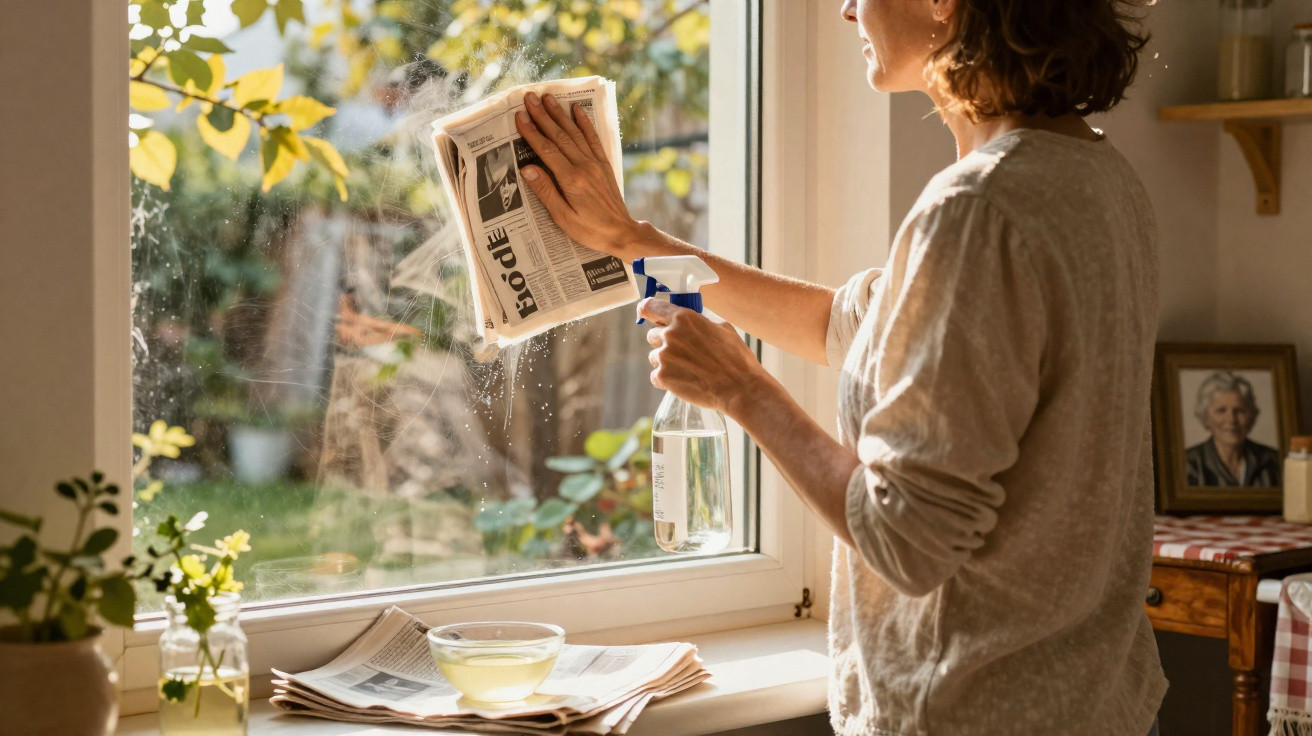
Streaks linger like gossip in a group chat, no matter how hard you spray and scrub. There’s a tried-and-tested answer that cuts straight through it: vinegar and yesterday’s newspaper.
I can still picture it - the kitchen half-lit and cosy, late sunlight slanting in by the back door. Nan was there with a jam jar of cloudy liquid and a casual pile of crumpled headlines. No branded bottle, no bright-blue shine, just that chip-shop vinegar tang as she tore a page from the classifieds. She cleaned in tight circles, unhurried and exact, the same steady hands she used for icing cakes or folding laundry. The glass went from dull to clear, like smog lifting off a city. She stopped, tilted her head, and held the pane up to the light: spotless, no squeak, no fuss. With a knowing smile, she tapped the paper. Cheap tricks, she said, last the longest. Then she passed me the jar with a wink - a little secret weapon.
Why this scrappy trick outperforms the fancy stuff
Vinegar is simple, stubborn and straightforward. It tackles mineral marks and the faint residue of sticky fingers in a way that “miracle” cleaners promise but often don’t manage. Match it with newspaper and it’s like an old band playing a tight set: nothing flashy, just results. It’s dirt-cheap and genuinely effective. And unlike plenty of bottled sprays, there’s no worrying fine print that makes you hold your breath or rinse everything twice.
Everyone knows the moment the sun finally shows up and the patio doors suddenly look like a streaky crime scene. I once tried a “diamond shine” spray on the balcony glass in my rented flat. At dusk it seemed fine - then morning light revealed zebra stripes visible from the sofa. One go with vinegar, followed by a polish using the sports pages, and it was instantly clear. No rainbowy film, no tacky layer that grabs dust the next day. Paper towels used: zero. Smug grins: one.
The science is uncomplicated. White vinegar contains acetic acid, which breaks down the alkaline mineral deposits left by tap water and helps shift greasy smears from fingers and cooking steam. Newspaper fibres are tightly packed and mildly abrasive, so they polish without shedding lint. The ink (mostly soy-based these days) dries quickly and doesn’t leave fluff behind like tissues do. In other words, you lift residue away rather than dragging it across the glass - the difference between a real gleam and the illusion of clean.
How to do it like Nan, without the faff
Use white distilled vinegar - not malt. Combine one part vinegar with one part warm water in a spray bottle or any clean jar. If the glass is properly grubby, add a tiny drop of washing-up liquid at the start, then swap back to the plain vinegar mix for the final run. Lightly mist the glass. Scrunch a full sheet of newspaper into a loose ball and wipe in small circles, working from top to bottom. Finish with long vertical strokes, then give the corners a quick horizontal buff. If you catch a streak, breathe on it and give it a last pass with a dry bit of newsprint.
A few friendly cautions, from someone who’s learned the hard way. Don’t soak the pane; a fine mist is plenty. Stick to black-and-white pages - skip glossy inserts and colour magazine sections, which can smear. Try a small, hidden area first on painted or wooden frames, as vinegar can dull certain finishes. Keep the mixture away from marble sills or other natural stone. The vinegar smell disappears quickly, and you won’t be left sitting in a perfumed fog. And honestly, nobody does this daily. Do it properly once, and you’ll get away with quick touch-ups for ages.
There’s a pleasing rhythm to it that feels a bit old-fashioned: two minutes, two sheets, two actions - wipe, then buff.
“A clean window should be invisible,” my nan would say, “and the only proof you were there is what you can see through.”
- Recipe: 1:1 white vinegar to warm water; optional tiny drop of washing-up liquid for heavy grime.
- Best paper: black-and-white newsprint; avoid glossy magazine pages.
- Avoid: stone sills, tinted films, delicate painted frames.
- Pro touch: final dry-polish with a fresh, crumpled sheet for a showroom edge.
Beyond the shine: what this habit says about home
There’s something steadying about getting a window sparkling using what’s already under the sink and last night’s headlines. It turns a dull job into a small moment of capability - the sort of thing that props you up when the rest of the day feels wobbly. Skip the blue stuff. Choose what works, smells of vinegar for five minutes, and then gets out of your way. The light that streams in afterwards feels earned rather than rented. And that blend of thrift and clarity hangs around long after the glass is dry.
This is where memory slips in: the way the paper folds, the sound of the swipe, the soft drag of fibres over glass. A window is both a boundary and a promise. Clean one and the whole room looks fresher. Make a cup of tea and watch the street come into focus. You don’t need a product with a trademarked shine. Old tricks travel well. Maybe that’s the real glamour - the quiet dazzle of something simple, done properly, in the time it takes the kettle to boil.
There’s no trophy for perfection - just a gentler morning. Pass the trick on to someone moving into their first place. Hand them a bottle that wasn’t born yesterday and a scruffy stack of newsprint, and tell them it’s quicker than a complaint and cheaper than a mood. Clarity spreads. The view outside might be the same, yet it feels brand new. That’s the secret weapon doing its job: part chemistry, part muscle memory, part stubborn joy.
| Key point | Detail | Benefit to the reader |
|---|---|---|
| Right mix | 1:1 white vinegar to warm water; tiny drop of washing-up liquid only for heavy grime | Reliable streak-free results without trial and error |
| Best tool | Black-and-white newsprint, crumpled; avoid glossy pages and colour inserts | No lint, clean buff, zero paper towel waste |
| Where not to use | Marble or stone sills, delicate paint, tinted window films | Protects surfaces while keeping glass perfect |
FAQ:
- Can I use brown or malt vinegar instead of white? Use white distilled vinegar. Brown or malt can stain and carries a stronger odour that lingers.
- Will newspaper ink transfer to my hands or frames? Modern soy-based inks are usually dry. Some transfer can happen, so wear thin gloves and keep edges away from pale frames.
- Does this work on mirrors and shower screens? Yes for mirrors and plain glass. Avoid natural stone surrounds and etched glass; vinegar can dull those surfaces.
- What if I hate the smell of vinegar? The scent fades quickly. Add a slice of lemon peel to the bottle or a drop of essential oil if you want a softer note.
- Is microfibre better than newspaper? Microfibre also works well. The charm of newspaper is the gentle abrasion and lint-free buff, plus it’s repurposing what you already have.

Comments
No comments yet. Be the first to comment!
Leave a Comment