
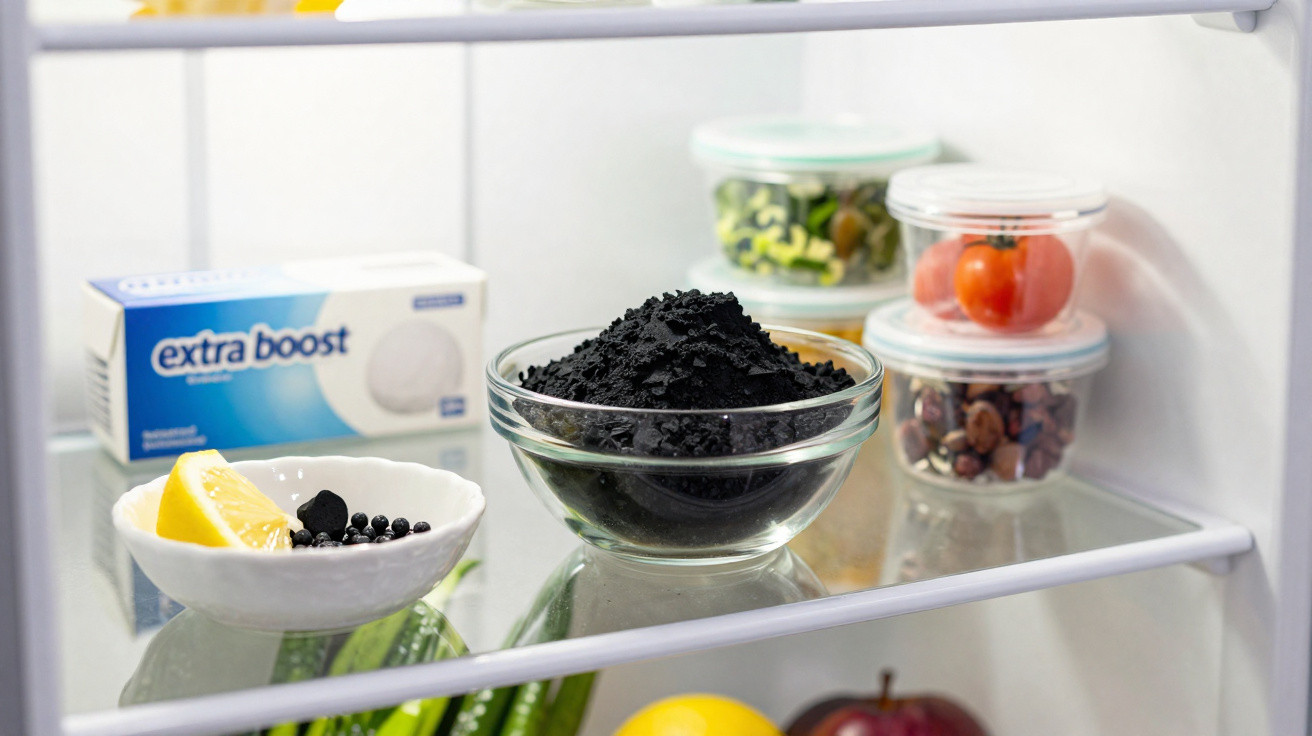
You know the routine: you vow you’ll properly scrub the fridge shelves, then you shut the door and act like you never saw the mystery spill, because dinner is on and life is loud. The classic move is to shove in a squat tub of baking soda and cross your fingers, but the next day the odour is merely muted, not erased. Last Tuesday I tried a different kind of powder-one that sat there like a dark little planet and got on with the job unnoticed. It worked before the leftovers had even gone cold.
Meet activated charcoal powder that outpaces baking soda
It turns up in more households than you might expect: activated charcoal powder-the same material found in water filters and aquarium cartridges, the soft black dust that gets stirred into face masks and toothpaste-style products. In the fridge it doesn’t just “freshen”; it gulps down smells through countless microscopic pores, with a kind of quiet hunger that seems unfair to whatever’s causing the stink. Set a shallow dish on the middle shelf and the sharp edge of onion or shrimp starts shrinking hour by hour, as though the air has been washed and left to dry.
A friend relies on it after a late fish supper made his flat smell like a seaside pier. I watched his small glass ramekin of charcoal flip the atmosphere before midnight; by morning the fridge air felt crisp and cold again, rather than heavy and briny. The research supports the instinct: activated charcoal can provide 1,000–2,000 square metres of surface area per gram, whereas baking soda is basically a mild base with a far smaller surface area by comparison-useful for neutralising acids, but slower at catching stubborn volatile compounds. That difference-surface area, contact, pace-translates in everyday terms to a much shorter gap between “oh no” and “we’re alright”.
What’s going on is more engineering than enchantment. Charcoal doesn’t cover smells; it adsorbs them, drawing odour molecules into a honeycomb of micro- and mesopores via weak electrical attractions, and it does so without contributing a scent of its own. Baking soda often needs the right molecules to collide and react, which takes time and decent mixing; charcoal simply provides an absurd number of “seats” for wandering stink. The payoff is faster odour capture in the cramped, damp churn of a working fridge-where speed matters, because your lettuce is in there too.
How to use activated charcoal in your fridge
Keep it straightforward. Put 2–4 tablespoons of food-grade activated charcoal powder into a shallow dish or small jar, cover the top with a coffee filter and secure it with a rubber band (to stop spills while still letting air pass), then place it on the middle shelf where airflow is reliable. If your fridge is larger-or you’re dealing with a fish-and-curry aftermath-use two smaller dishes on separate shelves to expose more surface area to more moving air. If you prefer a neater approach, spoon the powder into a reusable tea bag or a square of cheesecloth and tie it into a soft sachet, then rotate in fresh powder every two to four weeks-or “refresh” it by leaving the pouch on a sunny windowsill for a few hours to release some of the trapped odours.
A few mistakes are easy to make (because we’re human): don’t seal the powder in a lidded container, don’t wedge it behind tall condiments where air can’t reach it, and don’t tip it loose onto a plate unless you want a black, dusty constellation after the first bump. Use a spoon so your hands stay clean, and store it out of reach of inquisitive children and pets; it’s inert, but a mess is still a mess. And realistically, nobody remembers this daily-so make it painless: set a reminder to replace it, the way you’d swap a BRITA filter or clean out the produce drawer you keep insisting isn’t sticky.
One appliance technician summed it up neatly:
“Baking soda is a slow fixer; charcoal is a fast trap.”
If you like something you can save for later, here’s a quick pocket guide.
- Where to place it: middle shelf or the middle of the door, with space around it for airflow.
- How much to use: 2–4 tablespoons per average fridge; increase after strong odours.
- When to replace: every 2–4 weeks, or after any major smell incident.
- Safety note: choose food-grade charcoal, keep it contained, and don’t ingest it on purpose.
It works even when you forget it’s there.
The quiet upgrade your fridge deserves
There’s a particular kind of calm in opening the fridge and smelling nothing at all-just cool air and the faint, clean whisper of plastic and greens, like a pocket of winter you can hold. It’s an underrated feeling, and it subtly changes the pace of the whole kitchen. What I like about activated charcoal is that it asks almost nothing: a small dish and a bit of room. It doesn’t perfume the space or pretend the problem isn’t there; it simply lifts the burden out of the air and gives you your choices back. Low-cost, low-effort fixes like this travel quickly-neighbour to neighbour, message to message-because they fit the way real homes actually run: a small Tuesday-night action that makes tomorrow simpler.
| Key point | Detail | Benefit for the reader |
|---|---|---|
| Why it works faster | Activated charcoal’s vast pore surface adsorbs a wide range of odour molecules quickly | A cleaner-smelling fridge in hours, not days |
| How to set it up | 2–4 tbsp in a ventilated dish or sachet, placed mid-shelf; swap every 2–4 weeks | A simple, repeatable routine that takes very little effort |
| Safe, sensible choices | Use food-grade powder, prevent spills, keep away from children and pets | Peace of mind and a mess-free kitchen |
FAQs:
- Can I put activated charcoal loose on a plate? Technically yes, but it’s dusty; use a coffee filter over a jar or a fabric sachet to keep it tidy while letting air through.
- Is it safe around food? Use food-grade charcoal and keep it contained; it doesn’t release fumes and won’t flavour your groceries when properly set.
- How much do I need for a big fridge? Start with 4 tablespoons split into two small dishes on different shelves; add another pouch after strong-smell incidents.
- Can I “recharge” the charcoal? Lightly-spread the sachet in sun or a warm, dry spot for a few hours to drive off some captured odours; replace monthly for best results.
- What if I spill the powder? Wipe with a dry towel first, then a damp cloth with a little washing-up liquid; for gaskets, use a soft brush before rinsing.

Comments
No comments yet. Be the first to comment!
Leave a Comment