
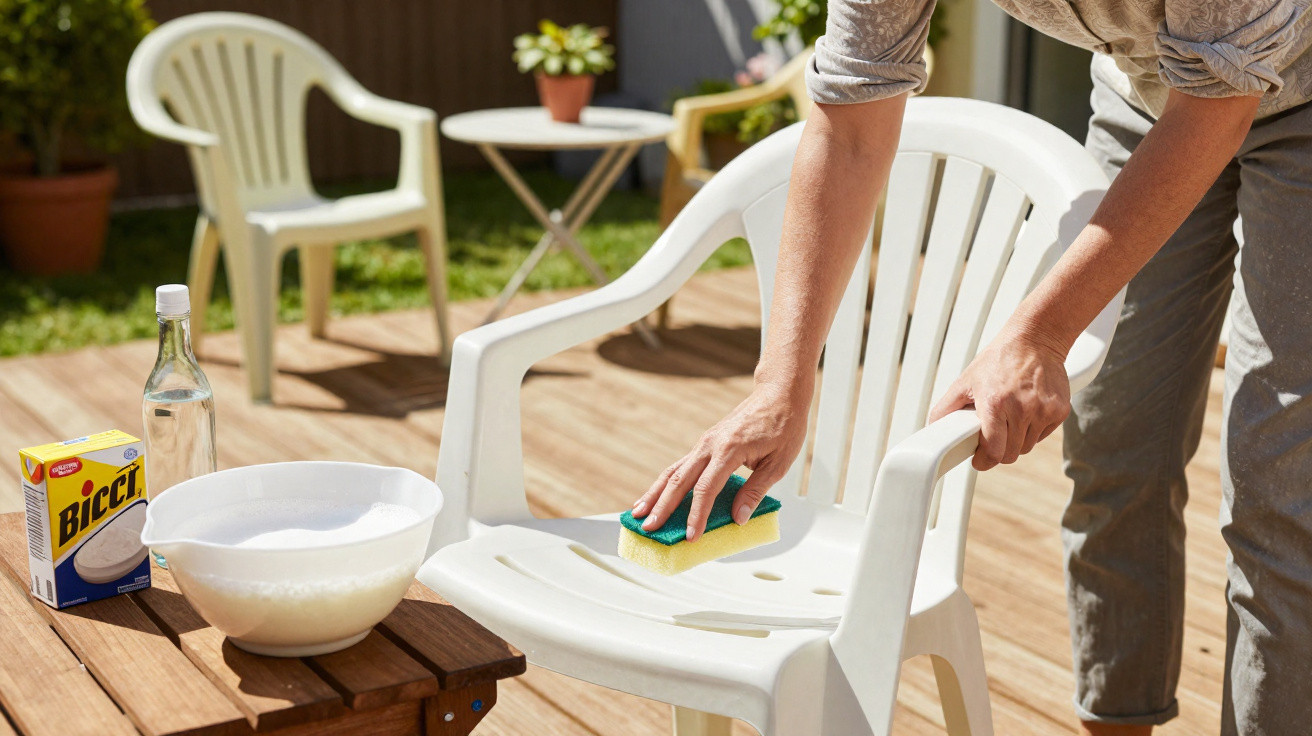
Many people who own plastic patio sets will recognise the scene: after winter, grime seems to weld itself on, UV rays age the surface, and the once-bright white set suddenly looks like it belongs at the tip. If you throw it out too quickly, you’re binning money - because with a simple household cleaning mix, a surprising number of pieces can be brought back.
Why plastic garden furniture turns grey and yellow so quickly
Plastic is often seen as low-maintenance, but outdoors the elements are constantly working against it. Over time, sun, rain and dirt noticeably alter the surface.
UV radiation attacks the top layer of plastic, leaving it more brittle and micro-porous. Those tiny pores then trap dust, pollen and soot. From a distance, it shows up as a dull grey film.
This is especially obvious on white PVC chairs: they take on a yellowish cast that looks grubby and aged. With coloured furniture, it tends to look like fading instead - red shifts towards pink, green becomes washed out and patchy.
"The more the surface is damaged, the more stubbornly dirt clings to it - and the older the whole set looks, even though the structure is often still sound."
Compared with wood, metal or woven furniture, plastic is still relatively easy to restore. Wood usually needs oils and sanding; metal often has to be de-rusted and repainted; poly rattan can crack or fray. Plastic pieces may look tired quickly, but with a sensible cleaning process they can often be made to look significantly better.
The household remedy that brightens dull plastic again
The method has two stages: first a thorough clean, then a targeted mixture to tackle discolouration. Many people get poor results because they go straight for a “miracle paste” while the heavy dirt is still sitting on the surface.
Step 1: thorough basic clean
- Brush off cobwebs, leaves and loose dust with a soft brush or hand broom
- Fill a bucket with warm water and a little washing-up liquid
- Wipe all surfaces with a soft cloth or sponge
- Leave briefly, then rinse with clean water
This first pass removes greasy films, pollen and loose deposits. Only then can the main mixture properly work on a greyed or yellowed finish.
Step 2: the household cleaning mix
The base is a blend of lukewarm water, white vinegar and sodium bicarbonate (bicarbonate of soda). Add a small dash of washing-up liquid.
| Ingredient | Amount | Purpose |
|---|---|---|
| Water (lukewarm) | 500 ml | loosens dirt, helps spread the mix |
| White vinegar | 1 tbsp | dissolves limescale, neutralises odours |
| Sodium bicarbonate (bicarbonate of soda) | 2 tbsp | gentle abrasive and cleaning booster |
| Washing-up liquid | 1 small squirt | lifts grease and light staining |
Pour the mixture into a spray bottle, shake briefly, and generously mist the pre-cleaned furniture. Work it in with a soft sponge using circular motions. Leave it for a few minutes, then rinse very thoroughly with clean water.
"The combination of vinegar and bicarbonate is mildly abrasive without scratching the plastic, and it shifts typical greying surprisingly well."
If you don’t have a sprayer, you can mix it in a bowl and apply it with a sponge instead. The key point is the same: don’t let it dry on for too long, otherwise mineral residue can leave white streaks.
What helps with stubborn stains - and what causes damage
Some pieces have endured more than a rainy summer. Sap marks, barbecue grease or black rubber scuffs from chair feet usually need a bit more effort.
Gentle helpers for tricky areas
- Cleaning stone / clay-based cleaning paste: Particularly good for white furniture, as it lightly polishes without leaving deep marks.
- Mild cream cleaner: Use only with plenty of water and very light pressure; test first in an inconspicuous area.
- Old toothbrush: Perfect for grooves, embossing and awkward corners.
With coloured pieces, a quick test underneath is always worth doing. Some pastes can slightly shift the shade or turn glossy surfaces matt.
Keep your hands off these products
- Chlorine-based bleach or mould removers: can attack the material and may even make marks stand out more
- Steel wool, pan scourers, coarse sandpaper: create scratches where dirt will embed even faster later on
- Straight cooking oil or car polish not designed for plastic: can leave greasy, sticky surfaces
"Overly aggressive methods often give a short-lived 'wow effect', but they significantly shorten the life of the plastic."
Repair instead of replacing: when the effort is worth it
Before you spend hours scrubbing, do a frank assessment. Not every chair is still safe - even if it could look decent again after cleaning.
Safety check before cleaning
- Check frames and seats for cracks and breaks
- Gently flex the chair legs - if the material gives a lot, breakage is likely
- Avoid heavily discoloured areas with hairline cracks; the plastic is often brittle there
If you see deep cracks or hear creaking when weight is applied, the item belongs at the recycling centre - not back on the patio. Safety clearly comes before appearance.
Cosmetic repair for worn surfaces
If the structure is still stable, there’s plenty you can do. Fine sandpaper (around 120 grit) can smooth dull, lightly eroded areas. After that, a specialist plastic paint can be applied to restore a more even look.
Outdoor plastic spray paints are particularly handy for chairs and tables with lots of curves. If you use a brush, work in thin coats to avoid runs. Crucially, follow the manufacturer’s guidance on drying time and weather resistance.
How to delay yellowing for much longer
Once the furniture is clean again, the habits you keep over the next few months will make the difference. A few simple routines can extend its life considerably.
- Choose the location carefully: Don’t leave it in harsh midday sun all the time if shade is an option.
- Use a cover: Even a basic protective cover cuts UV exposure and dirt build-up significantly.
- Give it a winter break: Stack chairs and store them in a garage, cellar or dry shed.
- Regular quick wash: Every few weeks, wipe down with washing-up water rather than doing one big annual deep-clean.
"If you treat plastic furniture like a car - cover it, wash it occasionally, and don’t park it permanently in the harshest sun - you’ll enjoy it for much longer."
Why vinegar and bicarbonate work so well
Plenty of household-cleaning “hacks” sound good but achieve very little. This one is effective because there’s real chemistry behind it.
White vinegar contains acetic acid, which helps dissolve limescale and mineral deposits - the kind left behind by rainwater and splashes. Those mineral layers are a common reason surfaces look dull and blotchy.
Bicarbonate of soda is mildly alkaline and acts like an ultra-fine scouring powder. With water and a little friction, it lifts stubborn dirt without aggressively grinding the material. Combined with washing-up liquid, you get a mixture that tackles grease, organic residue and light limescale in one go.
A realistic scenario: what the mix can do - and what it can’t
If a white plastic chair has sat unprotected in full sun for ten years, no household remedy will make it look factory-new again. But over a weekend, you can still rescue far more than most people expect.
Typically, the mix noticeably brightens greying, removes many yellowish shadows and produces a more uniform overall appearance. Minor shading often remains, but it stops dominating the look. That’s more than enough for a barbecue with friends - and you can postpone buying replacements for a few more seasons.
Taking a before-and-after photo can be useful. It makes the improvement clear, and helps you judge whether a second round is worthwhile or you’ve reached the practical limit.
When changing materials makes sense
If you’re dealing with the same issues every year, you can shop more strategically next time. Not all plastics are equal, and not every material ages in the same unforgiving way.
- Plastic with UV protection: Usually labelled by the manufacturer; often a bit pricier, but noticeably longer-lasting.
- Through-coloured plastic: Pigment is mixed through the material rather than applied only on top - reducing visible wear.
- Hybrid furniture: A metal frame with plastic seats combines stability with fewer dirt-prone areas.
- Wood or metal: Need more upkeep, but offer a different look and a different ageing pattern.
If you already have a set, a gradual approach can also work: replace the worst-damaged pieces, restore the sound ones with the household mix, and upgrade over time rather than sending everything to disposal at once.

Comments
No comments yet. Be the first to comment!
Leave a Comment