
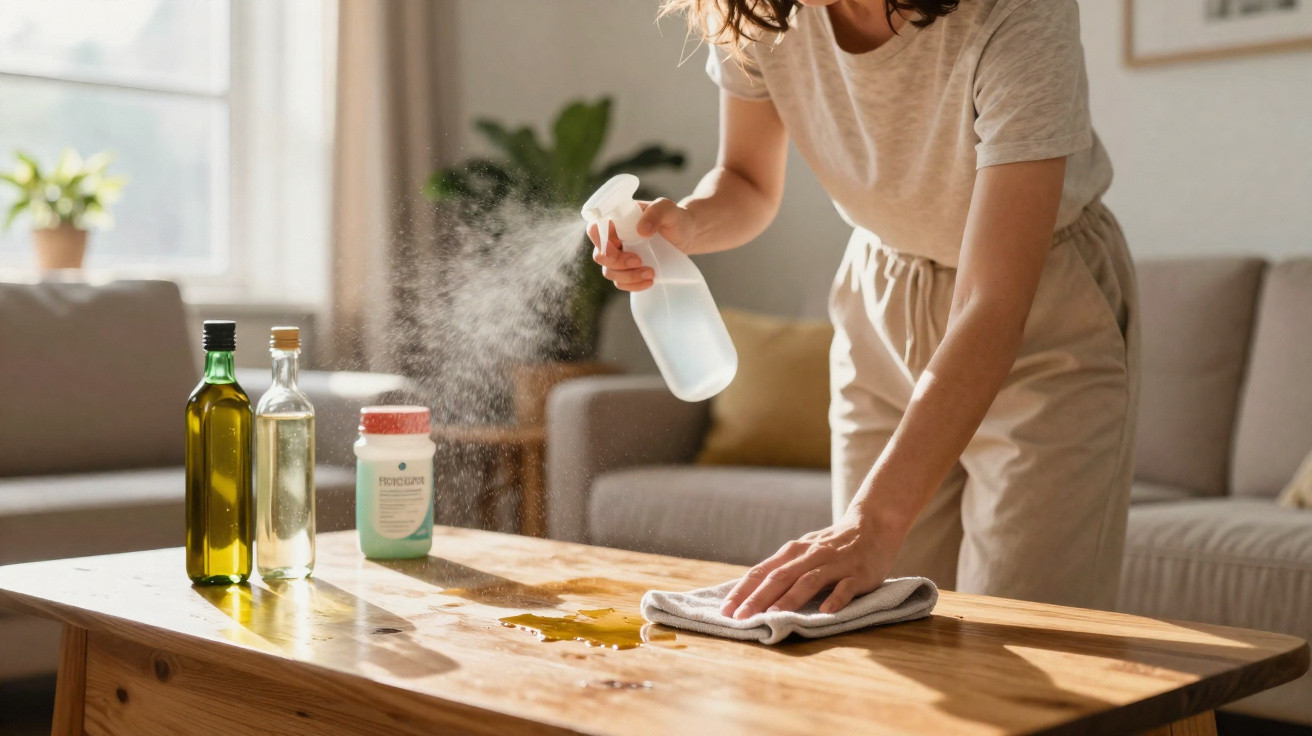
Even if you clean regularly, it can take only a few days for a dull grey film of dust to settle again on shelves and chests of drawers. If you have allergies, you’ll notice even the slightest trace in your nose. A homemade spray can noticeably ease the problem - without a big spend and without harsh chemicals.
Why dust comes back so quickly
Dust is far more than just “a bit of dirt”. In every home, tiny particles float around and continually settle on furniture. They typically include:
- extremely fine skin flakes from people
- hair and pet hair
- fibres from clothing, throws and carpets
- microscopic grains of soil and sand brought in from outside
This mix clings easily to smooth surfaces, gets stirred up again by walking around or airing the room, and then drops back onto the sideboard soon after. Even in very tidy homes, a visible layer keeps forming.
"If you only wipe surfaces dry, you often just move dust from A to B - and within a few days you’re back at the start."
People with a dust allergy or sensitive airways, in particular, can react quickly to these deposits with sneezing, itchy eyes or coughing. You can’t eliminate dust from day-to-day life entirely, but you can significantly cut both how fast it returns and how much builds up.
The home-remedy spray that beats supermarket cleaners
Good cleaning basics still matter: vacuuming, mopping, and wiping surfaces with a damp cloth. The difference comes afterwards - from a thin layer that stops dust sticking again straight away. That’s exactly what a DIY spray can do, using ingredients many people already have at home.
Recipe: dust-reducing spray from kitchen ingredients
To fill a standard spray bottle, you’ll need:
- 2 × 250 ml water (ideally boiled then cooled, or filtered)
- 1 × 250 ml clear vinegar
- 2 tablespoons olive oil
- a few drops of mild washing-up liquid
- optional: a few drops of essential oil, to taste
| Ingredient | Purpose |
|---|---|
| Water | Base that helps distribute everything evenly |
| Vinegar | Breaks down grease and grime; has a mild disinfecting effect |
| Olive oil | Leaves a very thin protective film so dust doesn’t cling as easily |
| Washing-up liquid | Helps water and oil combine and improves cleaning |
| Essential oil | Masks the vinegar smell and adds a fresh scent |
How to use the mixture properly
Pour everything into a clean spray bottle. Give it a brief, vigorous shake so the water, vinegar and oil combine. Then:
- Lightly mist a microfibre cloth - don’t soak it.
- Wipe furniture and other smooth surfaces along the grain.
- For heavy dirt, clean normally first, then use the mixture afterwards as a “finishing” wipe.
The fine oily layer helps stop dust from gripping the surface straight away. Many people say they see noticeably less dust for several days - and in some cases for as long as two to three weeks.
"You notice the effect most on wood, painted surfaces and smooth plastics - they stay clean for noticeably longer."
If you dislike the smell of vinegar, add a few drops of essential oil such as lemon, orange or lavender. Only use oils suitable for indoor use, and keep the dose small so the scent doesn’t become overpowering.
Alternative method: slowing dust with fabric softener
There’s another well-known household tip: a heavily diluted spray made with liquid fabric softener. The idea is that many softeners are anti-static. When a surface builds up less static charge, it attracts less dust.
How to mix the fabric-softener spray
Applying neat fabric softener directly to furniture isn’t a good plan, because it can leave residue, streaks and sticky patches. A light dilution works better:
- Fill a spray bottle with cooled, boiled water
- Add about half a capful of liquid fabric softener
- Shake well until it’s evenly mixed
Afterwards, lightly mist a cloth and wipe down surfaces. The fragrance stays subtle, while the anti-static effect helps dust return more slowly.
Where this works well - and where it doesn’t
The fabric-softener method is especially suitable for:
- shelves and chests of drawers with lacquered finishes
- plastic fronts in kitchens and bathrooms
- window sills and smooth doors
- casings of televisions and speakers (never spray directly - apply via the cloth only)
Take care with delicate natural materials, such as untreated wood or valuable antiques. It’s best to test first on an inconspicuous spot - or avoid it entirely and use only a slightly dampened cloth with no additives.
How often to use it - and what else helps against dust
You don’t need to use the homemade spray every day. In most cases, it’s enough to go over the main surfaces every one to two weeks after your normal clean. In between, a dry microfibre cloth can quickly lift light layers.
If you want to reduce everyday dust levels further, these adjustments can also help:
- Air rooms properly with short, wide-open ventilation rather than leaving windows on the latch for long periods
- Wash textiles such as throws, cushions and curtains more often
- Vacuum mattresses and change bedding more frequently
- Brush pets so less hair ends up indoors
- Use a vacuum cleaner with strong filtration performance (HEPA)
"The fewer loose fibres and hairs floating in the air, the more slowly a visible dust layer settles on furniture."
What “anti-static” and an oil film really do
Many household products advertise an “anti-static” effect. This refers to reducing electrical charge on surfaces. Charged surfaces can attract particles, much like a balloon rubbed on hair. When the charge is lower, the pull on dust particles decreases too.
The light oil film from the vinegar–olive oil mix works differently: it smooths out microscopic irregularities on the surface. Dust grains have less “grip”, so they’re more likely to be removed with the next wipe - or even shifted by gentle air movement - rather than settling firmly.
Both effects support regular cleaning, but they don’t replace it. If you rely only on sprays and stop vacuuming, dust and dirt from corners will quickly find their way back onto open surfaces.
Risks, limits and practical combinations
As useful as home remedies can be, it’s worth considering possible downsides. Too much oil can leave marks on high-gloss fronts, where fingerprints may also become more visible. Vinegar isn’t suitable for every material either - for example, natural stone such as marble or delicate lime-based plasters.
If you’re unsure, test the mixture on a small, hidden area first. If there’s no discolouration or streaking once it dries, it’s usually fine to use. For screens, display surfaces and glossy TVs, these sprays are generally off-limits - use only purpose-made cloths designed for those materials.
A particularly practical approach is to combine both methods: in living rooms and bedrooms - especially on wood and shelving - the vinegar–oil mix can work well. In kitchens and hallways, where there’s often more friction and static build-up, the diluted fabric-softener spray can be effective. This way, dust stays away for much longer without needing to spend hours cleaning every weekend.



Comments
No comments yet. Be the first to comment!
Leave a Comment