
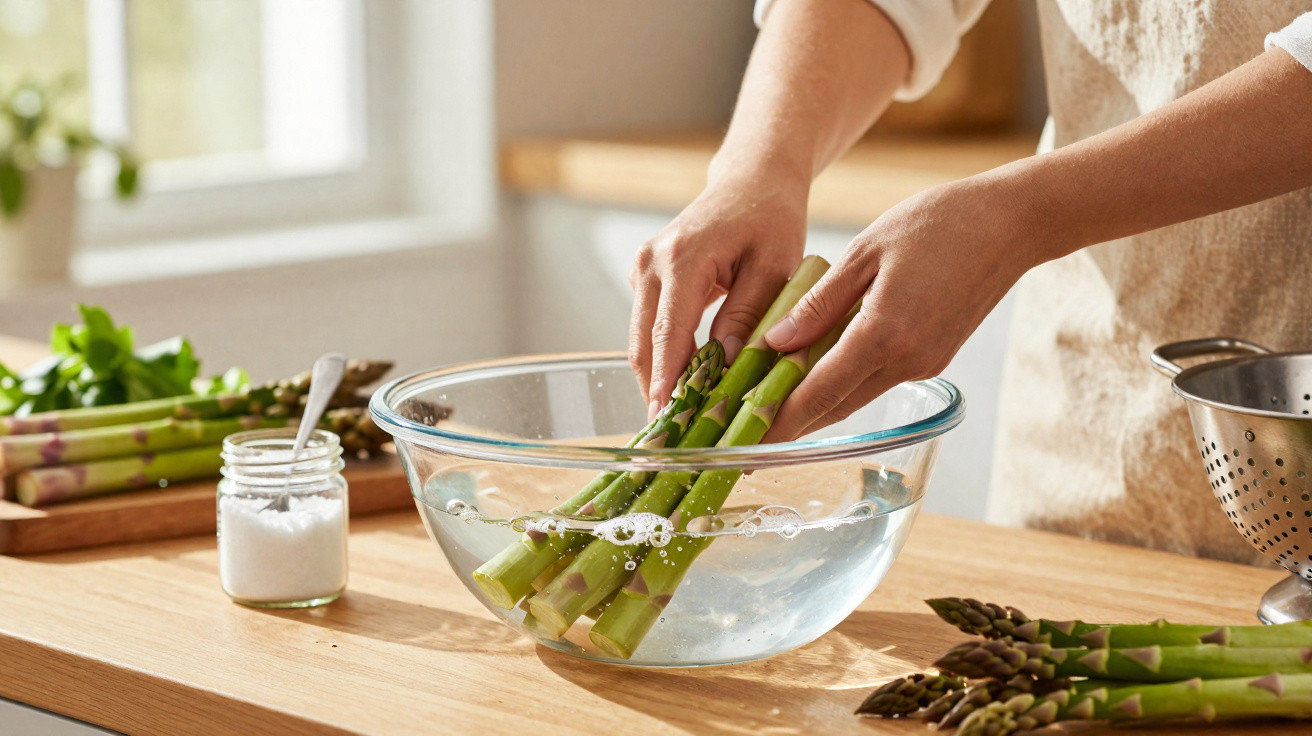
When people bring home a bunch of asparagus in spring with real anticipation, they usually picture hollandaise sauce, butter and new potatoes - and rarely think about residues from plant protection products. That is exactly where nutrition professionals step in: a quick rinse under the tap may look like it has done the job, but based on current knowledge it often does not reduce residues to any meaningful extent. With a few deliberate steps, however, you can clean asparagus far more thoroughly without damaging its delicate structure.
Why asparagus should be cleaned more thoroughly
Asparagus grows directly in the ground, constantly exposed to soil, sand and moisture. In many growing areas, plant protection products are used to manage fungi, insects or weeds. The spears also have a particular feature: the tips are made up of many fine scales where particles can easily lodge.
"Not only sand and soil collect between the tight tips, but also traces of sprays and tiny insects."
Studies published in the Journal of Agricultural and Food Chemistry indicate that plain tap water does wash away some residues, but a significant amount can still cling to the surface. These substances are designed to withstand rain, after all. So if you only hold the spears briefly under the tap, you often reduce the load far less than you could with a more considered cleaning routine.
The experts’ basic trick: how to prep asparagus spears properly
Before water even comes into play, specialists recommend a simple mechanical first step: remove the parts that are most fibrous and most likely to carry soil.
- Remove woody ends: Snap off or cut around 2.5 to 5 centimetres from the base of each spear. This area often holds sand, soil and the toughest fibres.
- Peel white asparagus: Especially with thick, white spears, peel the lower section with a vegetable peeler before washing. This reduces stringy patches and exposes a fresh surface.
- Only peel green asparagus if needed: Thin green spears generally stay unpeeled; for very thick ones, it is usually enough to peel the bottom third.
This initial step already cuts down some potential residues - and it makes thorough rinsing easier later on, because less soil ends up being carried into the cooking process.
The best standard method: a cold-water bath with movement
Next comes a proper soak. A quick spray from the tap barely reaches the fine crevices in the tips, whereas immersing the spears in plenty of water is noticeably more effective.
- Fill a large bowl: Run in cold water and fully submerge the spears.
- Leave for five to ten minutes: During this time, swish the water around with your hands several times.
- Gently “swirl” the asparagus: Lightly rub the tips against one another so sand and particles can work loose.
A nutritionist sums up the key idea like this: the more the spears move in the water, the better particles detach from the fine scales at the tips. The effect is similar to a gentle “wash cycle”, but without the pressure that would crush or damage the heads.
After the soak: treat each spear individually
Once the bowl bath is done, the tap does come back into the process - but in a targeted way:
- Hold each spear individually under cold, running water.
- Carefully cup the tip between thumb and forefinger and rub lightly.
- Stroke down the stalk from top to bottom to lift any remaining residues.
- For particularly thick spears, use a soft vegetable brush and pass it over the surface without pressing.
This step also aims to increase friction where it matters most, while avoiding squashing the tender flesh. Spending a few minutes here can make you feel more confident when you sit down to eat.
Maximum reassurance for sensitive people: a bicarbonate of soda bath
For people who want extra reassurance - for example toddlers, pregnant women or those with chronic illnesses - some professionals suggest an additional cleaning step using bicarbonate of soda (sodium hydrogen carbonate, also sold as baking soda).
"A 1% bicarbonate of soda solution can, depending on the type of active substance, remove well over 60% of surface residues."
How the bicarbonate of soda bath works
- Pour 1 litre of cold water into a bowl.
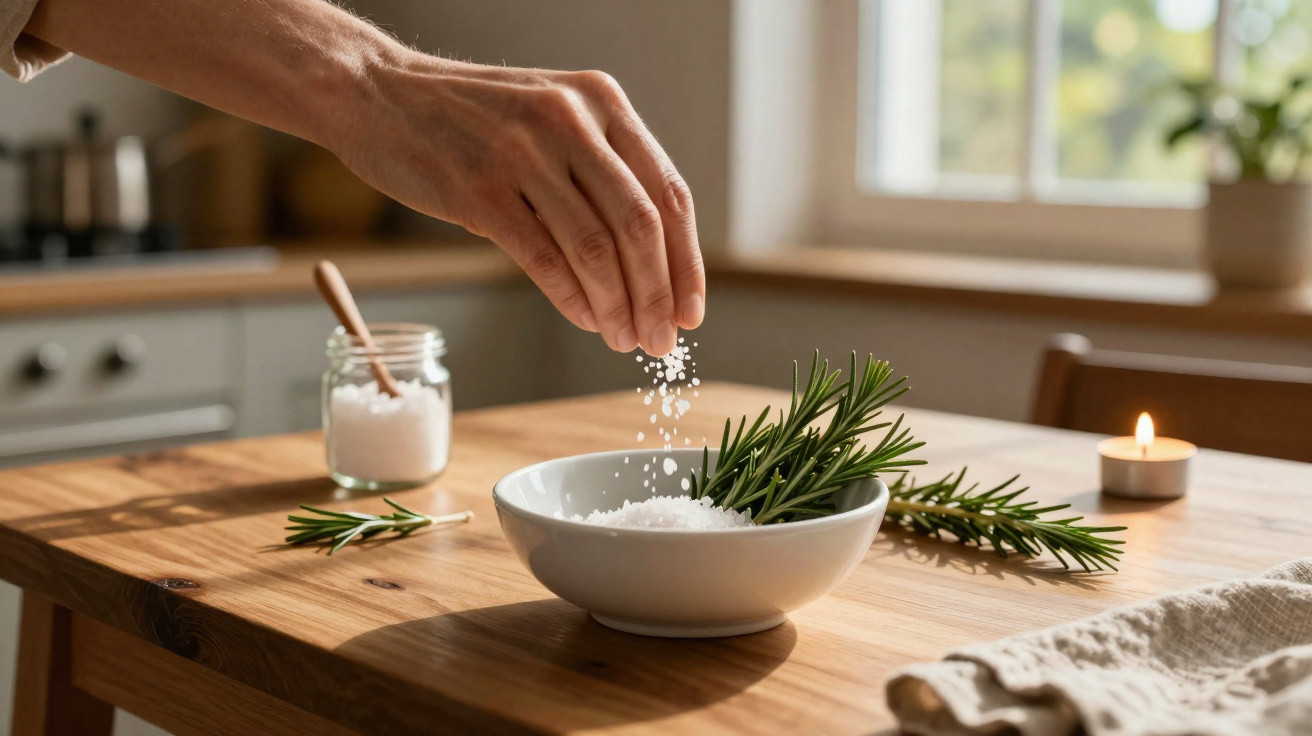
- Stir in about 10 grams of bicarbonate of soda (roughly a heaped teaspoon) until fully dissolved.
- Submerge the prepared asparagus spears completely.
- Leave for twelve to fifteen minutes, gently moving the spears by hand from time to time.
- Then rinse very thoroughly under plenty of clean water.
- Finally, pat dry or leave briefly on a clean tea towel.
Studies using different fruits and vegetables suggest that this kind of bicarbonate mixture can lift substantially more surface pesticides than plain water. The spears still keep their typical bite and aroma, provided you do not overdo the soaking time.
What the bicarbonate of soda bath cannot do
Even with good results, one point remains crucial: substances that have been absorbed by the plant and transported through its vascular system cannot be removed from the outside. No brush and no solution can reach those. These cleaning methods are primarily aimed at residues on the surface.
Professionals also caution against common kitchen “hacks”:
- Washing-up liquid or soap: They may cut grease, but they can leave behind substances not intended for consumption.
- Chlorine cleaners: These belong in the cleaning cupboard, not on food - even small traces can irritate the stomach and mucous membranes.
- Undiluted vinegar: At high concentration it can attack the delicate asparagus tissue and alter both flavour and colour.
If you want to play it safe, stick to water and bicarbonate of soda in moderate amounts. That is enough to noticeably lower residue levels without introducing new risks in the kitchen.
More reassurance by combining buying habits and cleaning
Even the most thorough washing method is no substitute for choosing carefully at the point of purchase. Shoppers can do a few things to keep their overall exposure to residues as low as possible.
- Choose local produce: Buying direct from a farm or at a farmers’ market often gives you the chance to ask about growing practices.
- Use organic certification: Organic farms work under stricter rules; on average, residue levels are lower.
- Pay attention to the season: In the main season, storage times are shorter and the asparagus is usually fresher.
- Mix up your vegetables: If you do not eat the same vegetable every day, you reduce the chance of repeatedly exposing yourself to the same substances.
Peeling matters too. With white asparagus, removing the skin also takes away part of any potential residues. With green asparagus, the emphasis is more on careful washing, because it is often only peeled at the bottom - or not peeled at all.
How thorough cleaning affects flavour and nutrients
Some home cooks worry that too much water will “draw out” the flavour. Based on current evidence, a moderate cold-water soak or bicarbonate bath does not cause any relevant harm to asparagus, as long as the soaking time is not greatly exceeded. Vitamins and minerals are mostly inside the spear rather than on the surface.
In fact, many people find properly cleaned asparagus tastes better because there is no sand crunching between the teeth and no earthy notes getting in the way. It also helps when frying or roasting: asparagus that has been patted dry browns more effectively. Too much leftover water in the pan prevents proper caramelisation and tends to create a steaming effect instead.
What terms like “pesticides” and “residues” actually mean
If you look into the topic in more detail, you quickly run into technical terms. “Pesticides” is an umbrella term covering several groups of substances: insecticides against pests, fungicides against fungi, and herbicides against weeds. Authorities set maximum residue limits intended to be considered safe for health. Many individual measurements sit well below those limits, while others come closer.
Washing at home cannot replace controls in the field, but it can act as an extra filter. The impact is greatest for foods eaten whole and not peeled. Asparagus sits somewhere in the middle: white asparagus is peeled, green asparagus usually is not, yet both types come into close contact with the soil.
If you use the combination described here - prepping, soaking, careful rinsing and, if needed, a bicarbonate of soda solution - you can noticeably reduce surface residues. Together with a varied diet and mindful product choices, this offers a practical balance between enjoyment, reassurance and everyday convenience.


Comments
No comments yet. Be the first to comment!
Leave a Comment