
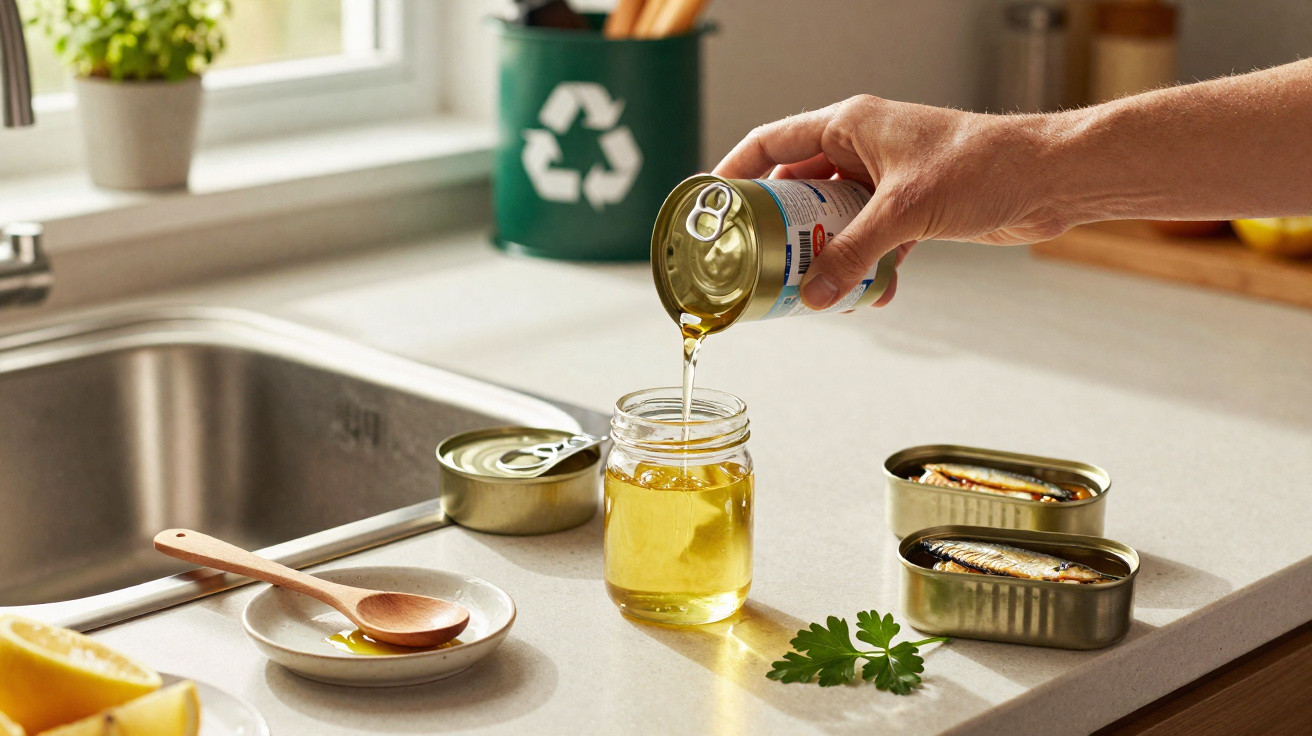
A small tin from the cupboard seems innocuous: pop the lid, take out the fish, tip the oil into the drain - done. That exact habit can quietly cause problems in your kitchen, harm the environment and even hit your wallet. Because that golden oil is far more than just “tin liquid” you can throw away.
What really happens to sardine oil in the drain
While it’s warm, the oil looks runny and harmless. But once it goes into the drain, it cools down quickly - and that’s where the real trouble starts.
- The oil thickens and coats the inside of the pipes.
- Over time, it binds with other fats and bits of food.
- A solid fatty layer forms, narrowing the pipe’s internal diameter.
- Water starts draining more slowly, with gurgling and unpleasant smells.
- In many cases it ends with a fully blocked pipe - and an expensive plumber’s visit.
Many property managers see this time and again: grease-laden pipes are among the most common causes of blockages in kitchen plumbing. One spoonful of oil from a sardine tin seems trivial, but it turns up again and again over months and years - building up layer by layer.
"Every tablespoon of cooking oil poured into the sink leaves some residue in the pipework and can end up costing a lot of money later."
Environmental damage: one litre of oil, 1,000 square metres of trouble
The issue doesn’t stop at the sink. Whatever makes it through your household pipework ends up in the sewer system and then at a wastewater treatment works - or, in some cases, straight into rivers and other waters. Cooking oils behave anything but harmlessly there.
A single litre of oil can spread across the water’s surface to form a film of around 1,000 square metres. That thin layer reduces oxygen exchange and puts extra strain on fish, plants and microorganisms. Rivers, lakes and coastal waters are all placed under additional pressure as a result.
At wastewater treatment works, fats create further complications. The bacteria used to break down pollutants work less effectively when too much oil is floating in the incoming water. Plants then need to use more energy to separate out the fat - a cost that ultimately shows up again in household bills.
Why the oil in the tin is far too good to pour away
Inside a sealed tin, the sardines undergo a kind of mini-maturation. Some of the fish fat moves into the surrounding oil; flavours dissolve into it; vitamins and valuable fatty acids disperse through the liquid. That’s the missed opportunity - and the mistake many people make.
Sardines are oily cold-water fish with a high proportion of omega‑3 fatty acids. These fats are widely regarded as beneficial for the heart, blood vessels and brain. Some of those compounds end up in the oil in the tin. Pouring it away noticeably reduces the health benefit of the meal.
"The oil is a kind of concentrate of flavour and omega‑3 - and in many kitchens it ends up in the drain for no good reason."
On top of that, fat-soluble vitamins such as vitamins D and E preferentially collect in fats. They disappear too once the oil vanishes into the trap under the sink. With only a small change in routine, though, the liquid is easy to work into everyday cooking.
How to use sardine oil sensibly in the kitchen
If you like the robust fish flavour - or can at least tolerate it - you can use the oil without any fuss as a stand-in for other fats. Here are a few quick ideas that take almost no extra effort:
- Vinaigrette with extra character: Mix a portion of sardine oil with vinegar, mustard and a little neutral oil - great with tomato salad or warm potatoes.
- Tin rillettes: Mash sardines with a bit of cream cheese or butter, lemon juice and seasonings, folding in some of the oil - you’ll get a spreadable topping for bread.
- Speedy pasta sauce: Sweat garlic in a pan, loosen it with sardine oil, add a little lemon zest and parsley, then toss the pasta through the pan.
- Finish vegetables: Drizzle a spoonful of sardine oil over cooked or roasted vegetables such as broccoli, fennel or carrots once they come out of the oven.
If the taste is too strong, dilute the sardine oil with a neutral vegetable oil. A 1 to 3 mix is often enough to soften the aroma significantly without throwing anything away.
If you can’t stand the taste: dispose of it properly instead of washing it away
Some people can’t bear fish oil on its own, or worry it will taste rancid. In that case, there’s a straightforward plan B that protects both your plumbing and the environment.
- Pour the oil into an empty jar or an old, clean bottle.
- Seal the container well and store it somewhere cool if possible, so the oil thickens.
- Take it to the household recycling centre and hand it in at the cooking-oil collection point.
Many local authorities provide containers or drop-off points for used cooking oils. The collected oil is sometimes processed further, for example into energy or industrial products. If you’re not sure what’s available locally, check with your council’s waste service or contact your local council offices.
If there’s no collection scheme and the amount is very small, the last resort is general waste. Even then, the oil should always go into the bin in a sealed container - never loose in a bag. Kitchen roll used to wipe out the tin should also go in general waste.
How much sardine oil is still healthy?
Despite the advantages, quantity matters. Even though omega‑3 fatty acids are viewed positively, the oil is still energy-dense. A tablespoon quickly comes to around 100 kilocalories. If you’re trying to maintain or lose weight, it’s worth keeping that in mind.
A practical everyday rule of thumb:
| Use | Recommended amount per person |
|---|---|
| Vinaigrette | 1–2 teaspoons |
| Pasta sauce | 1 tablespoon |
| Bread spread / rillettes | 1–2 teaspoons in the overall mixture |
| Drizzle over vegetables | 1 teaspoon |
If you eat tinned fish often, you can also collect the oil: keep adding small amounts to the same jar and use it for dishes where a stronger flavour makes sense, such as stews or spicy one-pan meals.
Common questions and typical misunderstandings
Can you just flush sardine oil away with hot water?
Hot water only dissolves the fat briefly. Once it reaches cooler sections of the pipework, the mixture cools again and clings to the pipe walls. In other words, it simply pushes the problem further towards the main line - where it’s harder and more expensive to deal with.
Is sardine oil automatically rancid if the tin is older?
Tinned fish keeps for a long time as long as the tin is undamaged and properly sealed. A slightly stronger smell can be normal. You should be cautious if the tin is swollen, if there’s an odd metallic or sharply pungent odour, or if you see discolouration. In that case, put the entire contents into general waste - not down the drain.
Does oil cause problems in the food-waste bin?
Pure oils do not belong in the food-waste bin. They interfere with processing at many composting facilities. Tiny residues clinging to food scraps are usually fine, but you should avoid tipping in liquid amounts.
Why a more mindful approach pays off twice over
If you stop reflexively pouring sardine oil down the drain, you gain three times over: your pipes stay clearer for longer, the environment is put under less strain, and what looked like waste becomes a useful ingredient in your kitchen.
Small routines make it easy. Keeping a small bottle by the sink is a simple reminder to catch the oil. Having a fixed plan for using it - for example, “vinaigrette at the weekend” - makes it much more likely you’ll actually do it. That way, the unassuming tin in the cupboard turns into something that can do far more than just a “quick supper”.



Comments
No comments yet. Be the first to comment!
Leave a Comment