
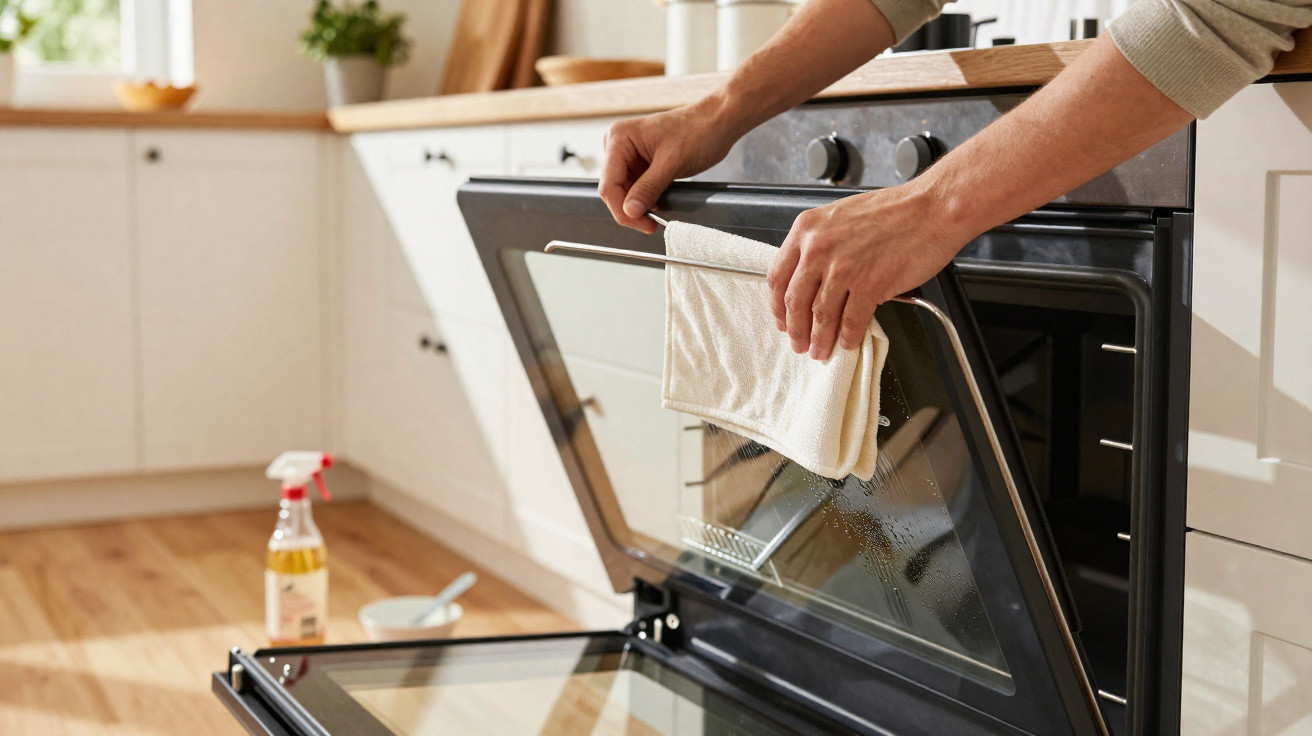
Nearly everyone knows the sight: from the outside your oven looks fairly clean, yet between the glass panes in the door you can see brown haze, greasy streaks and trapped crumbs. A normal cloth simply can’t reach that gap, and many people don’t feel confident dismantling the glass. A kitchen professional has shared a household-items method that can tackle even older marks surprisingly well.
Why the space between oven door panes becomes a problem so quickly
When you bake or roast, the oven is doing serious work: fat spatters, sauces bubble, and steam rises. Some of that inevitably finds its way into the narrow gap between the door’s glass panes sooner or later. It stays warm in there and it’s awkward to access-perfect conditions for grime to cling on.
Many manufacturers fit two or more panes so the outer surface doesn’t get too hot. Between them sits a slim air space, often only a few millimetres wide. That tiny cavity is exactly what makes cleaning so frustrating: fingers, sponges and cloths just don’t fit properly.
While a few models allow the panes to be removed without too much hassle, others require special tools or screws that are hard to reach. Plenty of owners worry about damaging the door or putting the glass back incorrectly. So the oven door stays as it is-and the mess remains visible, right at eye level.
"The dirt is easy to see but almost impossible to reach-a classic household frustration."
A simple cleaner instead of pricey specialist products
The good news is you don’t need harsh chemical sprays or expensive specialist cleaners to get clear oven glass. In many cases, a straightforward home-made mix does the job perfectly well.
Basic mix for streak-free oven glass
- 1 empty spray bottle
- 1 part tap water
- 1 part clear household vinegar (white vinegar)
- 1 soft microfibre cloth or an absorbent cloth
Pour water and vinegar into the spray bottle in a 1:1 ratio. Give it a quick shake and you’ve got a strong degreaser that won’t attack the glass. Vinegar helps lift hardened grease, reduces odours and makes the surface look clear again.
If your oven has an inner pane you can remove, the job is fairly straightforward: take the pane out according to the manufacturer’s instructions, spray both sides, leave it briefly, wipe with a damp cloth and then buff dry. The trouble is, that doesn’t help much when the panes are fixed in place. That’s exactly where the kitchen professional’s trick comes in.
The coat-hanger trick: how to get between the panes without removing anything
If you can’t-or simply don’t want to-take the glass apart, there’s an unexpectedly useful tool you may already have in your wardrobe: a thin metal coat hanger.
Step-by-step instructions
- Pull out (or remove) the drawer beneath the oven, if you have one. This often reveals narrow openings at the bottom edge of the oven door.
- Unbend a metal coat hanger fully until you have the longest, reasonably straight length possible.
- Wrap a small microfibre cloth (or another lint-free cloth) around one end of the metal rod.
- Secure the cloth tightly with a strong elastic band or firmly sticking tape so it can’t slip.
- Dampen the cloth tip well with the vinegar-and-water mix, but don’t soak it until it drips.
- Carefully guide the prepared rod through the openings under the door and into the space between the panes.
- Move it back and forth in calm, long strokes, much like using a long paintbrush. Rinse the cloth, re-dampen it and repeat as needed.
Depending on the oven model, the slots or ventilation openings vary in width. Usually it takes a little trial and error to find the right angle so you can reach the full glass area.
"With a simple metal coat hanger, a nearly unreachable dirty spot suddenly becomes just another surface you can clean."
How often should you clean the oven door glass?
Many people wipe the inside of the door regularly, yet the gap between the panes can be ignored for years. The longer residue is left to dry out, the more time it takes later to get everything clear again.
If you bake a lot or often cook bakes, roasts and pizzas, it’s worth checking the gap once a quarter. As soon as you can see smears or splashes, the hanger trick is worth doing. If you only use the oven occasionally, a thorough clean once or twice a year is often enough.
Situations that signal it’s time for an in-between clean
- After very fatty dishes that splatter a lot, such as roast goose or lasagne.
- After an overflowing bake or cake where liquid ran down the door.
- When children regularly press their hands against the outside of the glass-marks inside become much more noticeable then.
What you must keep in mind when using vinegar and a metal coat hanger
As simple as this method is, there are a few details to take seriously. Vinegar is effective against grease, but it is acidic. Seals, delicate coatings or aluminium parts won’t appreciate repeated contact.
So follow these rules: - Apply the vinegar-and-water mix to the cloth and glass only-don’t spray it liberally into the oven door. - Avoid rubber door seals as far as possible and don’t leave them damp for long. - Use a coat hanger with no sharp edges so you don’t scratch the glass or damage seals. - Work slowly and avoid pressing hard against the panes to prevent stressing the glass.
If you want to be extra cautious, start in a corner that won’t be very visible later and check that the glass cleans as expected without leaving streaks or scratches.
Alternative household cleaners and where they fall short
Some people rely on baking powder or bicarbonate of soda mixed with a little water into a paste. That can work on baked-on marks inside the oven cavity, but between the panes it’s impractical-the paste is difficult to remove completely from such a narrow space.
Off-the-shelf glass cleaner will also tackle dirt, of course, but it often contains extra additives, fragrances and surfactants. In the tight gap between panes, those residues can linger and may discolour with heat or leave a smeary film. The vinegar-and-water blend is easier to wipe away fully.
When to call a professional-and when a new oven makes sense
Some oven doors are fully sealed. If there are no openings large enough to feed a hanger through, the only option is a proper dismantle-if the door is designed for that. If your appliance is still under warranty, check the paperwork first or contact the manufacturer before attempting any DIY fixes.
If dark shadows have formed inside the glass and won’t shift even after thorough cleaning, the coating may be damaged or dirt may have worked permanently into fine cracks. In that case, replacing the pane is usually the only remedy. With very old appliances, it may then be worth weighing up whether a modern, energy-efficient oven is the more sensible choice.
More clarity in the kitchen: why the effort is worth it
Clean oven door glass isn’t just about looks. When you can see clearly into the oven from the outside, you don’t need to keep opening the door to check on food. Heat stays in the oven cavity more effectively, cooking is more even, and energy use drops a little.
In open-plan kitchens especially, a stained oven door stands out immediately. A small extra effort with a spray bottle, a microfibre cloth and a coat hanger helps the oven look like a well-cared-for appliance again-rather than a problem you’d rather ignore. And that’s what turns an annoying cleaning task into a genuinely visible "before-and-after" result.




Comments
No comments yet. Be the first to comment!
Leave a Comment