
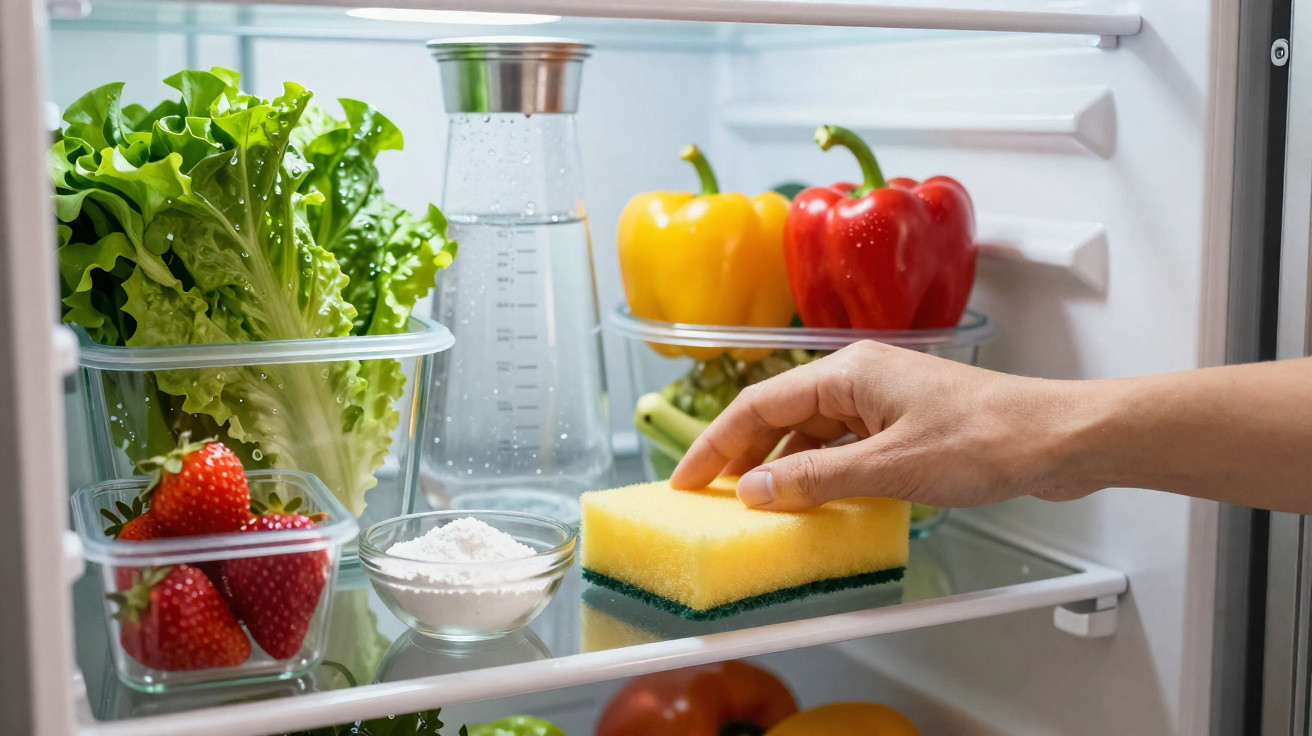
A tip has been doing the rounds on social media for a while now that sounds almost ridiculous at first: putting an ordinary washing-up sponge in the fridge. While it looks like an internet joke, there’s a practical reason behind it. Household and hygiene specialists explain why it can work, how to do it properly - and what mistakes to avoid.
Why a sponge belongs in the fridge at all
Moisture is always building up inside a fridge. Warm air entering from outside, foods that are still slightly damp, and condensation collecting on the inner walls all contribute. That humidity creates ideal conditions for:
- unpleasant odours
- fruit and vegetables spoiling more quickly
- mould developing in corners and seals
- sticky films of water on glass shelves and walls
"A fresh, dry sponge works in the fridge like a small moisture magnet and noticeably eases the internal climate."
The more moisture hanging in the air, the faster lettuce turns limp, berries go mouldy and leftover bits of cheese start to smell sharp. A sponge absorbs some of that excess humidity. The result is a more stable environment, which can help food stay fresh a little longer.
How to use the sponge trick correctly
For this to be effective - and not become a hygiene problem - the details matter. A few straightforward rules are enough:
Choose the right type of sponge
Use a standard, brand-new household sponge with no cleaning agents in it and no scouring side containing metal fibres. A plain, uncoloured or light-coloured sponge is best, because you’ll spot discolouration more quickly.
- New and unused: Never take an old sponge that’s already been used at the sink.
- No soap residue: No washing-up liquid, no cleaner and no fragrance should be in the material.
- Firm but soft: It should hold plenty of liquid without crumbling apart.
The best spot in the fridge
Experts suggest placing the sponge where humidity tends to be highest. Common areas include:
- the salad/vegetable drawer, or the shelf directly above it
- the back wall, where condensation often gathers
- a glass shelf where droplets regularly appear
Lay the sponge flat on a plate or small saucer so it doesn’t stick to any food. What matters is that air can circulate freely around it.
"The sponge shouldn’t be put in cling film, trays or boxes - it can only pull moisture from the air when left uncovered."
How often you should replace the sponge
This is the most important part: upkeep. If a sponge is left damp and mildly warm for long periods, it can quickly become a breeding ground for bacteria. Specialists therefore recommend a clear routine:
- check briefly every day: does the sponge feel saturated?
- at the latest every two days, wring it out thoroughly and let it dry completely
- after about a week, swap it for a new sponge
If you shop infrequently and barely use the fridge, you can stretch the interval slightly. In family households where the door is opened often and lots of fresh produce is stored, it’s sensible to change it more frequently.
Does the sponge really help with bad smells?
A sponge doesn’t add a scent and it doesn’t mask anything. What it can do is reduce moisture in the air - and it’s that humidity that tends to intensify odours. Rotting leftovers, spilled milk or onions stored uncovered smell far stronger when the air is damp.
"Less moisture usually means more pleasant fridge air - especially if there aren’t any forgotten leftovers lurking around."
That said, the sponge trick is not a substitute for a proper clean. If yoghurt has leaked or vegetables have gone off in the back corner, cleaning is the only solution. A sponge won’t tackle visible mould, dried-on sauces or greasy build-up.
Combining it with household staples such as bicarbonate of soda
If you want to control odours more effectively, you can pair the sponge approach with tried-and-tested household remedies. Popular options include:
- Bicarbonate of soda or baking powder: In an open dish, it binds odour molecules.
- Coffee grounds (dry): Neutralises many smells, though it can leave a faint coffee scent.
- Activated charcoal: Sold in small sachets, it absorbs odours very strongly.
The sponge is mainly there to manage humidity, while bicarbonate of soda and similar options work on smells at the same time. Used together, they complement each other well.
Regular fridge care: how to get the most from the trick
If you rarely clean your fridge, a sponge alone won’t make it hygienic. Experts recommend a simple routine:
- every one to two weeks, throw out old food
- wipe up any spills immediately with warm water and a little mild detergent
- every few weeks, remove shelves and compartments and wash them separately
- pat vegetables dry before putting them in the drawer
- store open foods in glass or plastic containers with lids where possible
When combined with this basic programme, the sponge’s effect is more noticeable: the fridge smells more neutral, and fewer water droplets collect on glass shelves.
Risks, mistakes, and when it’s better to skip the trick
As easy as the method sounds, it isn’t entirely risk-free. The biggest issue is neglecting the sponge.
- Leaving it too long: A sponge that isn’t replaced for weeks can become loaded with bacterial build-up.
- Using the wrong sponge: Versions with a scouring layer may scratch other items or shed crumbs.
- Letting it touch food: Sponges should not sit directly on uncovered foods.
People with significantly weakened immune systems, or allergies to mould spores, should be especially strict about hygiene. In such cases, it may be better to rely on regular cleaning and classic odour absorbers such as activated charcoal instead.
How much does the trick extend food’s shelf life?
It’s not possible to give a fixed number of extra days, because it depends on many factors: temperature, the fridge model, how food is packaged and how often you shop. The sponge doesn’t replace proper chilling or use-by/best-before dates. What it may do is make the microclimate slightly more stable.
"In households that store lots of fresh fruit and vegetables, users report that lettuce and berries stay crisp for a little longer."
Delicate items such as strawberries, raspberries and soft leafy salads are particularly sensitive to moisture. Drier air slows down mould growth and the development of soggy patches.
Practical everyday examples
A common scenario looks like this: after a big shop, unwashed lettuce, slightly damp cucumbers and wet fruit go into the vegetable drawer. Within a few days, condensation forms on the inside of the drawer. With a sponge placed in that area, some of the moisture ends up in the sponge instead of settling directly on the food.
Another example: anyone who regularly cools warm dishes in the fridge introduces extra moisture into the appliance. If you can’t avoid putting warm pots in, a sponge can at least soak up part of the humidity that forms until the fridge returns to balance.
What’s behind the effect - explained simply
The physics is straightforward: air can only hold a limited amount of moisture. Once it reaches saturation, water is deposited as condensation on cold surfaces - in a fridge, that means walls, shelves and sometimes even the food itself.
A porous sponge acts like extra storage space: it takes in moisture into its tiny cavities before it can condense on surfaces. That keeps the air a bit drier, so condensation develops more slowly.
This can be particularly helpful in tightly packed fridges where air circulation is poor. Where little air moves past the back wall, humidity and odours linger for longer. In one of these “stagnant corners”, a sponge can be especially effective.
A conclusion without clichés: a small trick with a surprisingly big impact
A single washing-up sponge won’t replace thorough cleaning, and it won’t turn an old fridge into a high-tech appliance. However, it can make day-to-day life easier: fewer droplets on glass shelves, slightly fresher air when you open the door, and often an extra day or two of freshness for sensitive foods. If you’re willing to replace the sponge regularly, you can gain a noticeable boost in hygiene and convenience in the kitchen with minimal effort.


Comments
No comments yet. Be the first to comment!
Leave a Comment