
A simple household trick can change that.
Between pizza nights, roast dinners and oven-baked casseroles, stubborn grease and baked-on sauce build up on oven racks. Yet these grids are surprisingly often left out of a deep clean, mainly because they’re awkwardly sized and barely fit into a sink or dishwasher. There’s an easy at-home method for cleaning burnt-on oven racks thoroughly with almost no scrubbing - using ingredients found in most kitchens.
Why the oven rack turns into a dirt magnet
Oven racks usually sit right above the heat source. Dripping fat, melted cheese and marinades burn onto the metal particularly quickly. With every baking session, fresh layers add up until a dark, sticky crust forms.
In many homes, attention goes to the oven door and the baking trays instead. The rack stays put because it will "just get dirty again anyway". There’s also a very practical issue: the bars are narrow, the gaps are even narrower, and the rack is larger than a typical sink.
"Oven racks are among the most heavily used parts of an oven - and among the most neglected."
Anyone who does try the sink knows what happens: water splashes everywhere, sections of the rack stick out of the basin, and some areas never get touched. Harsh oven cleaners may work quickly, but they can irritate hands and airways and, in some cases, attack the metal as well.
The unexpected helper: why the bathroom becomes the cleaning station
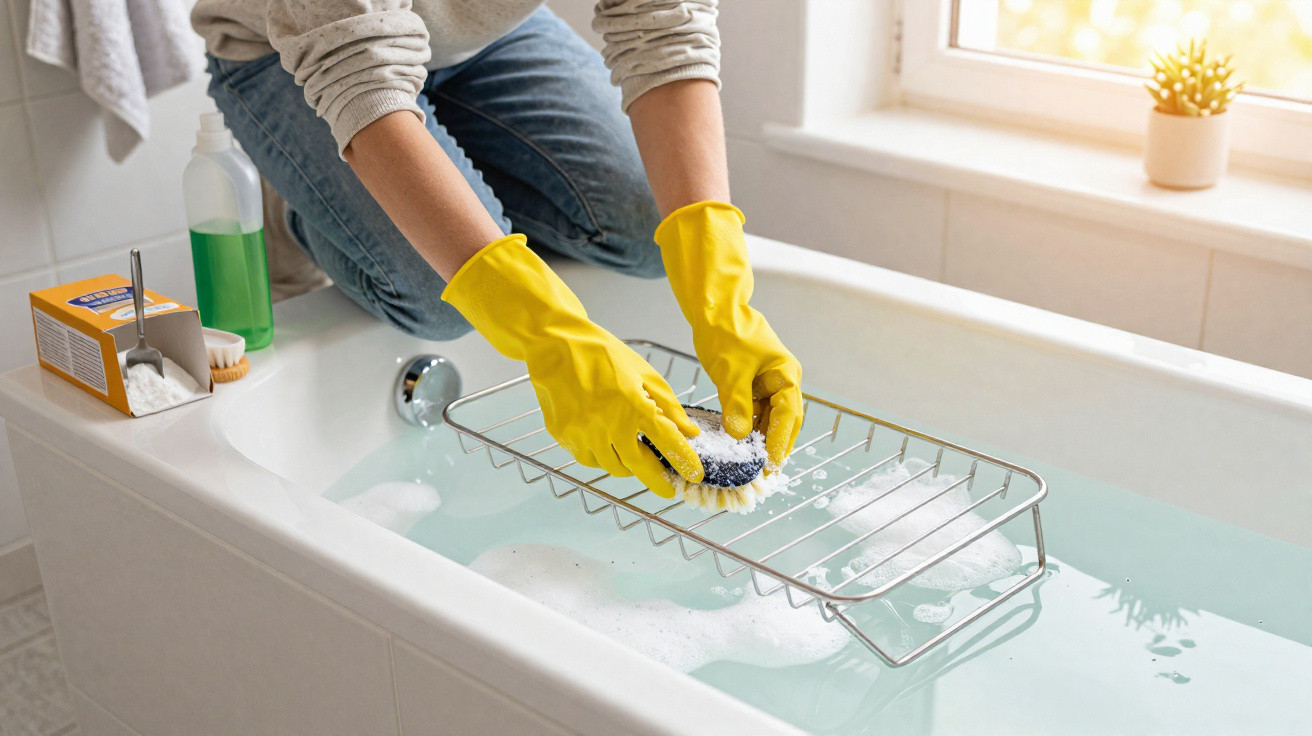
The answer is often just one door away - in the bathroom. A bath gives you what a sink and bucket can’t: enough space for the rack to sit fully submerged.
To avoid damaging the bath or the enamel, a little preparation helps:
- lay a thick, old towel on the bottom of the bath
- place the rack(s) flat on top, so they don’t rub against the bath
- plug the drain securely so nothing leaks out
The towel trick doesn’t only protect the bath surface from scratches; it also muffles the clatter when you lower the metal grids into the water or lift them out again.
Which ingredients actually tackle baked-on crust?
For the cleaning itself, you only need a straightforward blend of three components:
- very hot water
- bicarbonate of soda (sodium bicarbonate, often sold as "bicarbonate of soda")
- grease-cutting washing-up liquid
These three work together particularly well:
| Component | Effect |
|---|---|
| Hot water | softens hardened residue and helps loosen the grease |
| Bicarbonate of soda | mildly alkaline and starts breaking down fat and roasting deposits |
| Washing-up liquid | splits fats and oils into small droplets that can be rinsed away |
A tried-and-tested ratio is about 150 grams of bicarbonate of soda to roughly 50 millilitres of washing-up liquid per bath. You can, of course, adjust the amount depending on the size and number of racks.
How to clean it step by step
1. Prepare the bath
Put the towel on the base of the bath, lay one or several racks next to each other on top, and close the drain. Ideally, the grids should lie as flat as possible so everything is covered evenly later.
2. Fill with hot water
Fill the bath with very hot water until the metal grids are completely submerged. The hotter the water, the better the crust softens. If the tap doesn’t run hot enough, you can top it up with boiling water from the kettle.
3. Add the cleaning mix
Sprinkle the bicarbonate of soda evenly over the water’s surface, then pour in the washing-up liquid. Stir briefly with your hand or an old washing-up brush until it’s well distributed. A light foam is fine - it’s a sign the ingredients are combining.
4. Leave it to soak
Now the chemistry does the work. For lightly soiled racks, 30 to 45 minutes of soaking is often enough. If there are heavily baked-on grease patches, patience pays off: several hours or an entire night in the solution can lift even stubborn layers.
"The longer the rack sits in the warm bicarbonate bath, the less muscle you’ll need at the end."
5. Lightly finish, rinse, dry
After soaking, most loosened residue can be wiped away with a soft washing-up brush or a non-scratch sponge. Wire brushes or steel wool are unnecessary and can damage the surface.
Finally, rinse everything thoroughly with clean water until no soap film remains. Dry the racks with a tea towel or let them air-dry before putting them back in the oven. This helps prevent water marks and rust.
Why this method works so well for everyday life
The appeal of the bath technique is the effort-to-result ratio: your active work is limited to a handful of steps, and the soaking bath does the rest. You avoid sharp sprays on your hands, and the air stays free of aggressive fumes.
At the same time, the gentle mixture helps preserve the metal’s protective surface. Heavy scrubbing on a dry rack creates micro-scratches where grease can settle again later. By soaking first and only wiping lightly afterwards, you reduce exactly that problem.
How to make rack cleaning part of your kitchen routine
If you only clean racks once a year, you end up battling thick, stubborn layers every time. A better approach is to act sooner: after especially greasy dishes - such as a roast goose, lasagne or anything topped with melted cheese - put the rack in the bath at the next opportunity.
Many households pair it with a weekend bathroom clean or a laundry day. The soaking happens in the background while you get on with other jobs.
- After each larger oven meal, wipe off loose residue straight away with kitchen roll.
- Plan a bicarbonate bath at least every few weeks.
- If you can see crust forming, don’t wait - deal with it early.
Where else you can use this method
The trick isn’t limited to oven racks. Other bulky metal parts also benefit from a bath of bicarbonate of soda and washing-up liquid, for example:
- grill grates from a charcoal or gas barbecue
- pull-out rails inside the oven
- oven grids in fan ovens with multiple levels
For enamelled parts or aluminium, it’s worth checking the manufacturer’s guidance first. Strongly alkaline cleaners can, in some cases, attack those surfaces. In many situations, a shorter soak with less bicarbonate of soda is enough for such items.
What to keep in mind with alternatives and home remedies
Some people swear by vinegar, citric acid or baking powder. Acid-based cleaners are excellent for limescale, but they’re often less effective on grease and protein crust than an alkaline mix of bicarbonate of soda and washing-up liquid. The commonly mentioned aerosol oven foam also works strongly alkaline - just with far more aggressive ingredients.
If you have sensitive skin, you can wear thin household gloves when handling the bicarbonate solution. Compared with specialist cleaners, the solution is very mild, but prolonged contact can still dry the skin.
For households with children or pets: never leave a filled bath unattended, and rinse the bath thoroughly afterwards so no residue is left where paws or hands might pick it up.
A cleaner oven means better baking results
A well-maintained rack isn’t only about appearance. Old fat layers can start to smell at high temperatures and may affect the flavour of new dishes. Dark crust also conducts heat differently from bare metal, which can lead to uneven results when baking.
If you make rack cleaning with simple household ingredients a habit, you gain twice over: the oven looks cared for and delivers more consistent results, whether it’s a Sunday roast chicken or a quick frozen pizza after work. The bath method achieves this with minimal effort and without an aggressive chemical cocktail - just hot water, bicarbonate of soda, washing-up liquid and a little planning.


Comments
No comments yet. Be the first to comment!
Leave a Comment