
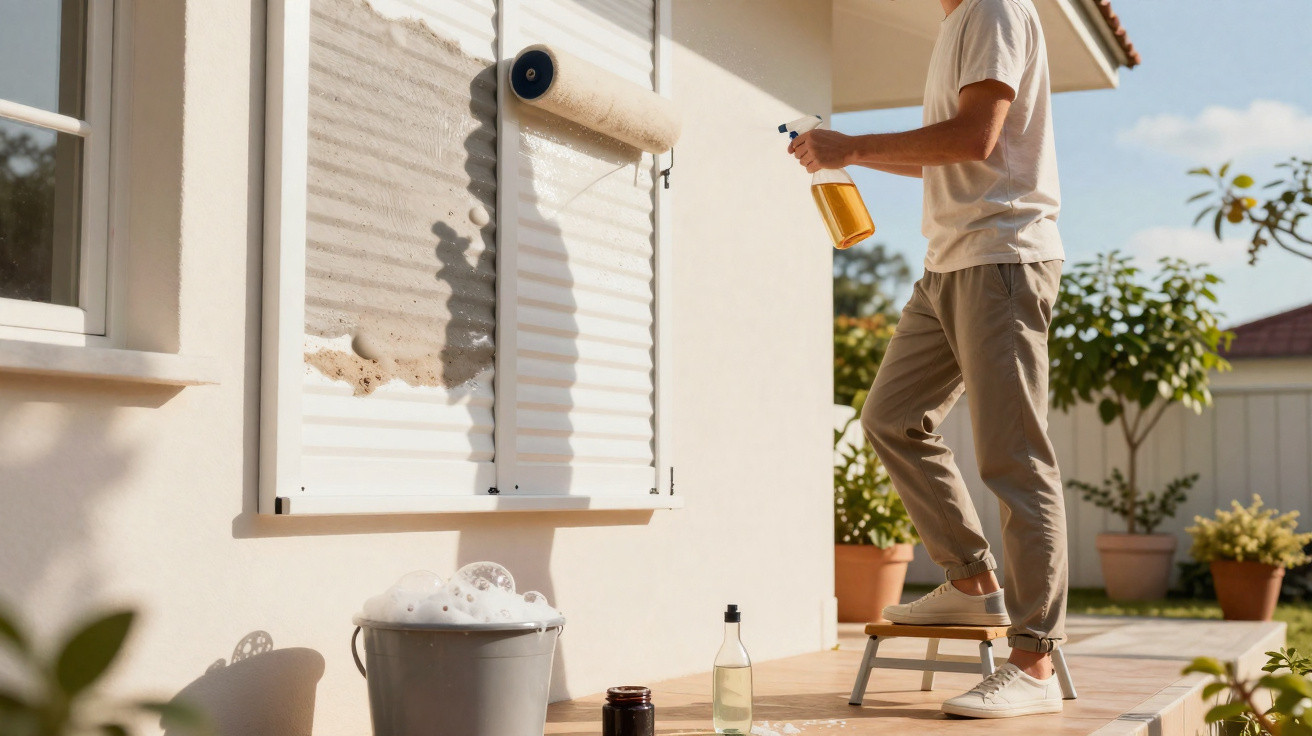
If your roller shutters are made from PVC or aluminium, you’ll know the pattern: you give them a proper clean once, and the very next shower leaves them looking dull and grubby again. Many people then reach for harsh chemicals or even a pressure washer - and, over time, that usually makes things worse. A straightforward blend of three everyday ingredients can make the whole job far easier and helps dirt and rainwater cling much less readily.
Why roller shutters get dirty again so quickly
Roller shutters are exposed to the elements all year round. Rain carries limescale and fine grime, wind blows dust and soot onto the façade, and in towns and cities you also get exhaust residue and industrial particles. Layer by layer, this builds up on the slats and turns into a stubborn grey film.
On PVC and aluminium, this cocktail shows up particularly clearly: the surface starts to look patchy, flat and uneven. At that point, a quick wipe with a damp cloth won’t touch it. Anyone who has tried scrubbing away the dark run marks along the edges or beneath windows knows how persistent those deposits can be.
A second issue appears after cleaning. Many products contain chlorine, ammonia or solvents. Rough sponges and scouring pads can do damage too. They leave behind tiny scratches, which makes the surface slightly rougher and more porous. Dirt then grips more easily - and you’re back to cleaning again even sooner.
“Roller shutters often don’t get dirty faster despite cleaning, but because of the wrong products and methods.”
Without any protective layer, the slats are left exposed to every dirty raindrop that lands on them. The result: before long, they look just as bad as they did beforehand - sometimes worse.
The 3-ingredient mix: cleaning without scrubbing
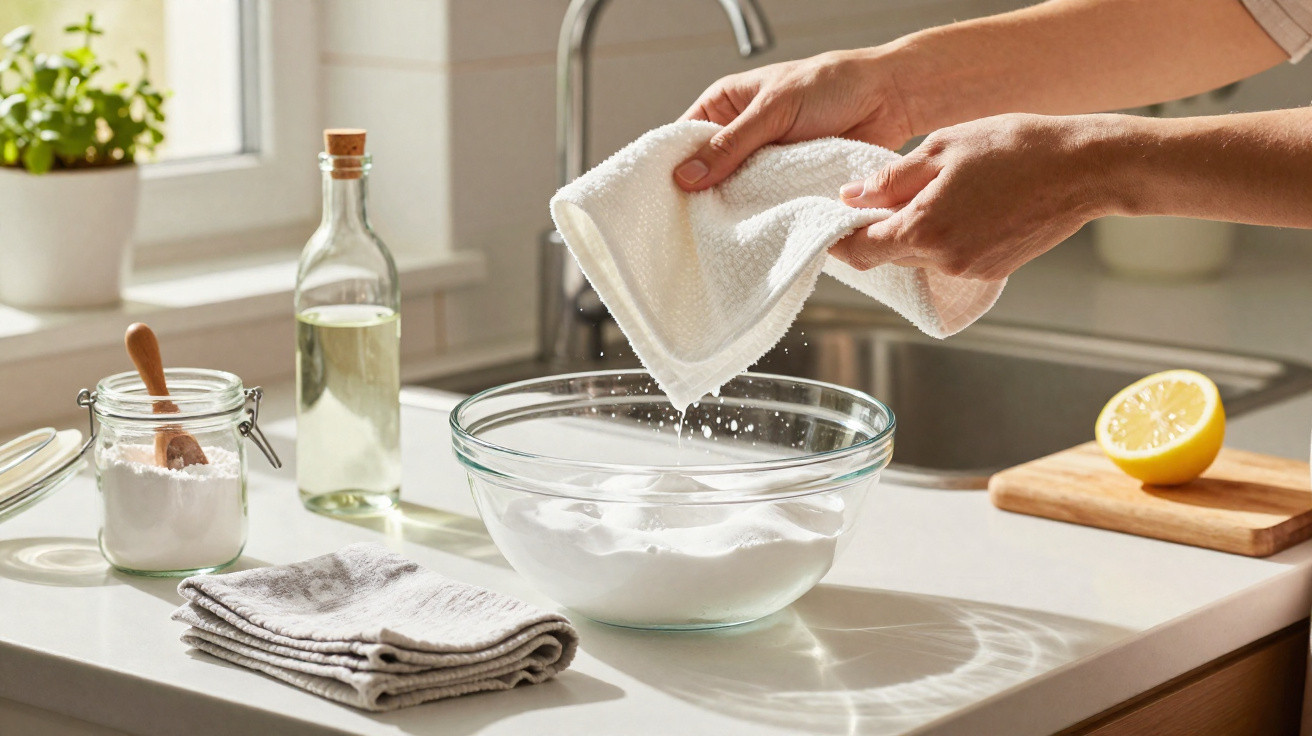
The good news is that clean roller shutters don’t require specialist cleaners or expensive kit. A simple 3-ingredient mix is enough to loosen grime while also leaving behind a light protective film:
- 5 litres of lukewarm water
- 2 tablespoons of liquid black soap (savon noir)
- 1 glass of white household vinegar
Each component has a clear job:
- Black soap breaks down grease, soot and the dark dirt film without attacking PVC or aluminium.
- Vinegar tackles limescale spots and rain marks and helps restore shine.
- Lukewarm water helps the solution work into hardened build-up.
“The trick is less about the cleaning itself, and more about combining a mild cleaner, dwell time, and a protective residue.”
Step-by-step guide to cleaning
Used properly, this mix quickly shows its advantage: heavy scrubbing is almost unnecessary. Here’s how to do it:
- Lower the roller shutter fully so every slat is accessible.
- Remove loose dust with a dry cloth or a hand brush.
- Mix the 3-ingredient solution in a bucket.
- Dip a soft sponge or microfibre cloth into the mixture.
- Wipe the slats from top to bottom, using only light pressure.
- Leave the solution to work for a few minutes - don’t rinse immediately.
- Rinse with clean water, ideally using a gentle garden hose spray or a fresh damp cloth.
- Let it drip-dry; if you prefer, finish by drying with a soft cloth.
The dwell time is what really changes the outcome. While it sits, the vinegar lifts limescale and mineral residues, and the black soap effectively “encapsulates” greasy and urban grime. After that, a gentle wipe is usually enough.
How long does the protective film really last?
Once dry, the soap leaves an almost invisible, ultra-thin layer on the surface. It acts like a kind of slip coating: the slats feel smoother, new dust sticks less readily, and rain tends to bead and run off rather than leaving smeary trails.
In practical terms, roller shutters stay looking presentable for much longer. Black run marks develop more slowly, and lighter showers may even rinse away some surface dirt instead of creating fresh stains.
“If you use the 3-ingredient mix once or twice a year, you can often halve how often you need to clean.”
In an average location - for instance, a residential area without a busy road directly outside - cleaning in spring and autumn is often sufficient. If your home is on a main road or near industry, three applications a year may be more appropriate. Either way, the gap between cleans usually becomes noticeably longer.
What to bear in mind for PVC and aluminium
Roller shutters are usually made from PVC or aluminium, and both can react badly if treated the wrong way. A few basic rules are worth following:
- Don’t use chlorine-based cleaners or products containing ammonia.
- Avoid cream cleaners, wire wool and stiff brushes.
- Only use a pressure washer if the manufacturer explicitly permits it - and then keep a large distance.
- Never rub hard on dry dust; always sweep away loose particles first.
Following these points helps you avoid scratches and fine grooves where soot and dirt can later lodge. That way, the smoothing effect from the soap lasts longer.
Common mistakes when cleaning roller shutters
A lot of cleaning routines accidentally make dirt return faster. Typical errors include:
- Too much pressure: Heavy rubbing can push particles into the surface and may damage it.
- The wrong tools: Stiff bristles and abrasive sponges leave visible marks.
- Mixing cleaners: Using several strong products at once can harm both the material and the environment.
- No pre-clean: Scrubbing while everything is wet straight away can drag sand and dust over the slats like sandpaper.
The 3-ingredient mix avoids these pitfalls: gentle on the surface, tough on grime - with the added benefit of a light protective layer.
Practical extra tips for longer-lasting clean roller shutters
If you want to keep roller shutters cleaner with less effort, a few simple habits help:
- Once a month, quickly go over the slats with a dry cloth or duster.
- During heavy pollen periods in spring, do light wipe-downs more often before it sticks.
- Clean seals and guide rails with a damp cloth so a black greasy film doesn’t develop there.
- After cleaning, run the roller shutters fully up and down so the transition areas are rinsed too.
If you’re already cleaning the windows, you can give the shutters a quick dusting at the same time. That prevents thick build-up and makes the twice-yearly deep clean much easier.
What black soap and vinegar actually do
Many people only know black soap from household-tip lists. In reality, it’s a plant-based soap - typically made from linseed oil or olive oil - with strong degreasing power. It is biodegradable and far kinder to surfaces than aggressive all-purpose cleaners.
Vinegar, meanwhile, mainly targets limescale, mineral deposits and rain marks. Together, the two products complement each other: the soap deals with organic and greasy dirt, while the vinegar tackles what the water leaves behind. In lukewarm water, the mixture spreads especially well over large areas like roller shutters.
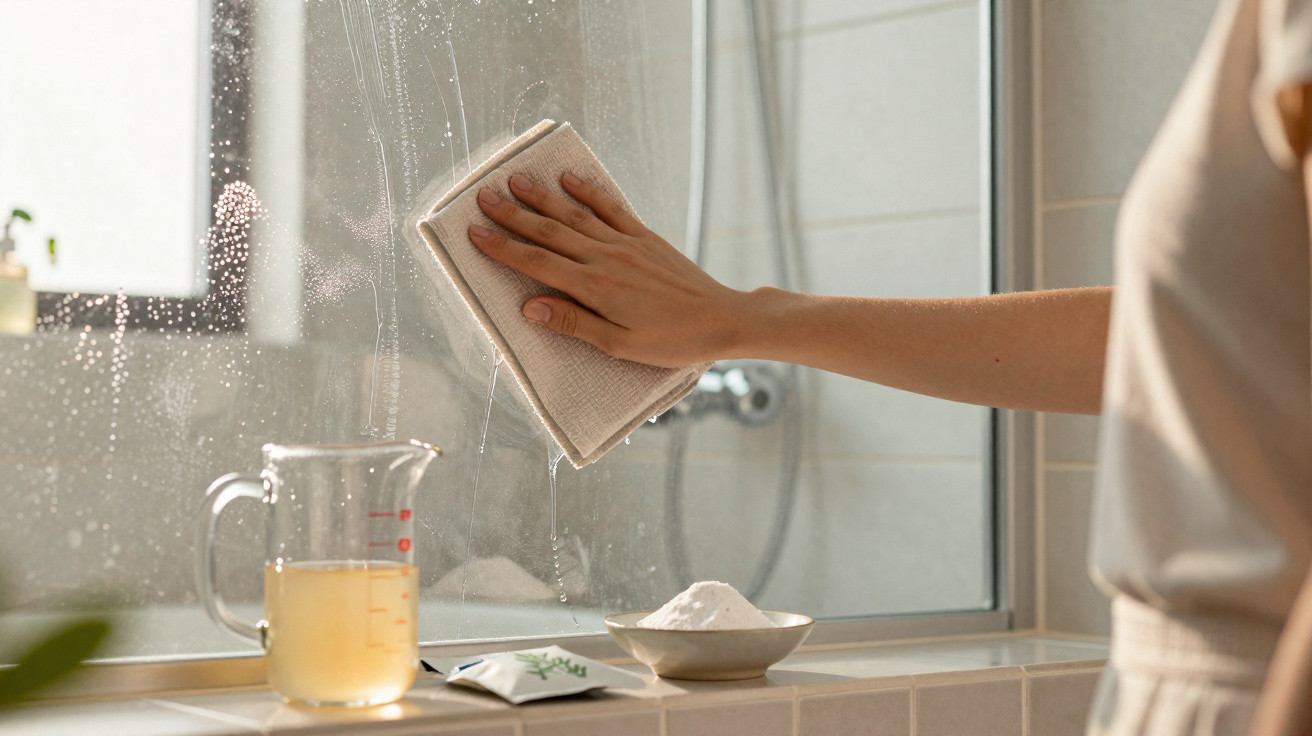
Similar mixes can also be used on patio doors, uPVC window frames or plastic garden furniture. The key is to test on an inconspicuous area first and then rinse thoroughly with clean water.

Comments
No comments yet. Be the first to comment!
Leave a Comment